
Potential for 2026 Forest and Land Fires Starting in June, BMKG's Mitigation Steps
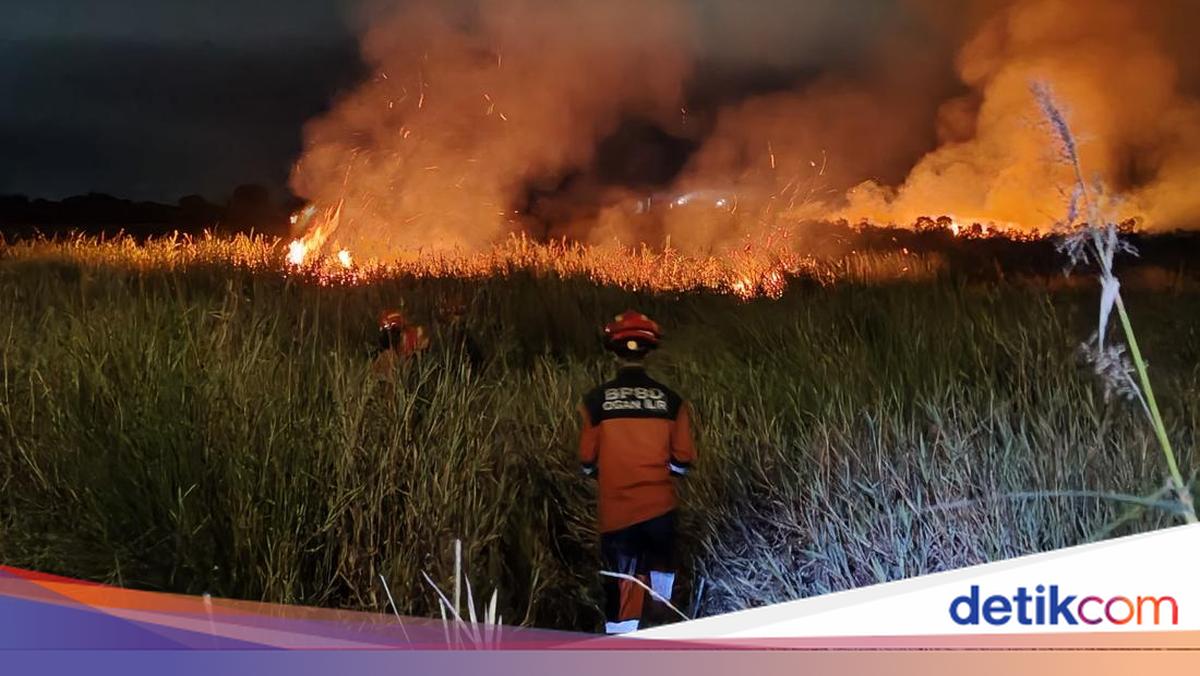
The dry season in 2026 is forecast to be longer. In addition, forest and land fires (karhutla) in 2026 are predicted to start increasing in June.
The Meteorology, Climatology, and Geophysics Agency (BMKG) has emphasised the importance of national preparedness in facing the potential for karhutla in 2026. This was conveyed during the national coordination meeting (rakornas) for karhutla control held at the office of the Ministry of Environment and Forestry (KLHK) RI, Jakarta, on Tuesday (7/4/2026).
Quoting from the official BMKG website, BMKG Head Teuku Faisal Fathani explained that climate conditions in 2026 have the potential to be drier than normal. He mentioned indications that the dry season will arrive earlier and last longer.
He stated that the current ENSO condition is still in a neutral phase. However, in the second semester of 2026, it is predicted to develop towards a weak to moderate El Niño with a probability of around 50-80 percent.
“It should be understood that dry season and El Niño are two different phenomena. The dry season is a climatological cycle. However, if they occur together with El Niño, rainfall will be significantly reduced and conditions will become drier,” he explained.
Potential Karhutla Starting June 2026
Up to early April 2026, the number of hotspots in Indonesia reached 1,601 points. This is higher compared to the same period in previous years.
The potential for karhutla is predicted to start increasing in the Riau region in June, then expand to Jambi and South Sumatra, and continue to West Kalimantan and South Kalimantan in the July to August period.
BMKG’s Karhutla Mitigation
As mitigation efforts, BMKG is carrying out the following.
- Weather Modification Operations (OMC) using the land rewetting method
When the groundwater level in peatlands begins to decline, BMKG immediately conducts weather modification to maintain moisture so that it does not easily catch fire.
Currently, weather modification operations are underway in several priority areas with support from the National Disaster Management Agency. In Riau, operations that started on 28 March 2026 and are planned to run until 11 April 2026 have shown significant results.
Meanwhile, operations in Natuna from 1-5 April 2026 have also contributed to increased rainfall.
Regular monitoring and climate forecasting
Utilisation of the Fire Danger Rating System (FDRS) to map fire risk levels, monitor hotspots and smoke distribution, and predict potential rain cloud development as a basis for field interventions.
Strengthening the dissemination of early warning information as well as conducting monitoring and evaluation of the effectiveness of operations that have been carried out.