
Posting Profits in the Tens of Trillions, This is BRI Group's New Business Engine
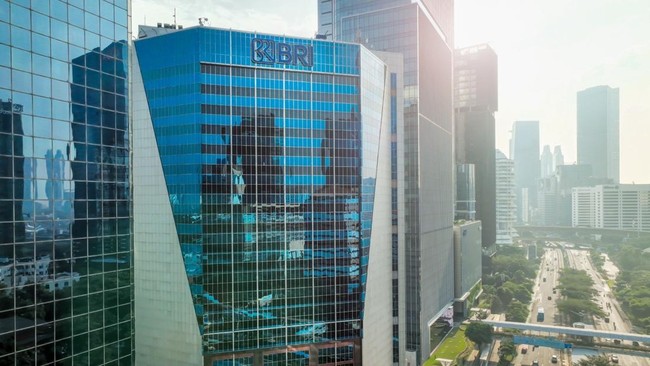
Jakarta, CNBC Indonesia - Year after year, PT Bank Rakyat Indonesia (Persero) Tbk (BBRI) has successfully recorded impressive performance and solid profits. Over the past 10 years, BRI has consistently achieved profit growth, from Rp 25.4 trillion in 2015 to Rp 57.13 trillion in 2025.
To maintain healthy and sustainable growth, BRI has undergone transformation through Brivolution Reignite. This initiative underscores BRI’s ability to execute all its business lines effectively and sustainably.
The transformation encompasses strengthening the acquisition of low-cost funds (CASA), enhancing BRI’s transaction capabilities, bolstering micro business operations, and accelerating new growth sources.
BRIVolution Reignite reaffirms BRI’s focus on fortifying funding structures, accelerating digitalisation, improving productivity, and developing core and new sustainable businesses. All these agendas are implemented with a customer-centric orientation, while reinforcing BRI’s role as a bank serving all segments.
Banking observer Moch Amin Nurdin assesses that the direction of BRI’s new growth engine is quite prospective, thus not solely relying on the MSME segment but moving towards stronger and more balanced revenue sources.
With this new growth engine, BRI will focus on increasing penetration in the consumer segment, gold, and strengthening products and value chains in the commercial and corporate segments. Amin believes BRI possesses important ‘capital’ to run its new ‘engine’, namely a broad customer base and a robust ecosystem.
The strong retail customer base can serve as a strength for penetrating the consumer segment, such as payroll loans, home loans, and motor vehicle credit. The value chain approach in the commercial and corporate segments also enhances cross-selling and financing quality. Furthermore, the aggressive digital transformation can expand access and operational efficiency.
“With this combination, this new engine has the potential to become a source of medium- and long-term growth, not just short-term expansion. This is a very good part of the strategy in driving Bank BRI’s revenue growth, as Indonesia’s largest bank at present,” said Amin to CNBC Indonesia recently.
One of the business lines being intensified is gold, through a digital approach together with its subsidiary, Pegadaian. Through the Ultra Micro Holding, BRI is able to reach a wider society. The gold business is further shining with the presence of the bullion bank licence mandated to Pegadaian. As of October 2025, the amount of gold collected by Pegadaian has reached 129 tons.
Amin assesses that developing the gold business is no less important, as it has promising prospects as a new revenue source. Moreover, the presence of the bullion bank is said to mark a new chapter in gold management in the country, while also increasing added value to the national economy.
“High gold demand that tends to be defensive as an investment instrument. Then strengthening the national bullion ecosystem from upstream to downstream and integration with Pegadaian and digital channels that expand customer access,” emphasised Amin.
In terms of the industry, the number of customers and the volume of gold savings show significant growth, reflecting substantial monetisation potential. With a business model encompassing savings, financing, and gold trading, the bullion bank can become a source of fee-based income and alternative liquidity for BRI.
Not only that, BRI’s other subsidiaries also play an important role in sustainability. Amin mentions the synergy of the Ultra Micro Holding (UMi) which expands customer reach and strengthens the financing ecosystem, then Pegadaian which plays a key role in the gold business as a new engine, and BRI Finance and other entities in strengthening the consumer segment and joint financing.
Throughout 2025, BRI’s subsidiaries recorded impressive performance with total net profit growing 16.1% to Rp 10.37 trillion, contributing 19.4% to the parent company’s consolidated total profit.
The contribution from BRI’s subsidiaries has increased compared to previous years. In 2024, the subsidiary contribution was only 14.7% with total profit of Rp 8.93 trillion, which then rose to nearly 20% in 2025. Meanwhile, from the total assets side, subsidiaries also recorded a 23.4% increase from Rp 215.5 trillion in 2024 to Rp 267 trillion in 2025.
BRI’s ten subsidiaries are PT Pegadaian, operating in the pawnshop industry, gold, and microfinance; PT Permodalan Nasional Madani (PNM) operating in ultramicro financing; PT Asuransi BRI Life (BRI Life) operating in the life insurance industry. Then PT BRI Asuransi Indonesia (BRI Insurance) operating in general insurance, digital bank PT Bank Raya Indonesia Tbk (AGRO), BRI Finance operating in the financing industry.
Then PT BRI Danareksa Sekuritas (BRIDS) operating in the capital market and investment, investment manager PT BRI Management Investasi (BRI-MI), venture capital BRI Ventures (BVI), and BRI Global Financial Services Co. Ltd operating in the remittance and financing industry.
“BRI Bank’s new growth engine is assessed as prospective, with the bullion bank and consumer segment as main catalysts, while subsidiary synergies become a key factor in maintaining sustainable and diversified growth,” added Amin.
The ability to generate profits not only from MSME financing certainly adds value to BBRI’s business fundamentals in the eyes of investors. Moreover, recently the bank led by Hery Gunardi decided to distribute dividends of 92% from net profit earnings.