
Post-Long Holiday, IHSG Projected to Strengthen Modestly
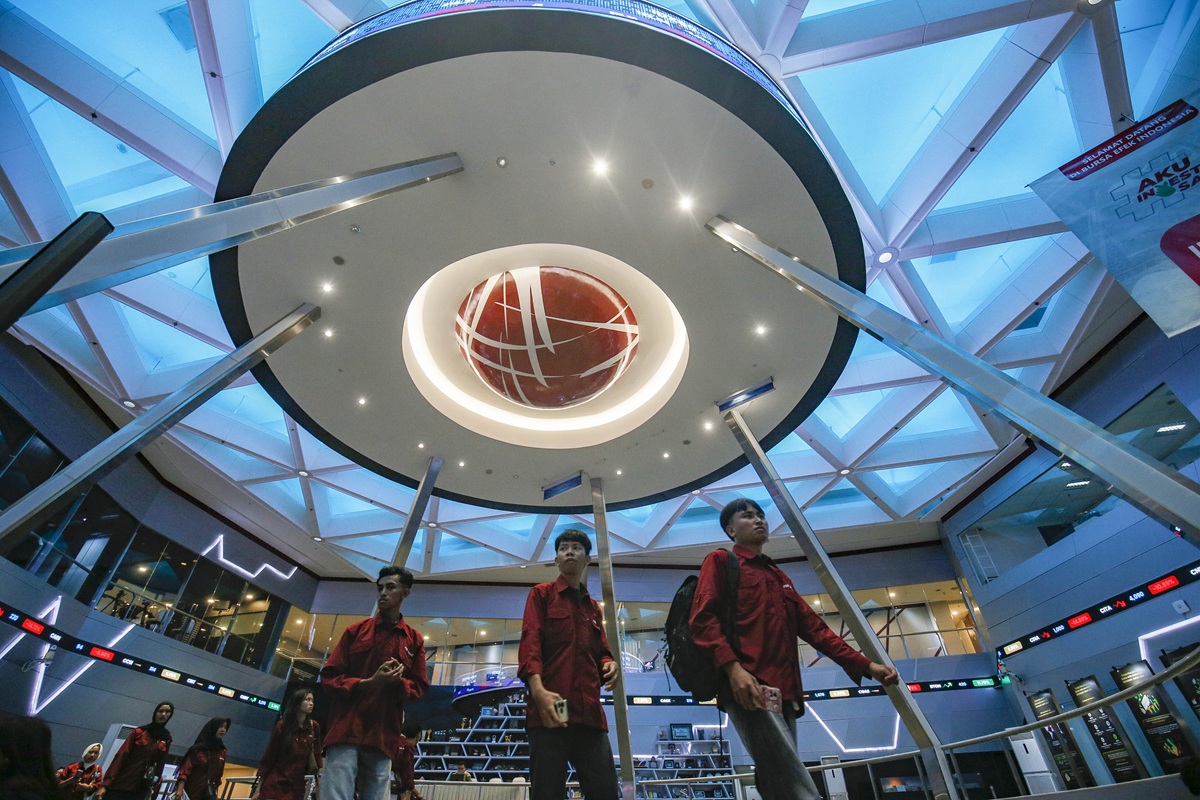
The Composite Stock Price Index (IHSG) is projected to strengthen modestly at the beginning of trading after the long Nyepi and Eid al-Fitr holidays. This strengthening is driven by positive sentiments from stable global markets during the holiday period, as well as opportunities for a technical rebound following profit-taking by investors beforehand.
Capital market analyst and founder of Republik Investor, Hendra Wardana, stated that observing global conditions during the long holiday, stock markets in the United States (US) and Asia tended to strengthen in line with easing geopolitical tensions and stabilising energy prices, thus providing positive initial sentiments for the Indonesian stock market.
Historically, the IHSG has a tendency to experience a technical rebound after long Eid holidays because investors typically engage in profit-taking and adopt a wait-and-see approach before the break, leading to renewed capital inflows post-holiday.
“With these conditions, the IHSG has the potential to move higher at the market opening after the holiday, but this strengthening is expected to remain limited,” said Hendra in a statement received by Media Indonesia on Wednesday (25/3).
The IHSG’s movement, he continued, is also likely to remain in a consolidation phase, with potential to test resistance levels around 7,150–7,200. The stock index strengthened by 0.88% to reach 7,169 as of 10:36 WIB today.
Hendra added that from the perspective of market participants, external risks need to be watched. If geopolitical tensions heat up again, energy prices surge, or US central bank The Fed’s interest rate policies become tighter than market expectations, the IHSG could face renewed pressure.
“And test the psychological support level at 7,000, which is currently a key level for keeping the IHSG’s trend in a healthy consolidation phase,” he explained.
This week’s market movements are also very likely to respond to global developments during the long holiday, including commodity price movements such as gold and energy. A decline in gold prices typically indicates that market concerns are easing and investors are returning to risk assets like stocks, thus serving as a positive sentiment for the stock market.
Nevertheless, Hendra noted that the Indonesian market is unlikely to move aggressively immediately, as investors will still monitor further developments in global conditions, particularly regarding The Fed’s interest rate direction and geopolitical stability.
“Therefore, the IHSG’s movement this week is more likely to follow a technical rebound pattern but with still quite high volatility,” he said.
This forecast arises because the market is still in an adjustment phase to various global sentiments that developed during the long holiday.
From the transaction liquidity perspective, trading volume and value this week are expected to remain relatively limited due to the lingering psychological effects of the Eid holiday and not all market participants, especially institutional investors, having fully returned to activity. This condition, Hendra explained, usually makes index movements more prone to ups and downs due to lower liquidity, so investors need to be more selective in choosing stocks and avoid overly aggressive short-term transactions.
In such conditions, a more appropriate strategy for investors is to accumulate gradually on stocks with good fundamentals, stable performance, and high liquidity, as well as to utilise the technical rebound momentum for stocks that previously experienced significant corrections before the holiday.
For investors looking to re-enter the market, an approach that can be taken is to buy on weakness gradually, rather than making large purchases all at once. Investors should also focus on stocks with positive catalysts, whether from performance, corporate actions, or sectors benefiting from global stabilisation such as media, investment, and consumer sectors.
Additionally, investors are urged to pay attention to foreign fund movements, as the IHSG’s direction after a long holiday is usually heavily influenced by whether foreign investors engage in net buying or net selling. If there is net buying from foreigners, the chances for the IHSG to continue strengthening will increase significantly.