
Post-Lebaran Return Traffic Dense at Ketapang, Logistics Trucks Surge
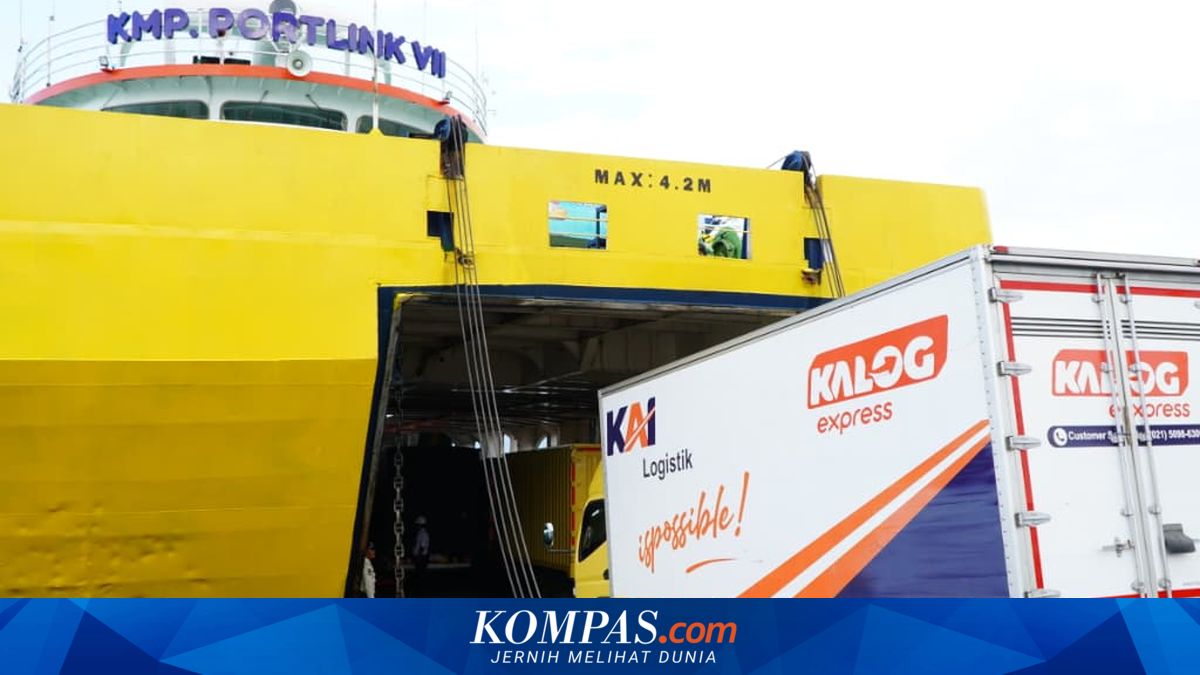
BANYUWANGI — Return traffic for Lebaran on the Ketapang-Gilimanuk route continues to show high pressure, even after the official mudik transport post has ended. The surge in vehicles, particularly logistics trucks, has led to queues stretching around 12 kilometres towards Ketapang Port.
From morning until afternoon, vehicles have been flowing steadily from the north towards the port. The flow is dominated by logistics trucks, accompanied by buses and private vehicles heading back to activities after the long holiday.
ASDP’s Deputy Director, Yossianis Marciano, stated that the significant increase in logistics vehicles is the main factor behind the congestion.
“Following the end of the logistics vehicle restrictions, there has been a significant increase in trucks entering Ketapang Port,” said Yossianis in an official statement in Banyuwangi on Tuesday (31/3/2026).
“This situation has impacted vehicle queues, but it remains under control through strengthened field operational management,” he added.
This condition coincides with the end of the policy restricting three-axle and above logistics vehicles from 13-29 March 2026, as regulated in the Joint Decree dated 5 February 2026. The lifting of the restrictions has caused logistics flow to increase significantly.
“We are optimising the Tiba-Bongkar-Berangkat (TBB) pattern, adding vessel trips and fleets, and regulating vehicle rhythm through buffer zones to ensure logistics flow is served properly,” said Yossianis.
“This is done without disrupting the smooth travel of other service users,” he added.
Operationally, ASDP has deployed 36 vessels with the TBB pattern applied to 10 vessels at Pier 4. Additionally, six support vessels are in operation, namely Portlink VII, Liputan XII, Dharma Kencana IX, Dharma Rucitra, Karya Maritim II, and Perkasa Prima V.
Ketapang Branch General Manager ASDP, Arief Eko, explained that the buffer zone not only maintains smooth flow but also provides rest time for drivers.
“In Bulusan itself, we apply two schemes, where some vehicles will be directly dispatched through Bulusan Pier using vessels docked there,” he said.
“Meanwhile, the others will be sent to the LCM Pier,” added Arief.
On Tuesday morning, around 380 vehicles—dominated by large and medium trucks—were recorded in the Bulusan buffer zone, with the number continuing to grow. Meanwhile, vehicle movement from the tollgate to the pier at 12:45 WIB was observed to be dense, with travel times ranging from 15 to 30 minutes.
Cumulatively, from 11-30 March 2026 (H-10 to H+8), 624,717 passengers and 171,921 vehicles have crossed. Of the total 183,810 vehicle reservations through the Ferizy platform, 171,921 units have been served.
The potential vehicles still to cross until H+10 is estimated at around 11,889 units.
ASDP advises service users to plan their trips well, purchase tickets online through Ferizy, and arrive according to the departure schedule. Vehicle condition readiness and driver health are also priorities to maintain smooth return flow.