
Post-Eid, Social Minister Asks Subordinates to Strengthen Social Programmes and Services
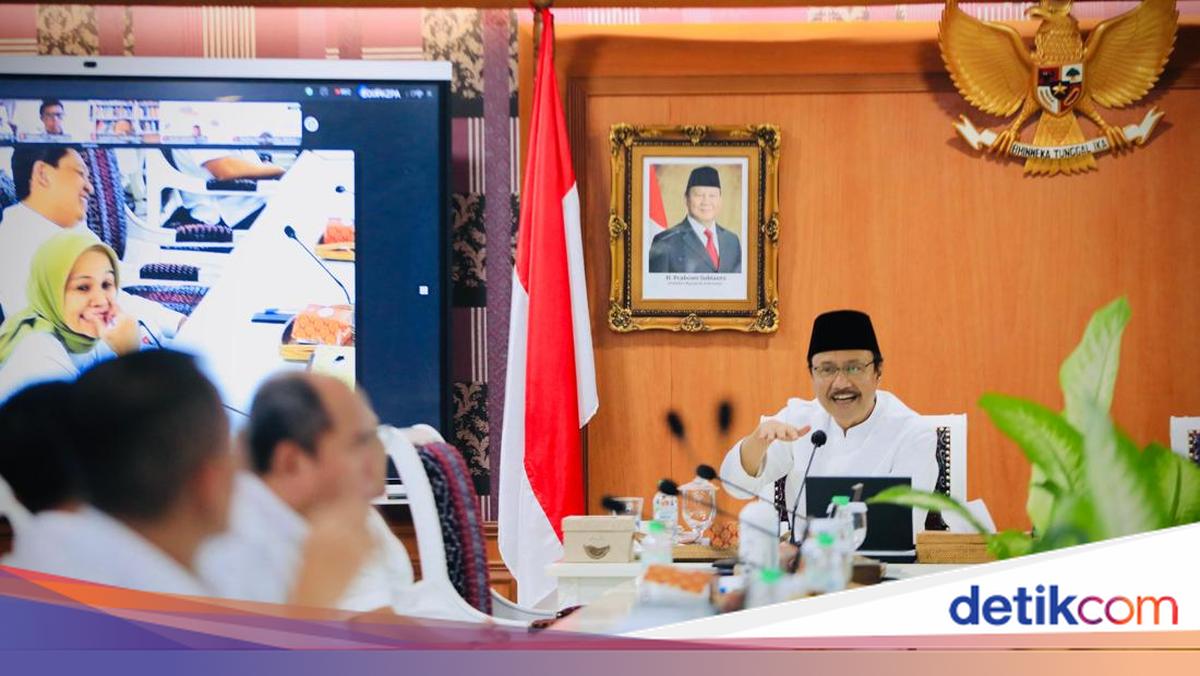
Social Minister Saifullah Yusuf (Gus Ipul) has emphasised to all his subordinates that the period following Eid 2026 should serve as a momentum to return to work with fresh enthusiasm and discipline, as well as a stronger orientation towards service delivery. He requested that various programmes and services provided must be on target, swift in delivery, accountable, and deliver tangible impacts to the community.
This statement was delivered during the Post-Eid Leadership Meeting (Rapim) after the Idul Fitri 1447 Hijriah holidays, held today. The meeting was conducted in a hybrid format at the Ministry of Social Affairs office in Central Jakarta and attended by all leaders from respective directorates.
“Post-Eid, this must become the start of accelerated work that is more disciplined, cleaner, and more impactful. All programmes, data, supervision, and services must converge on one goal: to protect, strengthen, and honour the community,” said Gus Ipul in a written statement on Wednesday (25/3/2026).
Gus Ipul also reminded that there should be no sectoral egos within the Ministry of Social Affairs in carrying out work. He stressed that all units must operate in unison to support President Prabowo Subianto’s priority programmes.
“One orchestration connected to one another. Try for the directors to chat frequently, not just formally, but basically those whose duties overlap. I ask that we truly sit together to find solutions, coordination, and ways to integrate programmes. Please make it concrete and let this become one policy that will have a real impact in the midst of society,” he asserted.
In addition to internal consolidation, Gus Ipul stated that the Ministry of Social Affairs must immediately coordinate with the Ministry of Public Works (PU) regarding the construction of 104 permanent People’s Schools. He encouraged the preparation of decent, safe, and quality transitional solutions for areas without permanent school buildings by utilising available assets or facilities.
“Then, there needs to be an acceleration of honest evaluation on the equitable distribution of human resources for People’s Schools, which ones already have enough, which still lack teachers, guardians, dormitory supervisors, administrative staff, and other support personnel,” he explained.
Furthermore, regarding social rehabilitation (rehsos), Gus Ipul asked the Directorate General of Rehsos to provide services to the elderly, people with disabilities, children, NAPZA victims, and other vulnerable groups with a humane approach, family-based, and community-based. He emphasised that service standards, accompaniment ethics, and intervention quality must be maintained so that efforts to restore dignity, social function, and life prospects for vulnerable groups can truly be felt.
Gus Ipul affirmed that centres in several provinces are the spearhead of the Ministry of Social Affairs’ services. He requested that all centres not only serve as administrative service points but must become active, responsive, and solution-oriented integrated service hubs.
“The centres must become nodes connecting social protection, social rehabilitation, empowerment, and emergency services. There needs to be a reaffirmation of each centre’s role according to regional needs and target groups. Centres must have clear focus, measurable services, and accountable outcomes. Do not let the centres run routinely but lose their strategic meaning,” stated Gus Ipul.
The management of centres must also shift from a passive pattern to a proactive one. Gus Ipul wants the centres to be able to read social issues in their respective work areas, build networks, and deliver appropriate interventions.
“There needs to be strengthening of collaboration with local governments, social pillars, communities, and institutions, and society. The measure of success is not just budget absorption, but real changes in the lives of beneficiaries,” he revealed.
Regarding social protection and assurance, Gus Ipul stated that social assistance must be increasingly on target, timely, transparent, and easily accessible to the community. He requested that complaints submitted by the public be handled quickly, simply, and solution-oriented.
“Social protection must become a buffer for vulnerable communities while being linked to empowerment and pathways to independence or graduation. Social companions such as PPPK, Tagama, youth groups, social workers, and all social pillars must continue to have their capacities and collaborations strengthened,” he said.
Gus Ipul also reminded the importance of strengthening social empowerment programmes. Thus, the community does not continuously depend on social assistance but must rise towards independence.
“Empowerment must be built together with local governments, the business world, universities, and various partners. Graduation targets must be clear,” he said.
Gus Ipul also requested that the updating of the National Single Social-Economic Data (DTSEN) as the basis for social assistance distribution must be seriously overseen through collaboration with various parties. He even emphasised data-based culture. According to him, all units work based on data, not assumptions.
Finally, Gus Ipul emphasised the importance of strengthening the Inspectorate General (Itjen) in overseeing and supervising. Thus, the Ministry of Social Affairs’ work programmes can run correctly from the start, in accordance with regulations, on target, and with minimal risks.
“Supervision must be earlier, more meticulous, and more touching on vulnerable points in programme implementation, especially those related to social assistance, centre management, People’s Schools, and budget utilisation. The Inspectorate needs to strengthen preventive functions, accompaniment, audit, monitoring, and early warning, not just action after problems occur,” said Gus Ipul.
Furthermore, he added that all work units must be open to supervision. Because, according to him, healthy supervision is part of efforts to maintain public trust.
“Strengthening the Inspectorate is important so that there is no room for negligence, waste, deviations, or weak internal controls in programmes concerning the little people,” he concluded.