
Post-Disaster Master Plan Brings New Hope for Farmers and Sustainable Food Security
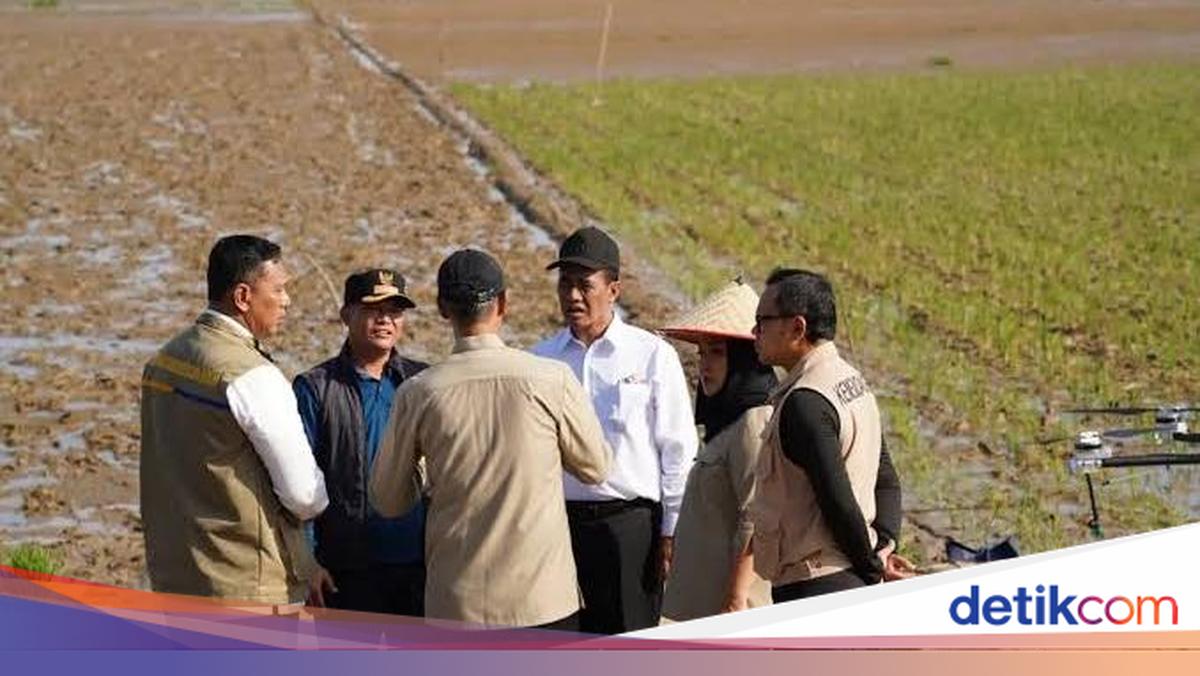
The government is implementing a series of agricultural land recovery and sustainable food security strengthening programmes to support food self-sufficiency in areas affected by hydrometeorological disasters in Aceh, North Sumatra, and West Sumatra. This move is part of a strategy for community economic recovery during the permanent rehabilitation and reconstruction phase. The primary focus is on ecologically viable food production, developing agricultural areas according to land characteristics, and encouraging food commodity diversification through production systems that are adaptive to climate change.
The Minister of Agriculture, Andi Amran Sulaiman, ensured that the central government is paying serious attention to the recovery of agricultural land, which serves as the primary livelihood for the community. He emphasised the importance of swift action from all stakeholders so that damaged land can quickly become productive again. “President Prabowo Subianto has instructed all levels, from ministers and governors to regents and mayors, to ensure that the handling of disaster-affected agricultural land in the three provinces is maximised,” Amran stated in a briefing on Monday (8/6/2026).
He made these remarks during a visit to inspect land rehabilitation in Lubuk Alung, Padang Pariaman, West Sumatra, recently. Amran revealed that the government has allocated aid totalling more than Rp1 trillion to accelerate recovery in the three affected regions. This budget covers various needs, ranging from the repair of agricultural infrastructure to support for farmers’ production facilities.
As a long-term measure, this programme has been integrated into the Master Plan (Renduk) for Post-Disaster Rehabilitation and Reconstruction in Sumatra. The scheme is designed to focus on adding value to agricultural products, food diversification, sustainable agriculture, strengthening cooperatives, and ensuring inclusive market access. Meanwhile, the Chairman of the Task Force for the Acceleration of Post-Disaster Rehabilitation and Reconstruction (Satgas PRR) in Sumatra, Muhammad Tito Karnavian, emphasised that the Master Plan will serve as the primary reference for the government in overseeing all permanent physical and non-physical recovery processes over the next three years (2026-2028).
“We are now in the process of moving towards permanent recovery or rehab-recon. The key is the Master Plan, which is compiled from the affected regencies, cities, provinces, and ministries/agencies. This document is then aligned by Bappenas and overseen by the PRR Task Force,” said Tito following a working meeting with the Indonesian House of Representatives (DPR RI) in the Parliament Complex, Senayan, Jakarta, last Monday (25/5).
As an initial implementation stage, the PRR Task Force continues to accelerate the distribution of agricultural aid in the three affected areas. Data from the PRR Task Force as of the end of May 2026 shows that the realisation of agricultural aid has reached Rp877.126 billion for programmes involving paddy field rehabilitation, land optimisation, and the construction of irrigation networks. During the same period, the area of land successfully recovered has also continued to increase, with 9,931 hectares of paddy fields recorded as having completed rehabilitation out of a total target of 42,702 hectares of affected land across the three provinces.