
Positive Impacts of WFH Policy for Civil Servants and Private Sector on Indonesia's Economy
The government has emphasised that the Work From Anywhere (WFA) policy is still under discussion and not yet finalised. This was stated by Coordinating Minister for the Economy, Airlangga Hartarto.
“There is still discussion. Not final,” he said to the media at the Coordinating Ministry for the Economy office in Jakarta, quoted on Friday (27/3/2026).
When asked by reporters about when the policy would be announced, he simply said: “It will be announced later.”
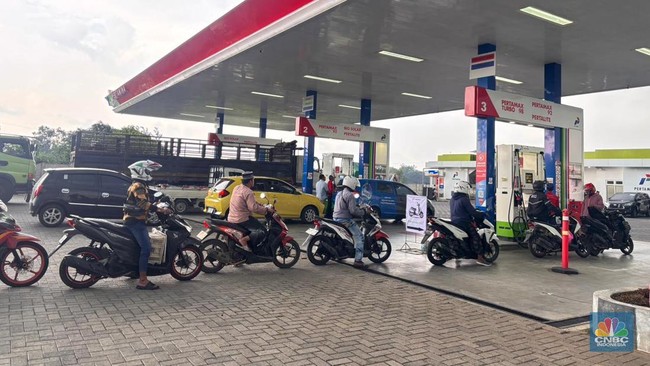
The government is proposing a Work From Home (WFH) policy for one day per week to save on fuel consumption amid global turbulence. The plan for implementing WFA was discussed in a meeting chaired by Airlangga earlier this week via video conference.
The meeting was also attended by Interior Minister Tito Karnavian, State Secretary Minister Prasetyo Hadi, Minister of Investment/Head of BKPM Rosan Roeslani, Minister of Basic and Secondary Education Abdul Mu’ti, Minister of Higher Education, Science, and Technology Brian Yuliarto, and Cabinet Secretary Teddy Indra Wijaya.
Tito explained that the meeting also discussed the WFA policy for civil servants (ASN) to save on fuel oil (BBM) following the global oil price surge. Nevertheless, he was unwilling to reveal details of the plan.
Tito said one of the schemes being considered is WFH for one day per week. Although he did not disclose when the plan would be implemented.
Regarding this regulation, Finance Minister Purbaya Yudhi Sadewa believes the most appropriate day to implement the policy is Friday. This is because the impact on productivity pressure is the lowest on that day.
“Friday has the shortest working hours. So the loss to productivity is considered the smallest. Meanwhile, the commute is the same from here to the office,” said Purbaya at his office in Jakarta on Wednesday (25/3/2026).
Economists view the government’s proposed Work From Anywhere (WFA) policy for workers in Indonesia for one day per week as appropriate for saving fuel consumption amid global turbulence.
BCA Chief Economist David Sumual said the WFA policy could serve as a way to save consumption and also potentially impact savings on BBM imports amid high global oil prices due to the war in the Middle East.
“So our consumption is higher than our oil production, which is also tending to decline. Now it’s around 600,000 barrels per day, so it has to be imported. So at high prices, it’s also a burden on the state budget because the subsidies swell,” said David when contacted by CNBC Indonesia on Wednesday (25/3/2026).
Nevertheless, David does not deny there are consequences, namely impacts on the mobility and MSME sectors.
“If this (WFA) is implemented, it could also affect, especially people’s mobility sectors. For example, logistics, transport, and MSME sectors like small traders around office areas,” said David.
Therefore, David suggests additional policies to protect the affected sectors, such as direct assistance from the government like during the Covid pandemic.
“Perhaps we need to think about how to mitigate to those sectors. Because during the pandemic, there was government assistance,” he said.
Meanwhile, Global Markets Economist at Maybank Indonesia, Myrdal Gunarto, said that the WFA programme is fine to implement for fuel savings.
“It’s fine and for WFA it’s used one day. So the spirit is to achieve fiscal efficiency without sacrificing economic growth momentum,” said Myrdal to CNBC Indonesia when contacted on Wednesday (25/3/2026).
According to him, the WFA policy is an alternative used by the government to avoid fuel price increases when world crude oil prices are surging.