
Portrait of Security for US-Iran Talks in Pakistan, the Fate of the World at Stake
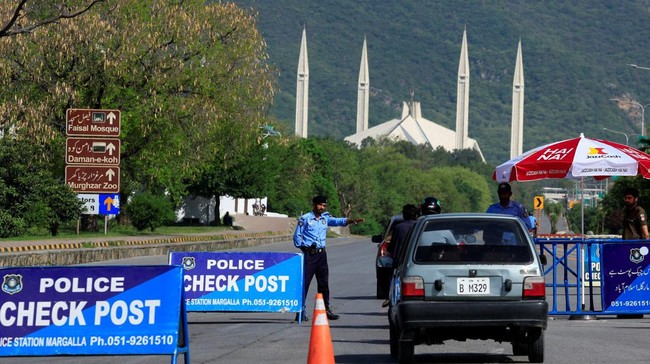
A police officer signals to vehicles at a checkpoint near Faisal Mosque, as Pakistan prepares to host the second phase of peace talks between the United States and Iran in Islamabad on Sunday (19/4/2026). Ahead of the high-level meeting, security has been tightened along several road sections, with the establishment of checkpoints to ensure smooth and safe preparations. (REUTERS/Akhtar Soomro)
US President Donald Trump has signalled that follow-up talks with Iran could take place soon after the initial round of negotiations ended without agreement over the weekend. This statement has sparked new hopes amid rising tensions between Washington and Tehran. (REUTERS/Akhtar Soomro)
In a telephone interview with the New York Post, Trump said the second round of talks could occur “within the next two days” and might be held again in Islamabad. He even suggested that the parties remain in Pakistan, as the chances of a follow-up meeting are considered quite high in the near term, although he had previously mentioned that the location could change before ultimately pointing back to Islamabad. (REUTERS/Akhtar Soomro)
Trump also praised Pakistan’s army chief, Asim Munir, who is seen as having played a key role in maintaining stability. Meanwhile, informal diplomatic channels continue to be intensified to reopen dialogue between Washington and Tehran. (REUTERS/Akhtar Soomro)
United Nations Secretary-General Antonio Guterres described the chances of follow-up talks as “very possible,” referring to his communications with Pakistan’s Deputy Prime Minister, Ishaq Dar. However, a US official emphasised that no official schedule has been set due to Iran’s nuclear ambitions remaining the main sticking point. (REUTERS/Akhtar Soomro)
Meanwhile, the conflict, now in its seventh week, continues to cause widespread humanitarian and global economic impacts. Tensions have escalated after the US imposed a blockade in the Strait of Hormuz. US Treasury Secretary Scott Bessent affirmed that Chinese-flagged tankers will not be allowed to pass, prompting criticism from Chinese President Xi Jinping and driving a surge in global oil prices. (REUTERS/Waseem Khan)