
Portrait of Pavements in South Jakarta Ahead of Eid: Filled with Seasonal Street Dwellers Hoping for Assistance
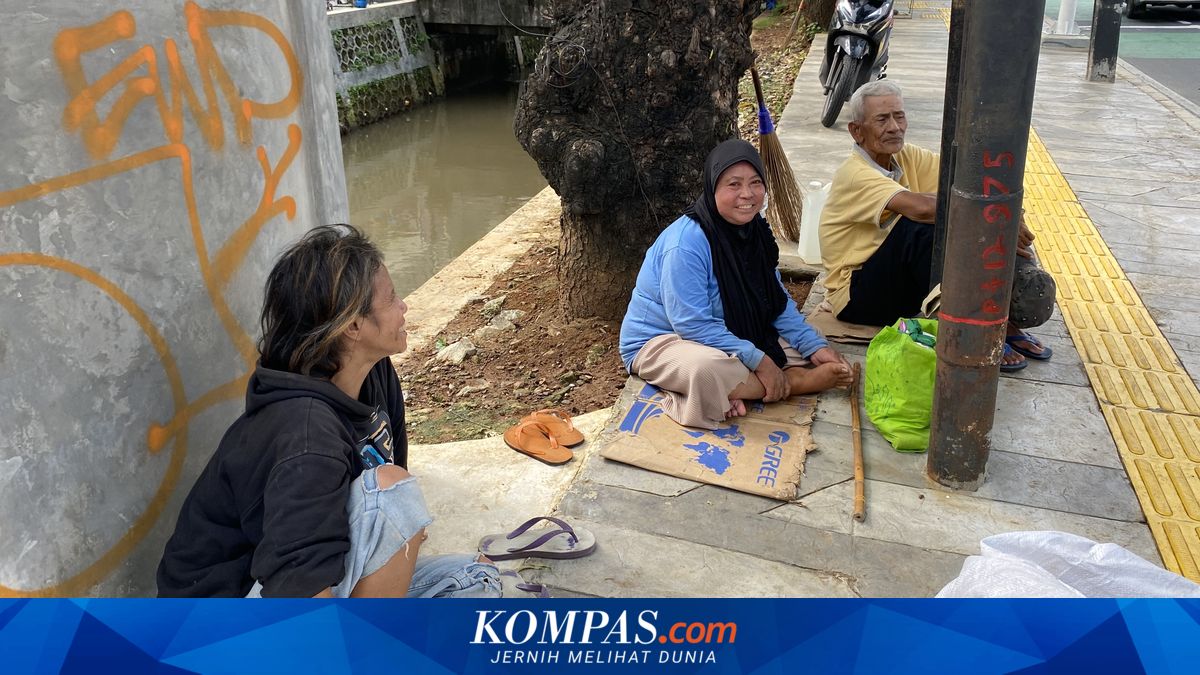
JAKARTA – As Eid approaches, numerous pavements across Jakarta have again become filled with street dwellers. They consist of beggars, waste collectors, and groups often referred to as “cart people”, though not all actually carry carts. This phenomenon is visible along several streets in South Jakarta. Pavements, which should be designated for pedestrians, are gradually being repurposed as resting places, income-generating sites, and temporary shelters for economically marginalised residents.
A middle-aged woman sits cross-legged on yellow tactile paving. Her hair is simply tied with an orange clip. She wears a faded pink shirt and worn jeans. Her gaze occasionally turns towards the heavy traffic passing in front of her. Her face appears tired, as if taking a break from the long routine of traversing the capital’s streets.
Beside her, a green wooden cart is parked on the pavement edge. The cart is filled with neatly stacked cardboard boxes, large white sacks containing plastic bottles, and several bags hanging from its sides. The cart is not merely a transport tool, but a livelihood. Not far from this location, similar scenes appear at several other points.
A man in a green shirt appears to sleep under a tree with basic bedding. Nearby, several cats lie down casually. The pavement is actually equipped with guidance lanes for people with disabilities. However, this public space has now also become a resting place for residents without homes.
The contrast is striking. On one side, vehicles pass quickly towards office areas and business centres. On the other, some residents must sit on the roadside simply to survive.
The woman sitting beside the scrap cart introduces herself as Idah (52). Idah is a native of East Jakarta. She says she no longer has a home after her parents died.
“So I have to earn my own living with my husband,” she says when met by Kompas.com.
To survive, Idah works as a waste collector. She gathers cardboard, plastic bottles, and used cans from various street corners. When it rains, she tries her luck by selling raincoats to motorcyclists, with the money intended to buy snacks or food for breaking the fast.
Her income is uncertain. Under normal conditions, she can only earn around Rp 70,000 from selling used items. She uses this money for her and her husband’s daily needs. For bathing, she usually uses public toilet facilities.
“I bathe at the public toilet at Pasar Jembatan Merah,” she says.
Living on the street, according to Idah, is never truly safe. She must always be wary of various risks. She has also experienced enforcement operations by authorities. On one occasion, the cart she used to transport scrap materials was confiscated.
“My cart was taken. To get it back, I have to pay around Rp 1 million,” says Idah.
“Sometimes I receive zakat al-Fitr or food,” she adds.