
Portrait of Fuel Subsidy Distribution in RI's Neighbour Amid Iran War Impact
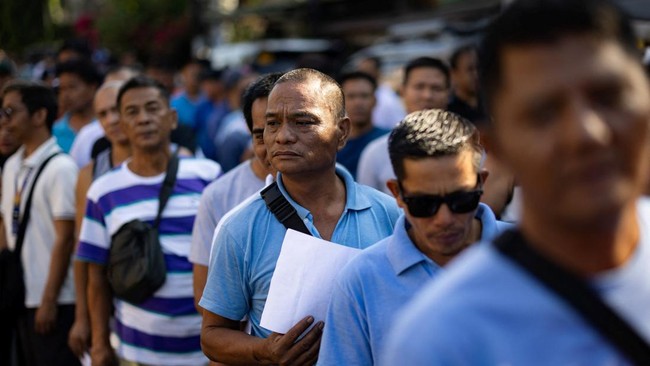
Drivers of jeepneys queue to receive cash assistance from the government in Manila, Philippines, on Tuesday (15/4/2026), amid rising fuel prices due to disruptions triggered by the Iran war. The Philippine government has begun trialling a fuel subsidy programme for public transport through an initial phase focused on the Metro Manila area as an effort to cushion the impact of surging energy prices on the public transport sector. (REUTERS/Eloisa Lopez)
Starting Tuesday (14/4/2026), the subsidy programme of 10 pesos per litre for official jeepney drivers is being implemented on a limited basis at 52 accredited fuel stations. This programme is an initiative previously announced by President Ferdinand Marcos Jr. as a response to the global rise in energy prices. (REUTERS/Eloisa Lopez)
Philippine Energy Minister Sharon Garin stated that this initial phase will focus on jeepney drivers before being expanded to other modes of public transport. She emphasised that this trial is important to ensure the system operates effectively before wider implementation. (REUTERS/Eloisa Lopez)
“This system needs to be tested to see if it will work. We will conduct a one-week trial in Metro Manila. After that, we will roll it out to public transport vehicles, namely buses, jeeps, and network transport services,” Garin said in an interview. (REUTERS/Eloisa Lopez)
The subsidy programme will run for three months, with a scheme allowing each driver to receive a discount on fuel purchases up to a maximum of 150 litres per week, equivalent to savings of up to 1,500 pesos. This limit is adjusted to the average weekly consumption while preventing potential misuse. (REUTERS/Eloisa Lopez)
Based on data from the Land Transportation Franchising and Regulatory Board, around 18,000 jeepney drivers are estimated to benefit from this trial phase. The launch of the subsidy also coincides with projections of fuel price reductions, where diesel is expected to drop by at least 20.89 pesos per litre, while petrol and kerosene could each fall by a minimum of 4.43 pesos and 8.50 pesos per litre, respectively. (REUTERS/Eloisa Lopez)