
Portrait of Blue Food Security Architecture in Ramadan 2026
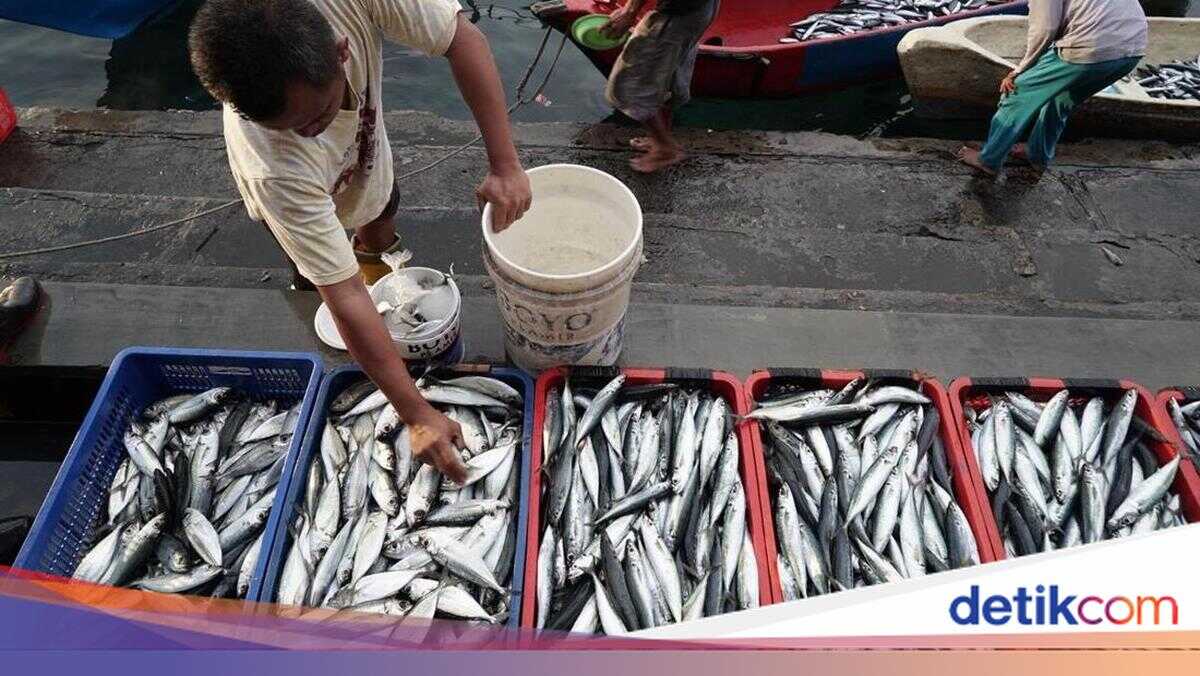
Every Ramadan, the public consistently asks the same two questions: is food stock secure and will prices remain stable? These questions are relevant because household consumption tends to increase during the fasting month. For fisheries commodities or blue food, the complexity intensifies because production is heavily influenced by seasonality, distribution networks, and global market dynamics.
The Ministry of Marine Affairs and Fisheries (KKP) assures that fish supply during Ramadan 2026 is secure. The government bases this assurance on projections of national production and simulations of domestic demand. Data from the first quarter shows that supply remains above monthly consumption needs, including during seasonal demand spikes.
In January and February 2026, Indonesia enters the west monsoon season, characterised by high waves and heavy rainfall. These weather conditions limit certain marine fishing activities. Nevertheless, the Directorate General of Capture Fisheries maintains controlled production trends through port-based and daily monitoring systems.
KKP projects national capture fishery production in the first quarter of 2026 to reach between 1.6 and 1.8 million tonnes. Production in January and February was recorded as moderate, whilst March shows increases as the transitional season begins. With average monthly production of approximately 550,000 to 600,000 tonnes, the capture sector continues to support domestic demand during Ramadan.
The government also calculates national consumption needs based on population size and per capita fish consumption figures. With a population of approximately 280 million and fish consumption at around 56 kilogrammes per capita annually, national demand reaches approximately 15.6 million tonnes yearly or about 1.3 million tonnes monthly. During Ramadan, consumption typically increases by 5 to 10 per cent, placing monthly requirements between 1.35 and 1.45 million tonnes.
Aquaculture provides significant contributions to supply availability. KKP projects national aquaculture production from January to March 2026 will reach 4.5 to 4.8 million tonnes, or more than 1.5 million tonnes monthly. These figures demonstrate that aquaculture serves as the primary buffer for national supply stability.
Several strategic commodities show positive growth in early 2026. Production of tilapia, grouper, catfish and shrimp has increased compared to the previous period. These increases strengthen domestic supply structures whilst maintaining export sustainability.
Regionally, Java remains the largest contributor to national aquaculture production. In March 2026, West Java is projected to produce approximately 148,000 tonnes, East Java 76,000 tonnes, and Central Java 57,000 tonnes. Outside Java, North Sumatra contributes approximately 47,000 tonnes, South Sumatra 41,000 tonnes, and South Sulawesi more than 32,000 tonnes. This geographically dispersed production distribution ensures the system does not depend on a single region.
When capture and aquaculture production figures are combined, total national monthly supply reaches approximately 2 million tonnes. This figure exceeds the estimated maximum Ramadan domestic demand of 1.45 million tonnes monthly. When considering exports and potential distribution losses, Indonesia maintains a structural surplus position during Ramadan 2026.
This supply stability is reflected in price movements. KKP records aquaculture commodity price increases approaching Ramadan at only between 0.25 and 1.39 per cent. No extreme spikes indicate supply disruptions. This demonstrates that production increases successfully contain food inflation pressures.
The government does not rely solely on production to maintain stability. Supervisory authorities have tightened distribution and marketing oversight in major consumption centres such as Greater Jakarta, Medan, and Surabaya. Officials also increase marine patrols to prevent illegal fishing practices that damage market equilibrium and harm local fishermen.
Downstream, KKP’s Quality Board continuously strengthens certification and laboratory testing systems. By 2025, Indonesian fishery products have been accepted in 147 destination export countries. Traceability systems and quality certification are crucial instruments for maintaining product reputation and competitiveness in global markets.
Last year’s Cesium-137 contamination case in shrimp tested these systems. The government responded swiftly through cross-agency investigation, laboratory reinforcement, and development of new certification procedures. Consequently, exports recovered and hundreds of containers successfully entered international markets without obstacle.
This array of data and policies demonstrates that Indonesia’s blue food security no longer depends solely on natural factors. The government has built systems based on production projections, regional diversification, distribution oversight, and quality diplomacy. When citizens enjoy fish at stable prices during Ramadan, this governance system is what truly functions.
If the blue economy represents the grand vision of national maritime development, then supply stability and fish quality form its genuine foundation. From ocean to dining table, food security now stands upon data, oversight, and trust. In the context of food, public trust remains the most valuable asset that must be preserved.