
Population Survey Identifies Eight Javan Leopards in Bromo Tengger Semeru National Park
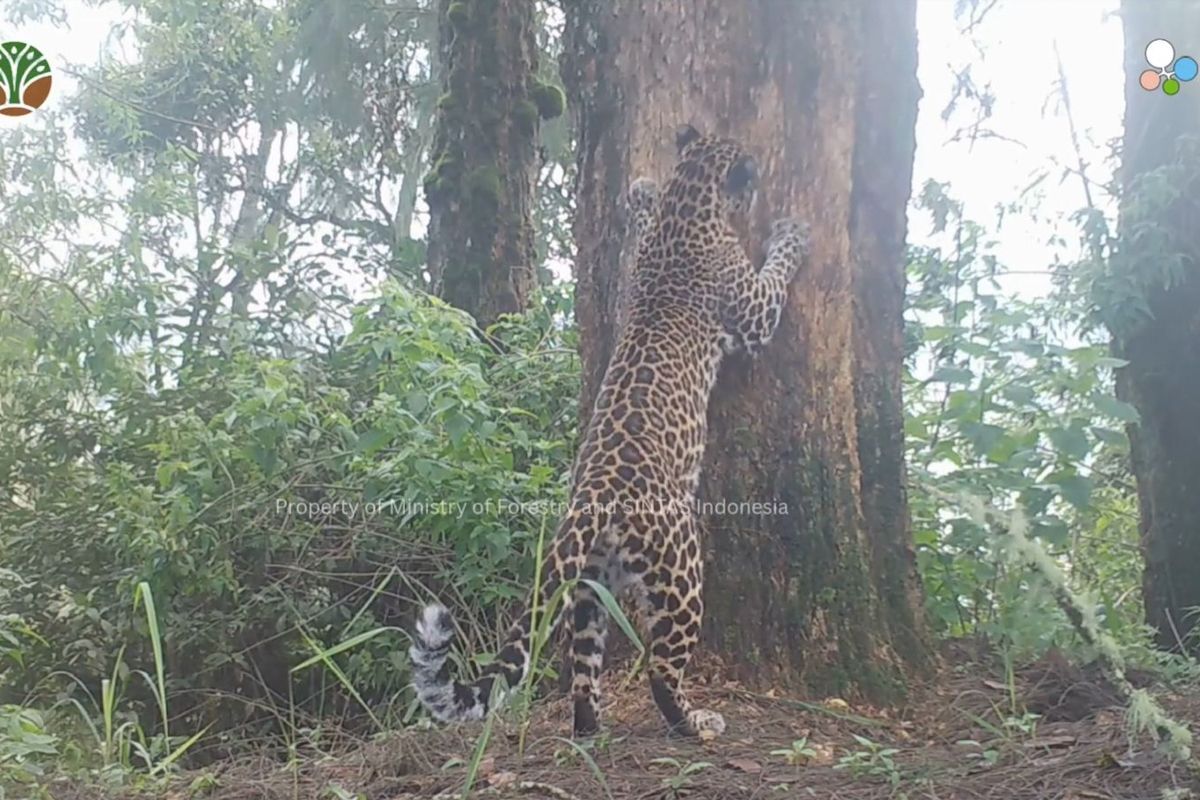
PT Bank Central Asia Tbk (BCA) is collaborating with the Indonesian Ministry of Forestry and several other parties to conduct the Java Wide Leopard Survey (JWLS), which has successfully identified eight individuals of the Javan leopard. “Since 2024, this contribution has strengthened data-based conservation management efforts, while also supporting the government in its endeavours to preserve the Javan leopard in Indonesia,” said EVP Corporate Communication & Social Responsibility BCA, Hera F. Haryn, in a statement in Jakarta on Tuesday. BCA and the Ministry of Forestry are collaborating with the Bromo Tengger Semeru National Park Conservation Agency (BBTNBTS) and the SINTAS Indonesia Foundation to carry out this conservation survey. The JWLS is being implemented because the presence of the Javan leopard, an endemic species of Java Island, is considered to be increasingly diminishing and potentially affecting the stability of the forest ecosystem’s food chain. The survey programme is being conducted in Bromo Tengger Semeru National Park as a form of support for the development of the Javan Leopard Conservation Strategy and Action Plan (SRAK) (Panthera pardus melas). Hera detailed that by mid-2025, the first phase of the survey in TNBTS had successfully identified at least eight Javan leopards, consisting of one male, six females, and one cub. Meanwhile, the second phase of the survey is still ongoing in 2026 to complete a comprehensive picture of the population. The programme has also trained 84 participants in survey techniques using camera traps to strengthen the capacity for monitoring the Javan leopard population in its natural habitat. In addition, 16 participants have been trained in camera trap data management and analysis techniques involving various institutions, including the Technical Implementation Unit of the Directorate General of Natural Resources and Ecosystem Conservation (Ditjen KSDAE) of the Ministry of Forestry and the East Java Natural Resources Conservation Agency (BBKSDA). Meanwhile, the Director of the SINTAS Indonesia Foundation, Hariyo T. Wibisono, revealed that the Javan leopard’s habitat has undergone landscape changes due to the expansion of human activities in recent decades. In such conditions, Javan leopards are often pushed out of their natural habitat, even approaching human settlements. According to Hariyo, the basic needs of the Javan leopard are actually simple, including safe habitats that are sufficiently spacious for their roaming areas and remain connected between regions. “The forest is their home, and the presence of humans around it certainly brings impacts. As long as we do not disturb or provoke them, animals like the Javan leopard will not attack,” said Hariyo. He added that the lack of data is another equally important challenge. Without accurate information on the number of individuals, population structure, and habitat connectivity, conservation efforts risk being off-target. An official from the Bromo Tengger Semeru National Park Conservation Agency, Tuangkat, said that in local wisdom, the leopard is not merely a threat, but part of the life system that must be respected. “The leopard is not to be fought, but to be protected. We believe that if the forest remains preserved, they will not come down to settlements,” said Tuangkat. “The key is simple: protect the forest, respect nature. That way, humans and leopards can live side by side, as has been taught by our ancestors since ancient times,” Tuangkat added.