
Polri's Nutrition Services Continue Free Meal Distribution During Ramadan
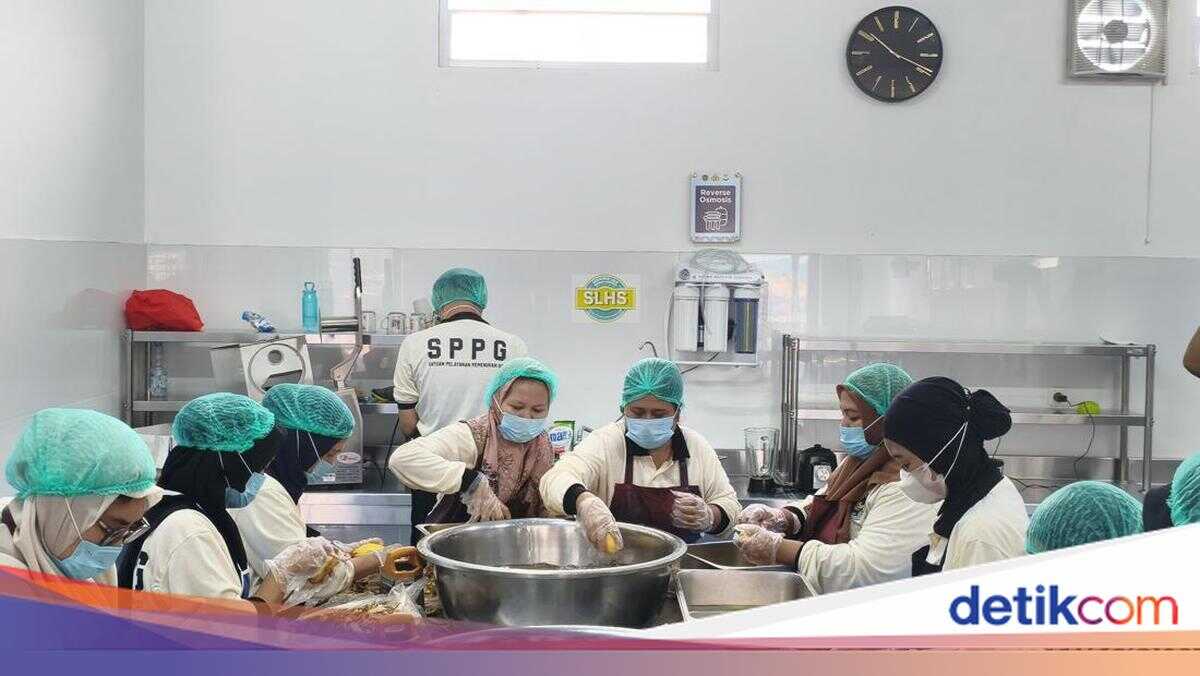
Amid the Ramadan atmosphere, the National Police Nutrition Services Unit (SPPG) in Palmerah, West Jakarta continued operating to ensure the Free Nutritious Meals (MBG) programme ran without any decline in quality. During the fasting month, dry food menus were distributed to beneficiaries so they could take them home and consume them during the breaking of the fast.
Detikcom had the opportunity to directly observe the MBG meal preparation process during Ramadan at SPPG Polri Palmerah, West Jakarta, on Wednesday 25 February 2026. The Head of SPPG Polri Palmerah, Mustaqim, ensured that nutritional standards of food provided to beneficiaries were maintained throughout the fasting month.
“For distribution during Ramadan, we receive raw materials as usual from suppliers, we check their quality and quantity. When they are suitable, we process the raw materials. So throughout this Ramadan distribution period, for dry menus, we continue to process the food materials ourselves,” Mustaqim told detikcom.
From detikcom’s observations, SPPG Polri Palmerah personnel conducted quality checks on processed food items from the outset that would later be cooked for MBG menus. To maintain the nutritional quality of the food, SPPG Polri Palmerah did not use ultra-processed foods. All menus were produced in-house at the SPPG, prioritising fresh ingredients and balanced nutritional content.
“So we ensure that the food maintains good nutritional standards. So not too sweet, not too salty, so the food remains suitable, remains nutritious, we maintain its quality for distribution to beneficiaries,” said Mustaqim.
When processed ingredients arrived around 10:00 WIB, volunteers who were part of the preparation team immediately checked their quality and quantity. Quality checks were conducted by visually inspecting each package, whilst quantity checks were performed through weighing.
After inspection was complete, the ingredients were then brought to the kitchen and placed on the preparation area table. There, staff immediately worked to ensure the cleanliness of the food ingredients that would be served.
The preparation process to ensure all raw materials were clean and fit for consumption took seven to eight hours. This was because the amount of food being cleaned was substantial, as meals were being prepared for 2,500 portions.
Once all ingredients were declared ready, at 20:00 WIB the cooking team began processing the ingredients. This cooking team worked together with the packaging team.
For the packaging team, they started work from 21:00 WIB. This collaborative effort was undertaken to save time.
“We also conduct the cooking process ourselves, as you can see behind us right now the cooking and portioning process is being carried out. So we portion it well too, the packaging is sealed and neat, after completion we distribute as usual in the morning,” said Mustaqim.
Overall, the cooking and packaging process was completed by the cooking team and packaging team at 05:00 WIB on Thursday 26 February. Subsequently, all served food would be checked for cleanliness and suitability through rapid testing.
There were four types of harmful substances checked by the Health Services team from the West Jakarta Metro Police District at SPPG Polri Palmerah. These four substances were nitrite, formalin, cyanide and arsenic.
Once everything was confirmed fit for consumption, the food was placed into goodie bags or meal packages to make it easier for beneficiaries to carry home. This was because the food was not immediately consumed due to the fasting condition.
The neatly arranged food was then arranged by drivers and loaded into delivery vehicles. Once everything was loaded into the vehicles, drivers promptly headed to the beneficiary distribution points.
SPPG Polri Palmerah, according to Mustaqim, always strived to create different menus daily during Ramadan. This was done to maintain the quality of food served to beneficiaries.
“For the menus we produce at SPPG Polri Palmerah, we create them differently every day. So according to instructions, we do not do repeats. So we continue production daily, we distribute daily, because we are aware of our SPPG capacity, and to maintain the quality of the production we create, so we continue production daily. The menus change every day, so there are no identical menus for an entire week,” he added.
For his part, Mustaqim explained that to support the variety of menus served, SPPG Polri Palmerah had a food security warehouse that could supply MBG ingredients at any time.
According to Mustaqim, the food security warehouse at SPPG Palmerah was fairly comprehensive. Various types of fish, assorted vegetables and other food ingredients were stocked in the warehouse.
“The food security warehouse at SPPG Palmerah includes a bio-pond with fish stocks, fish farming and also hydroponic systems. For this food security warehouse, the Police wanted to build an ecosystem to supply the SPPG. So the raw materials obtained from the SPPG could hopefully be supplied from the food security warehouse itself,” explained Mustaqim.
“From hydroponics, various types of vegetables are grown, ranging from bok choy, mustard greens, spinach and so forth. And for the fish being farmed, fish that can be utilised for the SPPG. Such as catfish that we can fillet, then there is also tilapia, there is also mujair fish, and so on,” he concluded.