
Political Culture as Root Cause of Corruption Among Regional Leaders
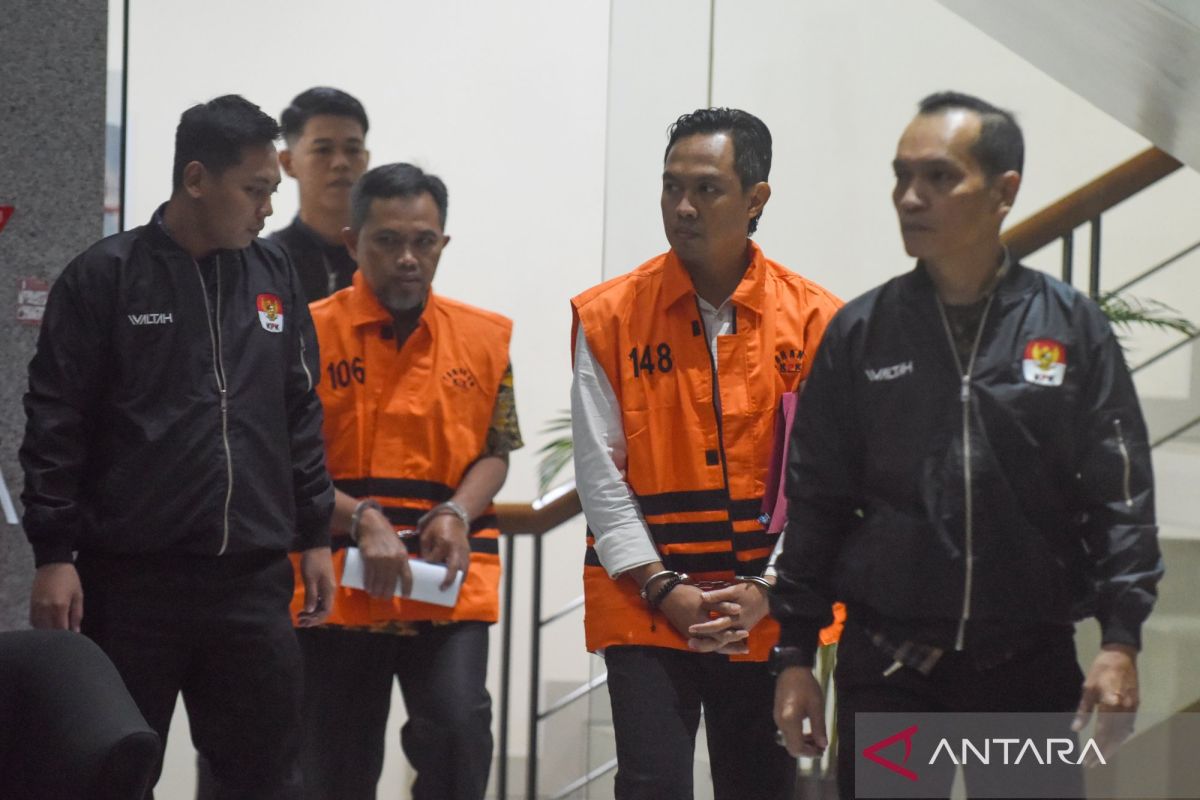
Jakarta — Iwan Setiawan, Executive Director of Indonesia Political Review, argues that political culture is a primary cause of corruption among regional leaders.
Setiawan identifies three components of this political culture: cadre systems, the recruitment of regional candidates by political parties, and the substantial costs associated with regional election campaigns.
“Whilst many factors contribute to regional leaders committing corruption, I wish to highlight the cadre systems and recruitment of regional candidates by political parties, as well as astronomical political costs,” he told ANTARA when contacted in Jakarta on Saturday, 14 March.
First, Setiawan states that the cadre development systems and processes within political parties tend to be inadequately implemented, with candidates frequently nominated in regional elections without undergoing thorough vetting processes.
“They do not undergo proper cadre development, particularly regarding the formation of leadership character based on sufficient intellectual capacity, mature national outlook and tested integrity. I believe if candidates nominated by political parties had been properly developed and passed these criteria, corruption could be minimised,” he said.
Second, Setiawan highlights that candidate recruitment does not align with principles of meritocracy and internal party democracy. The recruitment system during the 2024 regional elections was based not on candidate maturity, but on transactional politics.
“We frequently observe that regional candidates are nominated not because of mature cadre development, intellectual capacity and high integrity, but rather on transactional grounds,” he stated.
Beyond cadre development and recruitment, political parties have a culture of nominating candidates based on popularity, electoral viability, and the candidate’s financial resources—which may become a “time bomb” regarding future corruption cases in regions.
“Even though the chances of victory are high, it is pointless if the elected candidate subsequently becomes the target of an Anti-Corruption Commission (KPK) sting operation,” he explained.
A candidate’s financial resources, according to Setiawan, are key to winning elections. At this stage, candidates spend tens of billions of rupiah in buying nomination endorsements, whilst ignoring capacity and integrity as primary factors.
The financial burden increases substantially during the campaign period. Candidates are required to spend considerable sums on witness fees, campaign costs, basic commodities distributions, and dawn attacks.
“Campaign costs vary significantly depending on the level and region of the contest. At district or city level, spending can reach 30–50 billion rupiah or more, and at gubernatorial level, it can reach 100 billion to 500 billion rupiah,” he noted.
Setiawan concludes that the entrenched political culture in regional elections means all regional leaders potentially face corruption charges, merely awaiting the timing of KPK operations.
“In other words, taking an extreme conclusion, all regional leaders have the potential and opportunity to be caught in corruption cases—it is simply a matter of when the KPK will conduct a sting operation. This is despite regional leaders having undergone government-organised retreats,” he stated.