
Policy Simplification for Economic Zones Could Boost Investment Certainty
Economic zone policies in Batam need to be simplified by eliminating the schemes of National Strategic Projects (PSN), Special Economic Zones (KEK), and Special Economic Zones (SEZ). This step could accelerate business processes and enhance investment certainty in Batam.
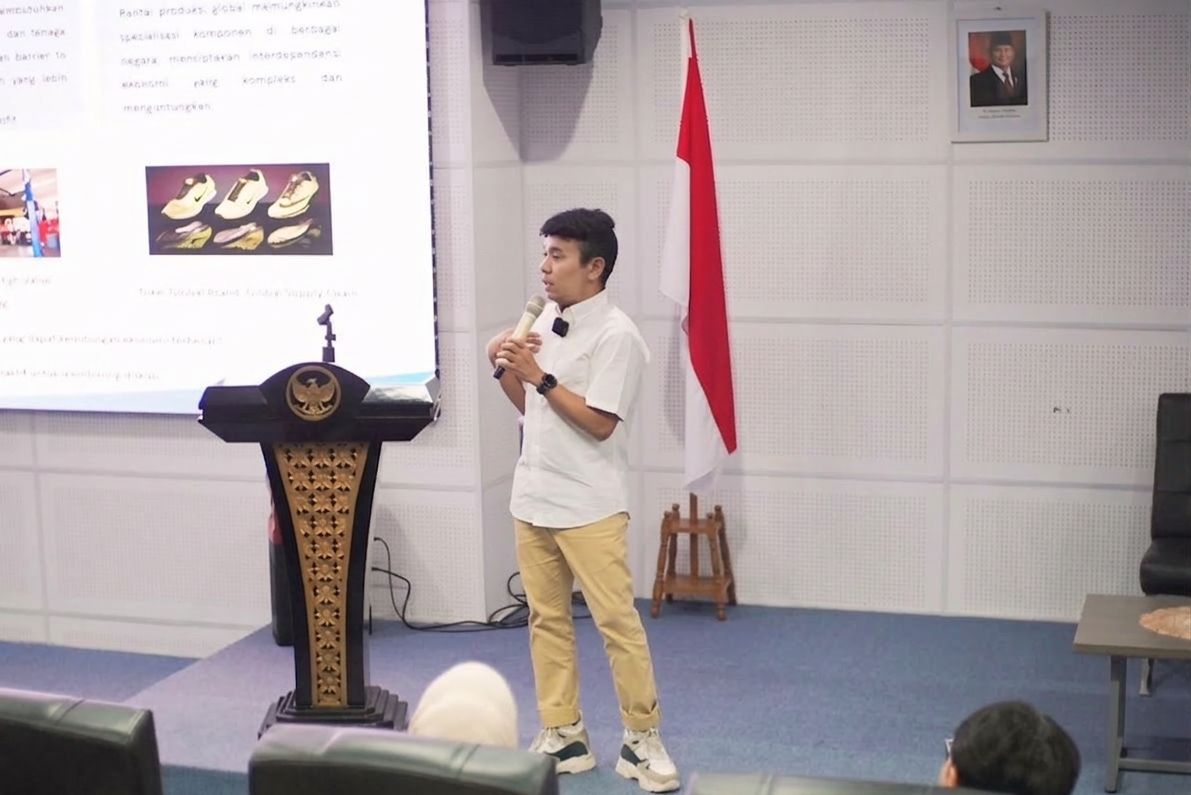
This was stated by Billy Mambrasar, an active economic researcher and visiting lecturer, while delivering a guest lecture at the State Polytechnic of Batam on the theme of Making Batam an Export Hub for Indonesian SMEs. According to Billy, the existence of various zone schemes such as PSN, KEK, and SEZ in Batam could potentially create bureaucratic complexity if not managed simply and in an integrated manner.
He explained that Batam has actually had Free Trade Zone (FTZ) status since the beginning, which provides various investment conveniences ranging from import duty exemptions to fiscal incentives for business actors. This zone is also managed by BP Batam, an institution responsible for managing the free trade zone.
“Economically, the facilities that are usually provided in Special Economic Zones are actually already available in Batam from the start. Therefore, the addition of various new zone labels has the potential to create policy complexity,” said Billy, who is pursuing studies in economics at the University of Buckingham in England.
According to him, in practice, investors who wish to build industries in Batam often have to coordinate with various institutions, ranging from local government, BP Batam, relevant ministries, to additional regulations relating to PSN and KEK.
From the perspective of institutional economics, this is known as transaction costs. The more institutions an investor must navigate through in the investment decision-making process, the greater the time and administrative costs the investor must bear.
“In the global investment world, speed and process certainty are major factors. If the process is too complicated, investors will compare with other areas in Southeast Asia that have simpler processes,” explained Billy, a Harvard University graduate with an international education background.
He also highlighted the potential for regulatory overlap, particularly regarding land licensing and investment bureaucratic pathways. When various zone policies are introduced simultaneously in one area, there is often unclear authority for decision-making.
Furthermore, from the perspective of regional economics, this can hinder the formation of industrial agglomeration. Agglomeration is a concept where many companies gather in one area, creating economic efficiency, such as proximity to suppliers, availability of skilled labour, and lower logistics costs.
“If industries are spread across many zones with different regulations, the potential for agglomeration could weaken and the productivity of the zone would not be optimal,” he said. Billy noted that in public policy economic theory there is a simple principle: a policy is only effective if the benefits generated are greater than the costs incurred.
“If we continue to add new zones, new regulations, and new bureaucracy, but the benefits are not greater than the costs that arise, the policy is inefficient,” said Billy, who has also studied International Business at the Australian National University.
Therefore, Billy believes the most strategic step for Batam at this time is to strengthen the simplification of investment governance, clarify policy authority, and build an investment service system that is truly integrated into a single window.
“For an area like Batam, what is most important is not adding new zone labels, but ensuring simple, clear, and consistent regulations. In the investment world, what investors seek is not promises, but certainty and ease of doing business,” Billy stated firmly.
According to him, with simplified regulations and more effective institutional coordination, Batam has significant potential to strengthen its position as one of the most competitive industrial and investment centres in Southeast Asia.