
Police Yet to Identify Attacker of Andrie Yunus, Criminologist: Gaps Exist in Digital Evidence
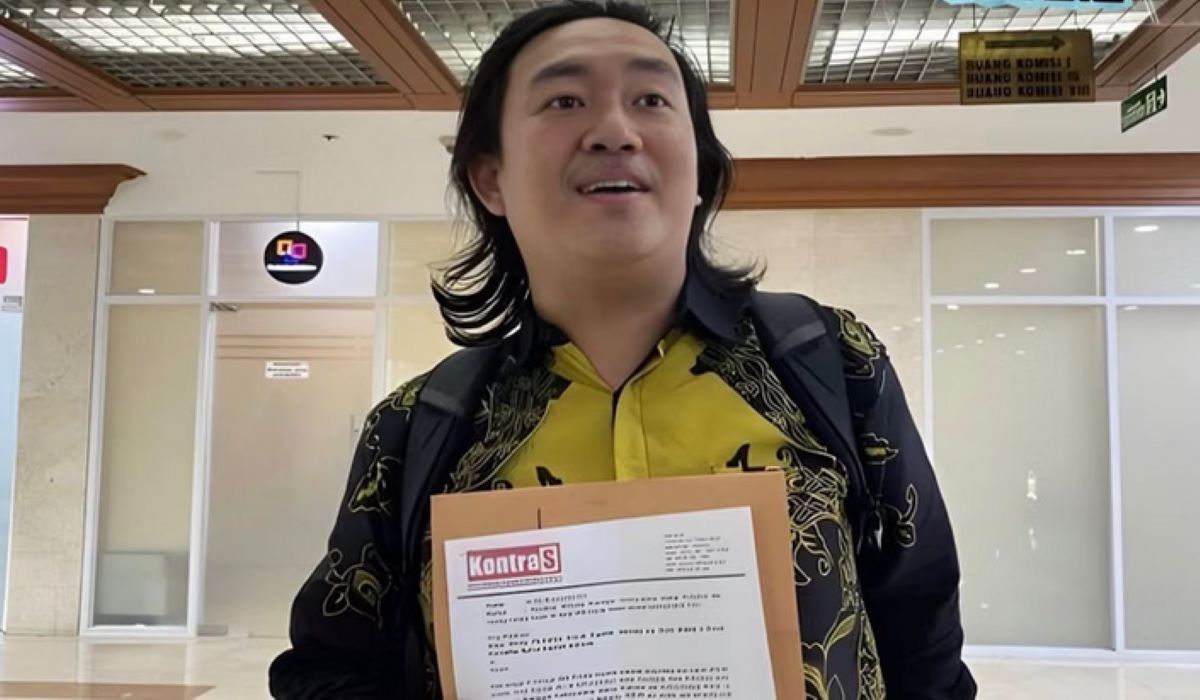
The caustic acid attack on human rights activist Andrie Yunus, Vice Coordinator of the Commission for the Missing and Victims of Violence (KontraS), remains unsolved. By the fourth day after the incident, Tuesday 17 March, police had failed to identify the perpetrator despite several CCTV recordings and AI-based facial reconstructions being widely circulated.
Adrianus Meliala, criminologist and professor at the Faculty of Social and Political Sciences, Universitas Indonesia, believes that technical obstacles in the field often hinder investigations despite visual evidence being available.
“There is always a possibility that although there are many recordings related to the perpetrator, none of them clearly show the face or vehicle registration number. Additionally, not all CCTV quality is high, which complicates the identification process,” Adrianus told Media Indonesia on Tuesday 17 March.
Digital Identification Obstacles
Adrianus explained that in cases with minimal quality visual evidence, police are heavily dependent on public involvement. However, he observed an information blockade in recent days.
“For this reason, police typically request public assistance to provide additional information. However, if several days have passed without significant developments, it is possible that no new information has come in from the public,” he said.
Beyond visual obstacles, digital tracking methods such as cell dump—a technique to identify mobile phone numbers active at the incident location—are suspected to have been conducted. However, this could fail if the perpetrator made thorough preparations.
“Regarding CCTV recordings, that remains merely speculation. Meanwhile, cell dump analysis, which can identify mobile phone numbers in the vicinity during the incident, has most likely already been performed by police. It is possible the perpetrator was not detected because they turned off their phone,” Adrianus added.
Commitment to Resolving the Case
The public now awaits the police’s resolve to investigate the case to its roots, including pursuing the intellectual architects behind the attack on the human rights defender. Adrianus reminded authorities to ensure the legal process proceeds transparently without interference from any party.
“Most importantly, police must not slow down or even halt the process after identifying the perpetrator, nor if they fail to find evidence of collaboration from institutions suspected as the source of the perpetrator,” he stressed.