
Police Traffic Head Unveils Strategy to Manage Mudik Flow at Ports, Implements Delay System
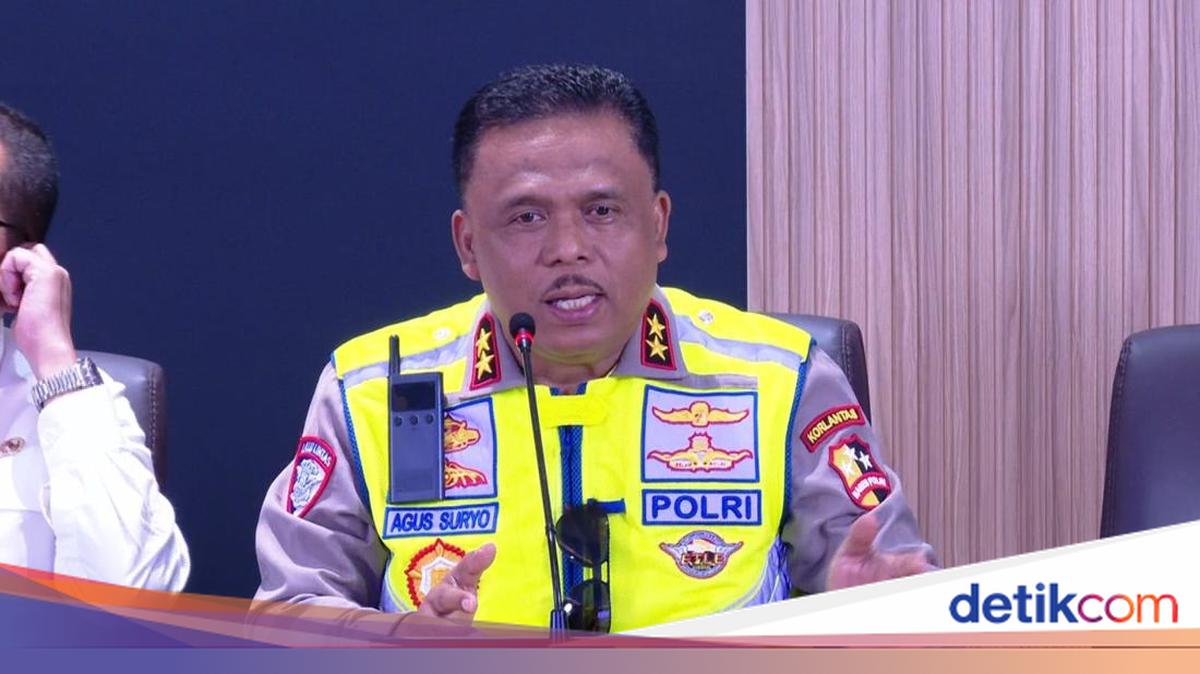
Indonesia’s Head of the National Police Traffic Corps (Kakorlantas) Irjen Agus Suryonugroho has revealed several strategies to anticipate congestion during the mudik exodus at ferry ports for Eid 2026. One key measure being prepared is the implementation of a delay system to prevent excessive vehicle queues heading to the port.
Irjen Agus made these remarks during a press conference on Eid mudik preparations held at the Bina Graha Building in Central Jakarta on Wednesday, 11 March 2026. He stated that the delay system strategy has been prepared to address potential disruptions, particularly if extreme weather conditions hinder the ship crossing process.
“This concerns ferry crossings, whether at Merak, Bakauheni, Ketapang, Gilimanuk, and beyond Java. When we talk about extreme weather, the port is most severely impacted. If extreme weather at the port prevents vehicle distribution from Merak to Bakauheni, there will be congestion and quite severe queuing,” said Irjen Agus.
To address this, the National Police Traffic Corps, together with all relevant stakeholders, has prepared various management scenarios. The scheme is divided into several conditions, ranging from normal or green situations, yellow situations, to red situations if serious disruptions occur.
“Therefore, there are protocols of action—as the National Police Chief previously mentioned—green, yellow, and red situations. Under extreme conditions, the National Police Traffic Corps and stakeholders have prepared an emergency plan. This includes how queuing on toll roads should be managed, preparation of supporting equipment, and traffic accident analysis,” he said.
“What truly demands attention is ferry port crossings. If vehicle distribution from Merak to Bakauheni is obstructed for even one hour, extensive queuing will result. It is this queuing that we will manage through traffic engineering management,” he continued.
One of the primary measures to be implemented is the delay system. This system involves slowing or reducing vehicle speed towards the port by utilising rest areas along the toll route leading to Merak.
“Along the Cikupa to Banten corridor, there are three rest areas. We will use these three rest areas. When vehicles cannot cross, we will hold vehicles coming from Jakarta at these rest areas, slowing their progress,” he said.
Irjen explained that three rest areas along the Cikupa to Banten corridor will serve as vehicle detention points. Vehicles approaching from Jakarta will be directed to wait temporarily at these rest areas if crossing cannot yet be conducted.
“From rest area 68. When rest area 68 is full, we will hold vehicles at rest area 43. When 43 is full, we will hold them at rest area 13,” he stated.
Should extreme conditions cause ferry crossings to halt for extended periods, the National Police Traffic Corps will also establish buffer zones at several locations. These areas will function as temporary parking to prevent lengthy vehicle queues extending onto main roads.
“If the situation remains stalled for several hours due to extreme conditions, we will activate buffer zones. These buffer zones are parking areas so that lengthy queues do not occur. Thus, from normal situations through yellow and red, the state is ready to provide the best service to the public. That is the broad outline,” said Irjen Agus.
Irjen Agus stressed the importance of cross-ministerial and inter-agency collaboration to ensure the success of Operation Ketupat 2026, with the tagline ‘Safe Mudik, Happy Families’. Various agencies, from relevant ministries to the National Police Headquarters, have prepared anticipatory measures to ensure smooth outbound and return traffic flows during Eid.
“Therefore, the key to success for 2026, first and foremost, is collaboration. From ministries, the National Police Headquarters, and agencies, we have prepared and evaluated future measures,” said Irjen Agus.
“Operation Ketupat is not merely about traffic management or securing mudik and return traffic. Operation Ketupat is the state ensuring that it guarantees and secures a social and spiritual momentum. This covers the entire sequence of the holy month of Ramadan, Eid al-Fitr, and the festivities, all of which must be secure from a crime perspective and orderly in terms of traffic,” he concluded.