
Police to Install ETLE and Guard Vulnerable Railway Crossings
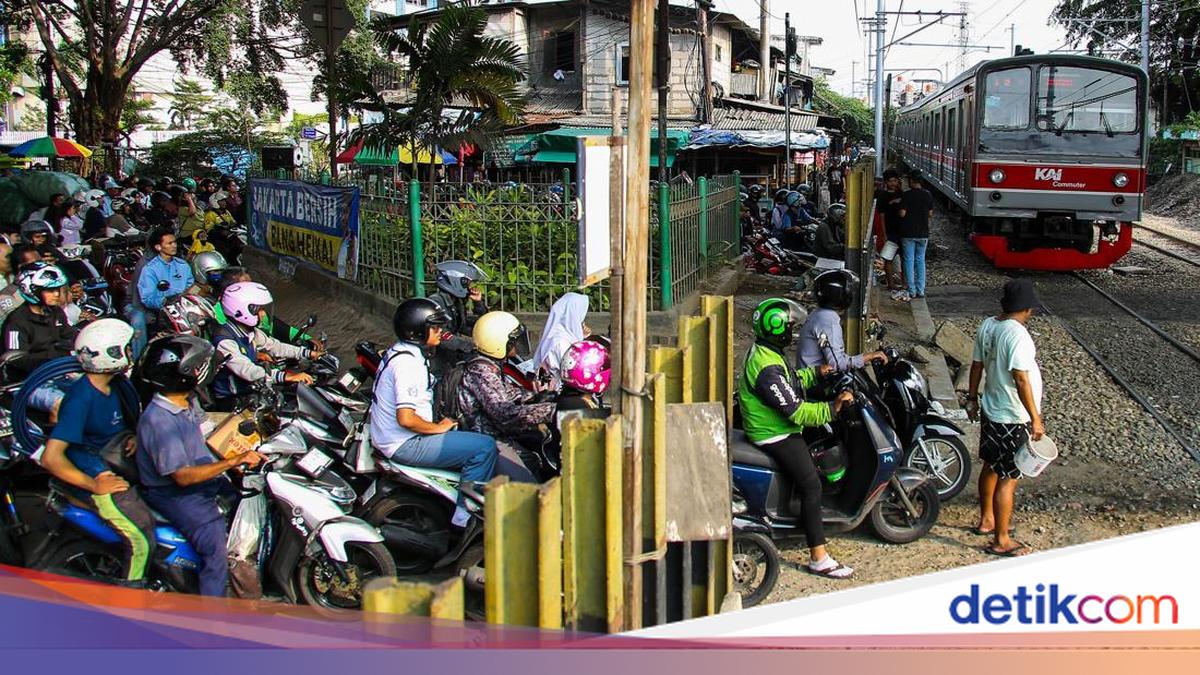
He stated that the installation of ETLE is intended to raise drivers’ awareness so they do not cross railway tracks when signs require them to stop, as this could trigger train accidents. According to him, accidents involving trains and vehicles often begin with traffic violations.
“We will install several ETLE units at locations that are indeed prone to violations, because this is certainly preceded by violations. Any accident is always preceded by a violation,” said Brigadier General Faizal after attending a discussion on train accidents at the parliamentary complex in Senayan, Jakarta, on Thursday (30/4/2026).
“We will strive to ensure that our society, when crossing or using railway facilities, remains orderly. Because we want safety to be the top priority,” he added.
In addition, the National Police will map railway crossings with high activity, including both the frequency of train journeys and the volume of vehicles passing through.
He said his side will also increase guarding at vulnerable points. Personnel such as Bhabinkamtibmas up to other police members will be deployed, especially during risky hours.
“We will utilise Bhabinkamtibmas members, as well as members present there to assist during those hours, because there are certainly risky hours. We will help and provide backup for whatever the risky hours are,” he said.
Brigadier General Faizal stated that the placement of personnel at railway crossings will be limited and selective. Each crossing point, he said, is estimated to be guarded by one to two members.
“The preliminary estimate is perhaps one to two people for each gate, in collaboration. Because with the placement of members, we also have to consider other interests,” he explained.
“That means possibly other interests for members to carry out other activities, but we prioritise what I mentioned earlier: selective priority for places that are very fatal or where accidents could occur, we place them there,” he continued.
He said that if there is a personnel shortage, monitoring will be strengthened with ETLE cameras. According to him, the technology can help monitor violations without always having officers on the ground.
“Then, if we are limited in personnel, we still have ETLE; without needing officers, ETLE can record, and we will evaluate it for railway issues. We hope it doesn’t happen again. We also don’t like always having to come down to process the scene of accidents, accident after accident,” he stated.