
Police Reform Committee Enters Final Stage of Reporting to Prabowo
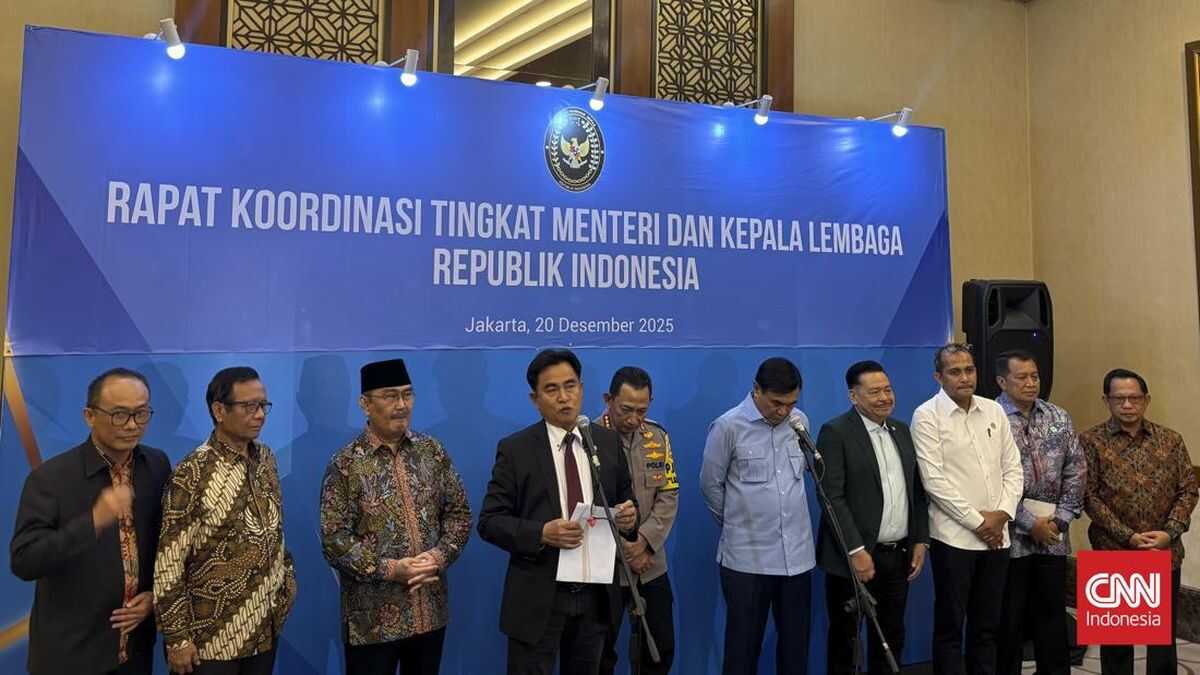
Coordinating Minister for Law, Human Rights, Immigration, and Correctional Affairs Yusril Ihza Mahendra, who also serves as a member of the Committee for the Acceleration of Police Reform (KPRP), stated that the committee has entered the final reporting stage ahead of submitting its findings to President Prabowo Subianto.
“The committee is now finalising its end report on the key reform proposals for the police, to be presented to the President,” Yusril said in a statement on Sunday (22 February).
Yusril noted that the KPRP has been continuously discussing improvements to the police force’s image. The discussions have also covered various critical aspects, ranging from recruitment patterns and education to discipline and oversight.
The KPRP was established by Prabowo and comprises ten members. The inauguration was held on 7 November 2025.
The committee is chaired by former Constitutional Court Chief Justice (2003–2008) Jimly Asshiddiqie, assisted by nine other members including former Coordinating Minister for Political, Legal, and Security Affairs Mahfud MD. Three former National Police Chiefs are also part of the team: Tito Karnavian, Idham Azis, and Badrodin Haiti.
Additional members include Presidential Special Adviser for Public Order and Police Reform Ahmad Dofiri, Coordinating Minister for Law, Human Rights, Immigration, and Correctional Affairs Yusril Ihza Mahendra, Deputy Coordinating Minister Otto Hasibuan, Minister of Law Supratman Andi Agtas, and National Police Chief General Listyo Sigit Prabowo.
Following his inauguration, Jimly set a target for the committee to work optimally and swiftly, despite not being given a specific deadline.
“Within a minimum of three months there should already be a report, although that could evolve according to needs,” Jimly said.
He added that the committee is also prepared to complement the work of the internal police reform team previously established by National Police Chief General Listyo Sigit Prabowo.
Jimly said it remains possible that the committee’s findings could lead to changes in regulations or even legislation if deemed necessary to improve the system.
“This means we remain open. So ideas for any changes or improvements — if necessary, we may have to amend laws. That is roughly the approach,” he said.
Since its formation in November, the KPRP has conducted consultations with various stakeholders, including the Gerakan Nurani Bangsa (National Conscience Movement) led by Sinta Nuriyah Wahid, the wife of Indonesia’s fourth president, the late Abdurrahman Wahid.