
Police Position Restrictions Hoped Not to Become Mere Tactic for "Shifting Actors"
JAKARTA, KOMPAS.com - Restrictions on police positions are hoped not to become a tactic for shifting actors, where officials from Polri are replaced by officials from other institutions.
Recommendations for Polri reform mandate restrictions on police positions outside the institution.
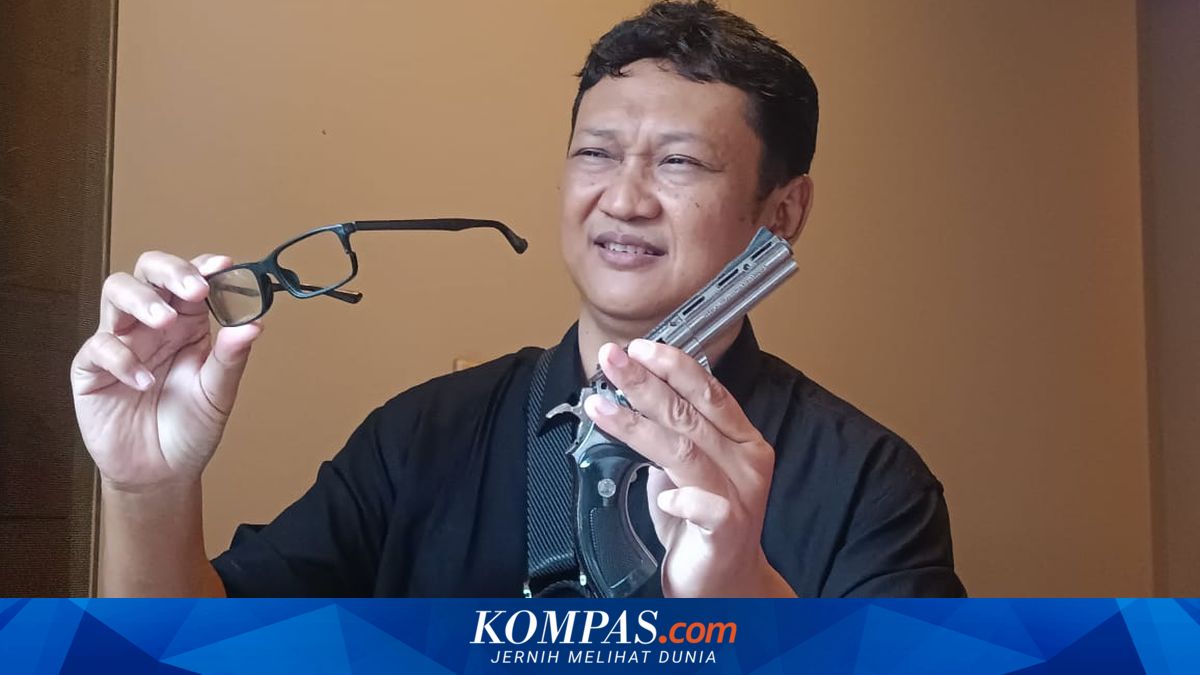
Police observer from the Institute for Security and Strategic Studies (ISSES), Bambang Rukminto, stated that Polri position limitations need to be accompanied by reorganisation of TNI personnel occupying civilian positions.
According to him, if police positions are restricted but TNI functions are expanded, what occurs is a redistribution of power among apparatus, not a reorganisation of functions.
This creates various risks.
The main risk is the blurring of boundaries between civilian and military domains, overlapping authorities, and the normalisation of security approaches in civilian matters.
“In conclusion, without a complete reform framework, this policy does not reduce the dominance of apparatus in civil spaces, but merely shifts the actors. This is not structural reform, but a repositioning of power with a new face through securitisation carried out by the state via Polri and TNI,” Bambang told Kompas.com on Friday (8/5/2026).
This is because, to date, the Civil Service Apparatus (ASN) Law still allows dual positions as long as regulated by the TNI Law and Polri Law.
“Well, the TNI Law is already regulated, but Polri is not yet,” said KPRP member and former Coordinating Minister for Political, Legal, and Security Affairs Mahfud MD in Kebayoran Baru, South Jakarta, on Thursday (7/5/2026).
To date, President Prabowo has already approved the proposal.
Bambang Rukminto assesses that position limitations have the potential to become a middle path that widely opens the entry of police members outside their structure, duties, and functions—even though the regulation is limitative.
Bambang hopes that the proposal must be monitored so that position limitations remain in accordance with duties and functions.
Normatively, said Bambang, the constitution grants Polri the authority to carry out policing tasks, namely protecting, nurturing, serving the community, maintaining security and public order, and law enforcement.
“Even if limitations emerge, they must be placed in institutions that truly handle security fields. Not in civilian ministries that are not directly related to security,” said Bambang.