
Police Officer's Commitment: Building Orphanage and School in Remote Sumba Region
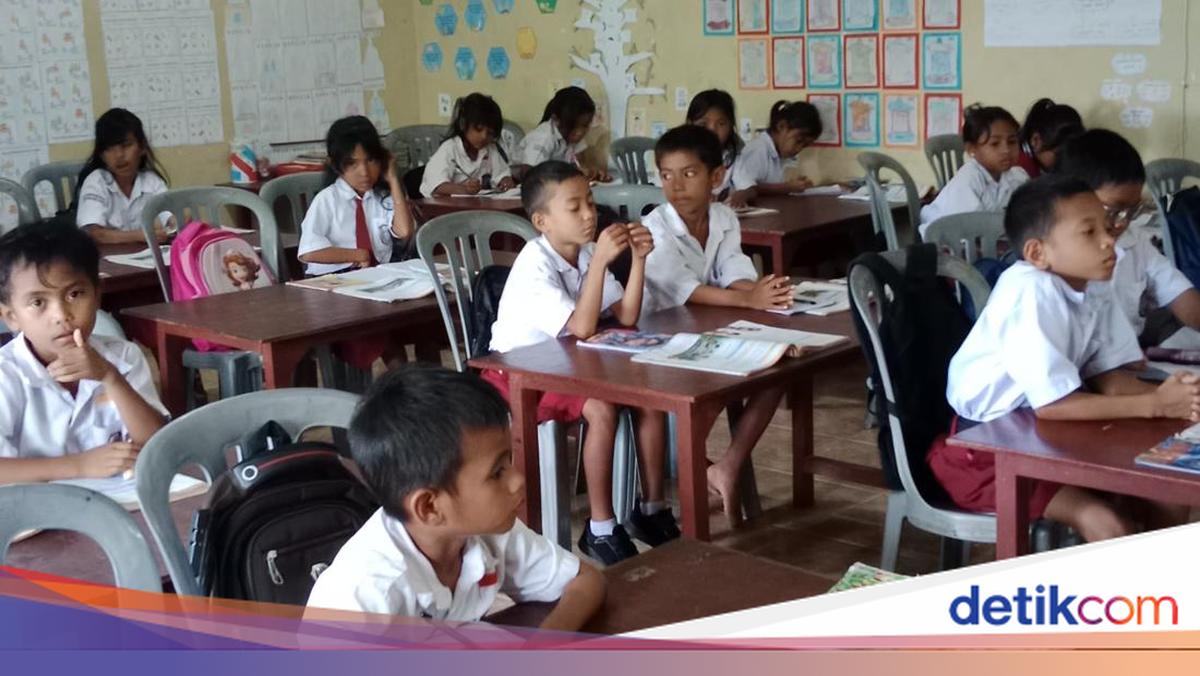
Aipda Yanrus Pake, a sergeant of East Sumba Police District (Polres Sumba Timur), has established an orphanage and school in Tana Mbanas Village, Central Sumba, Nusa Tenggara Timur (NTT) together with his wife. His commitment to providing quality education for children in remote, frontier and outermost (3T) areas has earned him a nomination for the 2026 Hoegeng Awards by Yustina Denga.
According to Yustina’s nomination, Yanrus and his wife founded the Iman Pengharapan dan Kasih (Faith, Hope and Love) Foundation in Tana Mbanas to support disadvantaged and neglected children by providing comfortable and dignified housing. The couple also established schools from kindergarten through junior secondary school to deliver adequate education to children in isolated villages, with dormitory accommodation for pupils whose homes are far from school. All dormitory and educational facilities are provided free of charge.
Yanrus actively teaches adopted children vocational skills including farming and animal husbandry in his spare time outside his duties as a police officer at Haharu Police Station. Yustina, who is both a programme manager and teacher at the foundation, previously lived in the orphanage herself before returning to serve the organisation after completing university.
Currently, approximately 300 children live in the orphanage or attend schools under the foundation. The foundation operates schools from kindergarten through junior secondary level with official approval from the Education Department. Beyond school hours, children receive instruction in agriculture and livestock farming.
“Usually Pak Yanrus teaches them welding skills, so children with hearing and speech difficulties—he trains them in welding, and now they can work independently and earn money. For boys, they are typically trained in electrical installation,” Yustina explained. “For girls, we have many activities including gardening and chicken farming. We raise laying hens, broilers, and village chickens, plus cattle. We train them in all these skills because they are close to the children’s lives, and when they eventually return to their families, they can do all of this themselves.”
According to Yustina, the foundation’s operational costs come from donors, personal funds from Aipda Yanrus, and family business ventures, supplemented by government grants. Monthly operational expenses, including food costs alone, amount to approximately 200 million rupiah, with the figure recently increasing as the foundation consumes 450 kilogrammes of rice daily.
Aipda Yanrus, originally from Kupang, married Christina Sihombing, who is from Medan, North Sumatra. In 1999, Christina volunteered in Tana Mbanas village with a Canadian volunteer known as Opa, where they developed the village including constructing a borehole well. Christina initially planned to stay for two years but became attached to the community and took on teaching at the local school, which was short of staff.
Yanrus met Christina in 2006 when he was assigned to the local police station. Impressed by her educational activities, they began working together as friends to help disadvantaged children in the area. In 2006, they formalised the foundation and orphanage. The organisation continued to expand, and they established a junior secondary school. They married in 2013 after years of working together on the same mission.
Yanrus acknowledged facing various challenges in developing the foundation, particularly regarding funding. He has made appeals to various parties and donors, though he noted that living within the same community helped sustain the work despite difficult years.
Since its inception, the foundation has been supported by Opa from Canada, who had connections to church communities in Canada and the Netherlands. Opa lived with them until 2017. Following his death, he continued to support the foundation through churches in Canada and the Netherlands. Donors from these countries regularly visit the foundation to provide assistance, with the most recent support received in 2025.