
Police Chief Outlines Middle Eastern Conflict Impacts Before Thousands of Workers
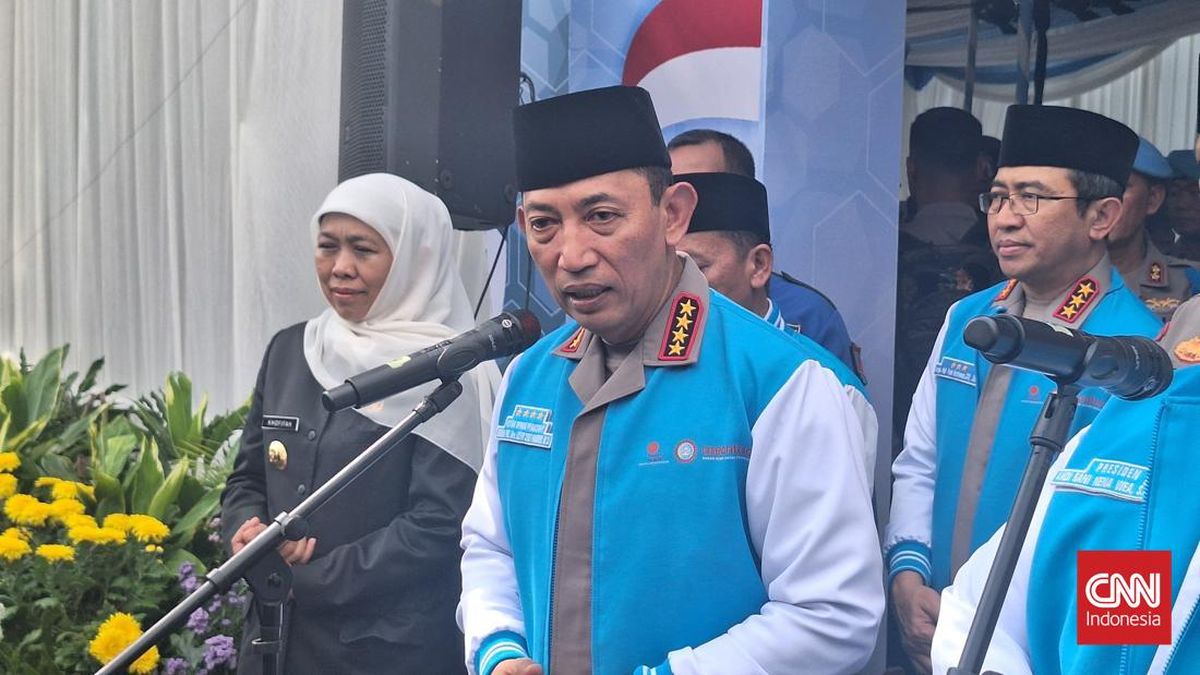
National Police Chief General Listyo Sigit Prabowo outlined the impacts of escalating conflict in the Middle East between Iran, Israel and the United States, predicting that the situation will not resolve in the near future.
Sigit stated that the current global situation is increasingly volatile and requires the readiness of all national elements, including labour groups, to anticipate potential long-term consequences.
He made these remarks whilst attending a solidarity gathering and Ramadan safari with the Indonesian Workers Confederation (KSPSI) in Surabaya, East Java, on Tuesday (10 March).
“We all hoped the Middle Eastern situation would end soon, but currently we see conditions are actually escalating, so whether we like it or not we must prepare ourselves for the possibility that this conflict could persist for quite some time. This is something we must inevitably anticipate,” Sigit said.
This tension, according to Sigit, is accompanied by a series of attacks on vital energy infrastructure in the region, including strikes on Aramco oil facilities and blockades in the Strait of Hormuz.
These developments, he noted, have triggered a dramatic surge in global oil prices, placing enormous pressure on Indonesia’s domestic economy, given that the country remains highly dependent on petroleum imports.
“This situation is causing world oil prices to continue rising—we can see how drastically prices have jumped, rising from around US$60 to US$70, then yesterday to US$90, and this morning possibly reaching US$100,” he said.
Nonetheless, the Police Chief warned that if the war continues, the implications will directly strike the logistics sector and essential commodity prices, ultimately burdening both the public and the state’s fiscal position.
“As this continues, we must certainly be prepared for a prolonged conflict. And if we cannot control oil prices, the implications will inevitably affect prices across the board. Rising oil prices will push up logistics costs, and this will certainly burden both the people and government finances,” he stated.
Addressing the matter, Sigit emphasised that the government is working tirelessly through international diplomatic channels to promote peace. International institutions currently in place, such as the United Nations, are no longer regarded by President Trump.
“The President is working actively to resolve or encourage peace to be realised soon. Of course, through various diplomatic channels he is pursuing, both with America and with Gulf and European nations. Why is this being done? Because the universal institutions currently established, such as the UN and other nations, are not being recognised by Trump. Therefore, we have no choice but to try to enter through channels that Trump has established,” Sigit explained.
For this reason, the Police Chief called upon all national elements, including workers, to provide full support to government efforts in maintaining stability amid global turbulence.
He also emphasised the importance of national unity and the spirit of self-reliance (berdikari) through strengthening food and energy self-sufficiency so that Indonesia no longer depends on imports.
“For this reason, we certainly need support, backing and prayers from all of us. So when we face the current situation, all our citizens and all national leaders and elements can unite to address what lies ahead. One key aspect is what the President has consistently emphasised—that we are entering a period of realism where facing existing conditions, we must be able to stand on our own feet,” he concluded.