
Police Bill Revision Begins, Retirement Age and External Deployments in Focus
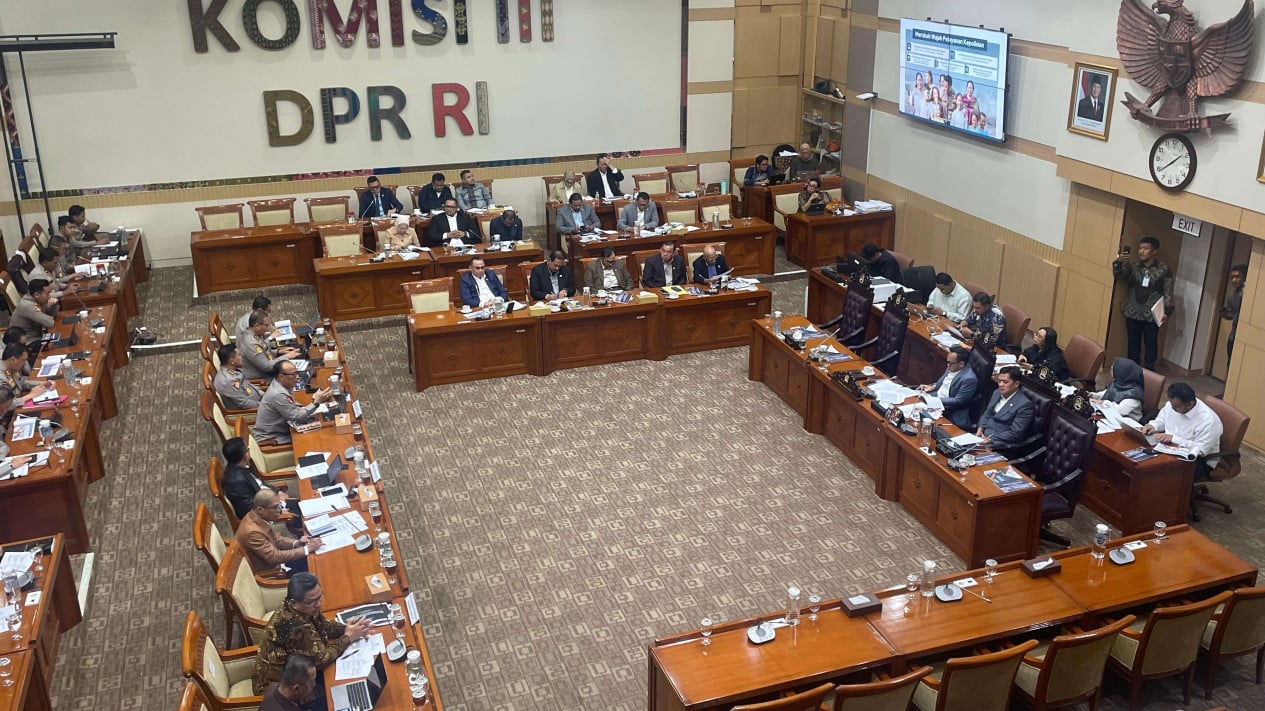
DPR Commission III and the government began discussing the Revised Police Bill on Monday, 25 May 2026. The meeting was chaired by DPR Commission III Chairman Habiburokhman.
Habiburokhman outlined several proposed changes in the bill, including the retirement age for police officers. He stated that the Police Bill aims to complement regulations in the new Criminal Code and Criminal Procedure Code, as well as follow up on recommendations from the Police Reform Acceleration Commission.
“The Police Bill includes eight key changes, 11 articles, and explanations,” Habiburokhman said.
He assured that the bill’s provisions will not deviate from the 1945 Constitution and MPR Decrees No. VI and VII of 2000, including the president’s prerogative in appointing the National Police Chief. To commence today’s working session, Habiburokhman explained that the bill was drafted after DPR Commission III, through the Special Committee for Police Reform, the Attorney General’s Office, and the judiciary, gathered inputs and identified fundamental issues within the police force.
The committee’s work resulted in eight reform recommendations approved by the DPR in a plenary session on 27 January 2026.
“We have received inputs, identified core issues, and produced crucial points regarding police reform strategies and efforts, which were presented and approved by the DPR in a plenary session on 27 January 2026,” he added.
The key points to be discussed in the Police Bill include:
Clarifying the goals and direction of police transformation towards openness, transparency, professionalism, integrity, and quality public service.
Strengthening oversight functions and implementing transparency principles through modern technology and information tools.
Ensuring neutrality and professionalism in police human resource management and career development systems.
Strict and clear regulations on police officers assigned outside the police institution.
Adjusting the retirement age based on organisational needs in a more precise and measurable manner.