
PMK 92/2025 Officially in Effect: Understand the Legal Certainty in Managing Goods that Become State Property
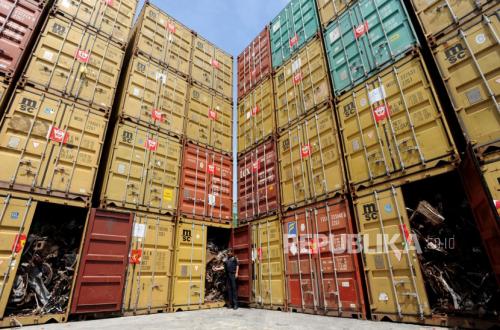
The government has officially implemented Finance Minister Regulation (PMK) No. 92 of 2025 on the Resolution of Goods Declared Uncontrolled, State-Controlled Goods, and Goods that Become State Property, effective from 1 April 2026. This regulation serves as the legal foundation for managing goods under customs supervision, including determining their final disposition.
Based on their legal status in the customs process, goods are divided into three types: uncontrolled goods (BTD), state-controlled goods (BDN), and goods that become state property (BMMN).
BTD refers to goods whose customs obligations have not been fulfilled. BDN consists of goods and/or means of transport under the control of Customs due to violations, seizures, or unknown owners. Meanwhile, BMMN includes goods and/or means of transport designated as state property in accordance with applicable provisions.
BMMN can be considered the final stage of the customs supervision process for goods no longer under the owner’s control. Goods may become BMMN if they are in the category of prohibited or restricted items whose customs obligations are not settled within the specified time limit, originate from customs enforcement actions, are abandoned by their owners, and/or their violations have been decided by the court and confiscated for the state.
So, what does the state do with BMMN?
After becoming BMMN, the state does not simply store the goods without clarity. The government determines the utilisation of the goods according to their condition and economic value.
BMMN can be resolved through five mechanisms. First, auction, if the goods still have economic value. Second, designation for use, for the needs of government agencies.
Third, donation, if the goods can be utilised by agencies or the community. Fourth, destruction, if the goods are dangerous, damaged, or unfit for use. Fifth, write-off, if BMMN experiences depreciation or loss.
In addition, the management of BMMN is supported by an integrated management system between the Directorate General of Customs and Excise and the Directorate General of State Assets. Through this system, the process of goods valuation, submission of intended use, to follow-up on disposition decisions can be carried out transparently and well-documented.
Head of the Subdirectorate of Public Relations and Outreach of Customs, Budi Prasetiyo, emphasised that the management of BMMN is part of efforts to maintain accountable governance of state goods while protecting the public.
“Through PMK 92 of 2025, the government ensures that goods whose customs obligations are not settled can be handled clearly and transparently. The management of BMMN is not only oriented towards law enforcement but also ensures that the goods are optimally utilised for the interests of the state and society,” he stated.