
PLN Watch: Internet service providers must not use PLN poles without permission
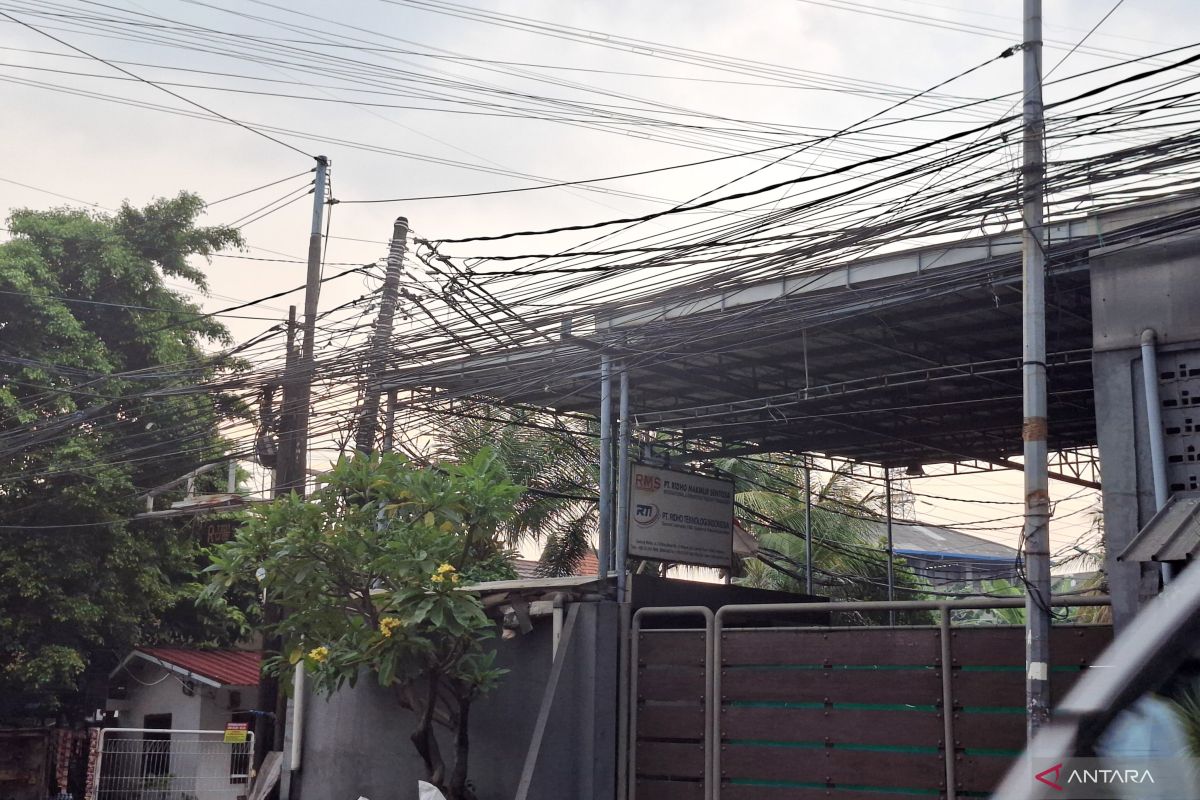
Electricity poles are strategic assets owned by the state. Any utilisation for business purposes must have a permit and meet administrative and financial obligations.
Jakarta — PLN Watch has urged the government and law enforcement to take firm action against internet service providers that install cables and network devices on PLN’s electricity poles without official permission.
‘Electricity poles are strategic assets owned by the state. Any utilisation for business purposes must have a permit and meet administrative and financial obligations,’ said PLN Watch General Chairman Tohom Purba in a statement received in Jakarta on Tuesday.
‘If used without permission, the state stands to lose potential revenue and the rule of law is at stake.’
Tohom said the practice has occurred in various regions and has caused public concern because, in addition to harming the state, it also threatens public safety.
Tohom cited several cases widely reported in the media recently. In Karangjeruk, for instance, residents complained of suspected illegal Wi-Fi networks piggybacking on electricity poles.
Then in Rembang, PLN issued clarifications regarding the proliferation of internet cables crowding the electricity poles. Meanwhile in Panyabungan, PLN through the local ULP carried out actions to clear illegal Wi-Fi cables.
Tohom argued that the widespread use of electricity poles without permits reveals gaps in oversight that must be closed promptly.
He argued that enforcement should not be sporadic, but should be conducted through a national audit involving the relevant agencies.
‘If left unchecked, there will emerge a perception that state assets can be used freely without rules. This is dangerous. The state must ensure that every metre of public infrastructure is used in an orderly fashion and delivers maximum benefit to the people,’ he said.
He added that, in addition to visual clutter, installing cables without clear technical standards can increase the risk of power disruptions, short circuits, and accidents for both workers and the public.
Tohom believes that Indonesia’s digital transformation must be built on a foundation of legal compliance.
According to him, companies that have followed official procedures should not be disadvantaged by operators who evade obligations.
‘Healthy competition will only exist if all business players comply with the same rules. There must be no business model that grows by illegally piggybacking on state facilities,’ he said.
He urged the Ministry of Communications and Digital, the BP BUMN, local governments, and law enforcement to coordinate an inventory and comprehensive crackdown on the use of electricity poles across Indonesia.
‘State assets must be protected, the law must be upheld, and the economic benefits must return to the people,’ he said.