
PLN: Surge in SPKLU Usage Reaches Fourfold During Eid 2026
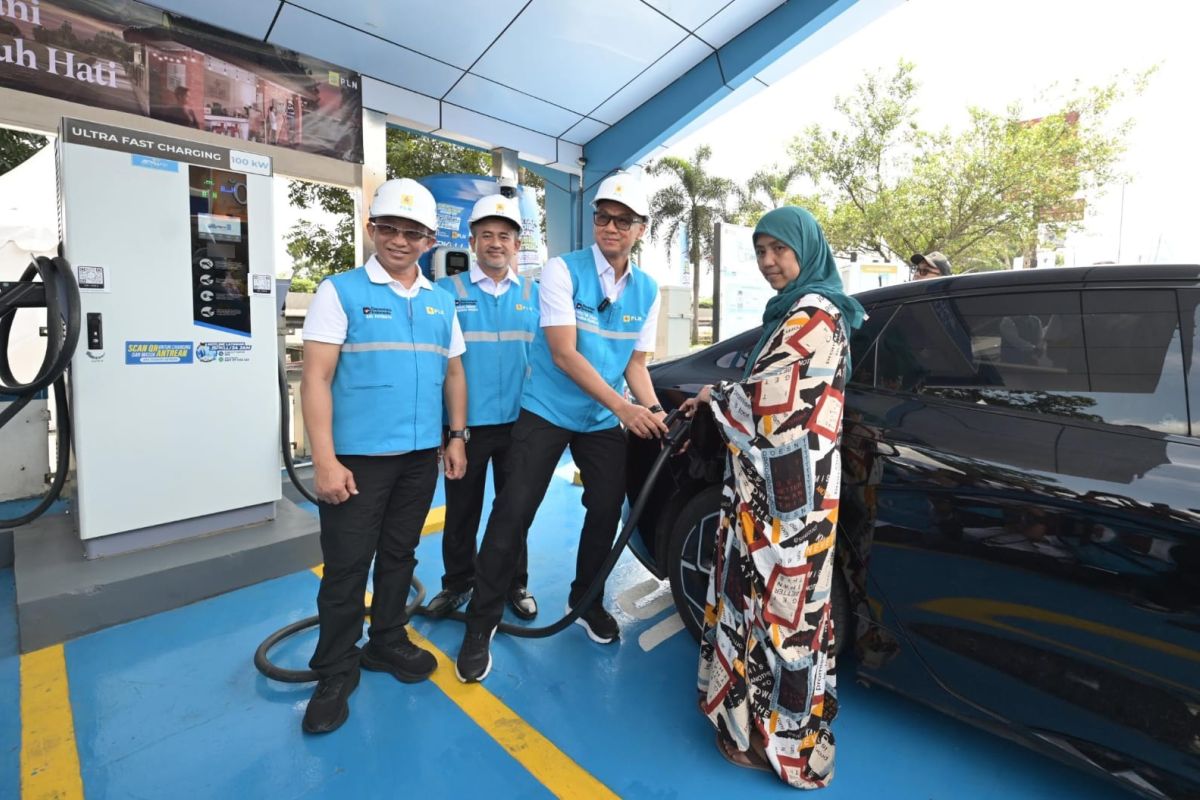
The surge in SPKLU usage during RAFI serves as an indicator of increasing public confidence in electric vehicles. Jakarta (ANTARA) - PT PLN (Persero) recorded a surge in the usage of Public Electric Vehicle Charging Stations (SPKLU) of up to 4.14 times during the Ramadan and Eid al-Fitr (RAFI) standby period in 1447 Hijriah (H). This surge is accompanied by an increase in electricity consumption for electric vehicles of more than four times compared to the same period in 2025. “The surge in SPKLU usage during RAFI indicates increasing public confidence in electric vehicles,” said PLN President Director Darmawan Prasodjo in his official statement confirmed by ANTARA from Jakarta on Thursday. In detail, the charging frequency during the 12–31 March 2026 period reached 303,234 transactions, up from 73,161 transactions in the same period the previous year. Meanwhile, electricity consumption was recorded at 7.16 million kilowatt hours (kWh), up from 1.75 million kWh in 2025. This achievement is part of the success of the National Command Post for the Energy and Mineral Resources (ESDM) Sector in maintaining the smooth flow of mudik and return travel during Eid, while ensuring the reliability of the national energy supply during the RAFI period. “This is inseparable from the readiness of the infrastructure and services that we have provided optimally during the mudik period,” said Darmawan. PLN, together with its partners, has provided 4,769 SPKLU units at 3,097 locations across Indonesia, with an average distance between SPKLUs of around 22 kilometres. Specifically on the main mudik routes of Trans Sumatra, Java, and Bali, PLN provides 1,681 SPKLU units at 994 locations, an increase of around 70 per cent compared to the previous Eid al-Fitr. To anticipate emergency needs, PLN also prepared 15 mobile SPKLU units at strategic points, especially in toll exit areas, supported by thousands of on-standby personnel. In addition to infrastructure additions, PLN also improved service quality through the modernisation of charging technology. Several high-usage SPKLUs have been upgraded from standard charging to fast charging and even ultra-fast charging, thereby making the charging process faster. “We will continue to strengthen electric vehicle infrastructure and services so that the public becomes increasingly comfortable switching to clean energy,” said Darmawan.