
PLN Offers Profitable Business Potential for EV Charging Stations, Here Are the 3 Schemes
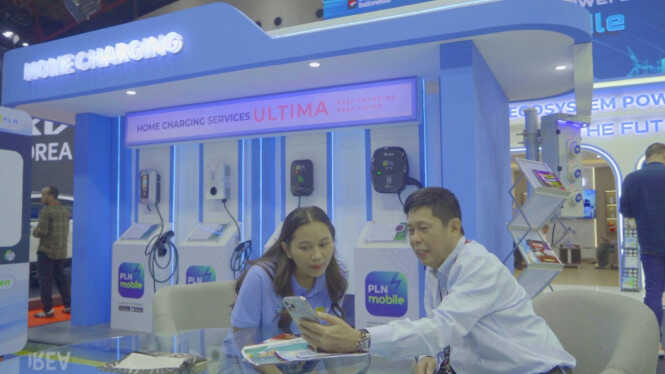
PT PLN (Persero) introduced a major partnership opportunity for the construction of public electric vehicle charging stations (SPKLU) at the Indonesia International Motor Show (IIMS) 2026. The business was affirmed to hold enormous future potential.
PLN Vice President of Commercial Product Commercialization Ronny Afrianto emphasized that the growing electric vehicle population must be matched by infrastructure availability, and that the public can capitalize on this opportunity.
“There are currently around 5,000 SPKLU units in Indonesia. This is a huge opportunity for the public and businesses to get involved,” he said on the sidelines of IIMS 2026.
Ronny acknowledged that electric vehicle growth has been rising sharply year over year. PLN cannot pursue this demand alone, which is why the company is opening its doors as wide as possible for partnerships.
“PLN is inviting the public and businesses to jointly build SPKLU, increase their numbers, and develop the electric vehicle ecosystem,” said Ronny.
He explained that there are currently several partnership schemes available. In the first scheme, PLN provides the charging equipment while the partner provides a strategic, easily accessible location with adequate waiting facilities for users.
In the second scheme, businesses can invest in SPKLU equipment while also providing their own land.
“The third scheme is a tripartite partnership: the landowner, the equipment owner, and PLN as the holder of the electricity sales business license,” he said.
On the regulatory side, any party selling electrical energy to end users must hold an electricity provider business license or standard certificate. Partners can choose to sell through PLN’s license or obtain their own.
“If you sell through PLN’s license, the business entity doesn’t need to handle licensing. But if you want to operate independently, you naturally have to take care of the permits yourself,” Ronny explained.
Nevertheless, equipment owners remain responsible for operations and maintenance. “If there’s any troubleshooting needed, the equipment owner handles the repairs. This is part of the commitment to service quality,” he added.
The government, through the Ministry of Energy and Mineral Resources, has established a roadmap for SPKLU development over the coming years. PLN is one of the key players but still requires private sector support.
“Regulations encourage development not only in densely populated areas but also in less populated ones. This is to strengthen the ecosystem evenly,” said Ronny.
Currently, of the approximately 4,800 operating SPKLU units, more than a thousand belong to partners. The number of partners stands at around 40 business entities and continues to grow. “Interest is increasing by the day. There are always new players entering the market,” he said.