
PLN EPI Develops Biomass Gasification in Remote Areas
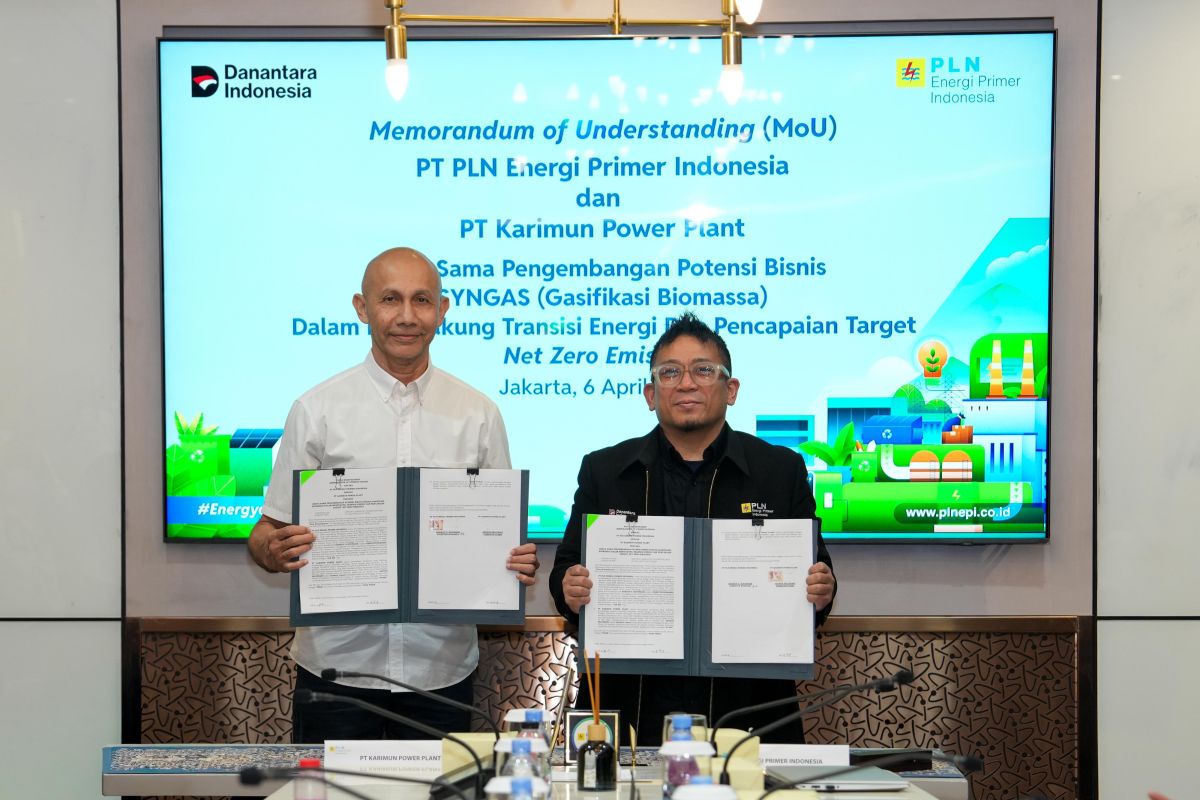
Indonesia’s national biomass potential reaches approximately 80 million tonnes, but only 20 million tonnes are currently utilised. This means there is still a vast opportunity that can be optimised to support national energy resilience. Jakarta (ANTARA) - PT PLN Energi Primer Indonesia (PLN EPI) is promoting the development of biomass gasification as a solution to accelerate the dedieselisation programme, especially in remote areas not yet reached by the interconnected electricity grid. PLN EPI Biomass Director Hokkop Situngkir stated in Jakarta on Wednesday that the utilisation of biomass is no longer merely an alternative but part of building an integrated new renewable energy (EBT) ecosystem from upstream to downstream. “Indonesia’s national biomass potential reaches approximately 80 million tonnes, but only 20 million tonnes are utilised. This means there is still a vast opportunity that can be optimised to support national energy resilience,” he said. The development is marked by the signing of a memorandum of understanding (MoU) between PLN EPI and PT Karimun Power Plant (KPP) for a biomass-based syngas gasification business, as part of efforts to support the energy transition and achieve the net zero emissions (NZE) target of 2060 in Jakarta on Monday (6/4/2026). Hokkop explained that biomass development is not only focused on co-firing in coal-fired power plants (PLTU) but can be expanded through a new pathway via syngas based on biomass gasification, which is more flexibly used in diesel power plants (PLTD) or isolated systems. “This biomass gasification becomes a concrete solution for isolated areas that still rely on solar fuel. With this approach, we can reduce energy costs while lowering emissions,” he added. According to Hokkop, limitations in PLTU design and infrastructure readiness pose challenges in absorbing biomass through co-firing, making diversification of utilisation a strategic step. “Therefore, we are opening a new branch through biomass gasification. This is not just a technical option but also a more adaptive business solution to meet energy needs in remote areas,” he emphasised. As an initial stage, PLN EPI is partnering with KPP to develop a pilot project in Karimun, Riau Islands. Currently, the facility has a biomass capacity of 1 megawatt (MW) and has the potential to be increased to 2-5 MW. KPP Director Arthur Palupessy stated that his company has over 25 years of experience in managing diesel-based power plants. However, the main challenge in transitioning to biomass lies in the certainty of price and raw material supply. “We are accustomed to the diesel system which has clear cost standards. The challenge with biomass is ensuring that prices and supply remain stable so that operations remain feasible,” said Arthur. He added that the biomass requirement for a 1 MW power plant can reach around 35 tonnes per day, thus requiring an integrated long-term supply chain scheme. “If supply and prices can be kept stable, then biomass gasification will become a very competitive solution compared to diesel,” he explained. Through this collaboration, PLN EPI will act as an aggregator as well as a developer of the biomass ecosystem, from mapping raw material sources, building production facilities, to providing gasification technology and syngas distribution. In addition to producing energy, this project also has the potential to generate derivative products such as biochar, which has economic value. Looking ahead, PLN EPI targets this model to be replicated in around 200 PLTD locations across Indonesia as part of the strategy to reduce solar fuel consumption and accelerate the national energy transition.