
Plight of Aceh Flood Victims: Too Embarrassed to Shelter with Relatives During Ramadan
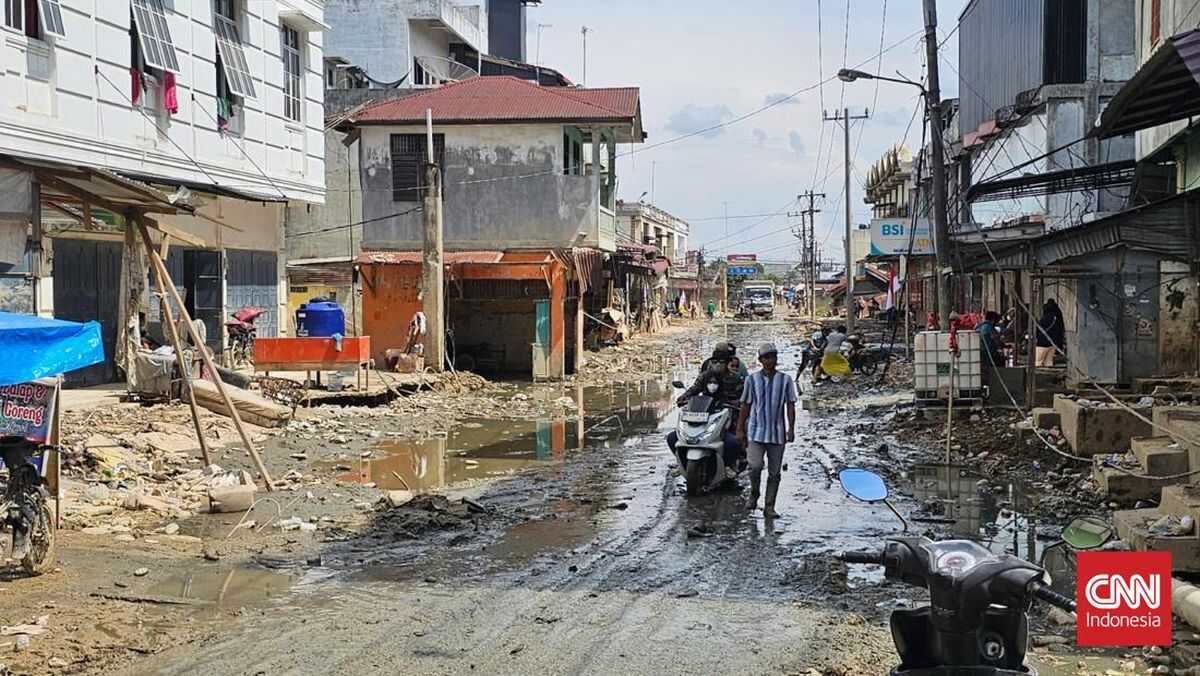
The Sumatran flood disaster has forced residents in Aceh to become nomads, moving from house to house in search of safe and comfortable shelter after their homes were swept away by floods or buried under landslides.
Whilst evacuation tents have been erected at every post in affected areas, many survivors have chosen instead to move between the homes of relatives and extended family members. Despite feeling reluctant to impose, they seek help from kin willing to take them in whilst waiting for temporary shelters (Huntara) to be completed.
One such survivor is Hasafah. Under the scorching midday sun, enduring thirst as she observes the Ramadan fast, she carried her daughter along a village footpath still strewn with building debris and cracked asphalt. She then navigated a steep, muddy trail, followed closely by her husband, Mohammad Natsir.
Access to Pantan Kemuning Village, Pintu Rimba Hamlet, Timang Sub-district, Bener Meriah Regency, Aceh — where Natsir and Hasafah currently reside — is only possible by motorbike. The bridge connecting four villages in Timang Sub-district was destroyed by severe flooding on 26 November 2025. A makeshift emergency bridge has since been constructed from whatever materials were available.
Natsir and Hasafah walked towards the remnants of their home, now buried under mud reaching roof height, surrounded by coffee trees submerged in sediment. After roughly 15 minutes, they stopped to point out the exact location of their former residence, now levelled to the ground. Not a single possession remains — only memories of the house they built four years ago.
“It was devastating to see our home carried away by the flood. We watched from the hilltop until our house was completely gone, then we went further up and took shelter at the school there,” said Hasafah, as quoted by Antara on Sunday (22 February).
After the flash floods struck, Natsir and Hasafah, together with their two children, evacuated to an Inpres Primary School near their village. Before long, aid arrived, and the family moved to a National Disaster Management Agency (BNPB) evacuation post.
Too embarrassed to shelter with relatives during Ramadan
After approximately one month at the evacuation post, Natsir mustered the courage to knock on the door of his brother Muslihadi, who lives in a different village that was fortunately spared by the disaster.
With Ramadan approaching, Natsir felt the urgency of finding a more comfortable temporary refuge. Fortunately, Muslihadi welcomed them with open arms.
“It’s Ramadan, so it didn’t seem feasible to be there for the pre-dawn meals. So we went to stay with relatives,” said Hasafah.
Remembering life before the floods
Hasafah recalled the Ramadan moments she looked forward to most — receiving orders for fabric from neighbours that she would sew into festive clothing for Eid.
“In the past, during Ramadan we would sew clothes. Every day people would come bringing fabric to be sewn into garments. But now all our equipment is gone — all the sewing machines, everything,” said the 34-year-old woman.
Her sewing machines and her husband’s livelihood as a coffee and food crop farmer have all been lost. Hasafah hopes to soon have a roof over her head, even if it means continuing to move from one house to another.
“Before, we were in our own home. Now we’re staying in other people’s houses — it feels different. Your own home is better. Although our house… we can’t bear to think about it anymore. It’s heartbreaking to remember,” she said, tears streaming down her face.
Currently, a total of 70 family units of Sumatran disaster survivors from Pantan Kemuning Village are staying at an evacuation post in the much safer location of Tunjang Village. Some evacuees, like Natsir and Hasafah, have sought out relatives willing to provide shelter until the temporary housing is completed.
Four thousand displaced persons remain in Bener Meriah
According to BNPB data as of Sunday, Aceh Province has recorded a total of 32,553 displaced persons as a result of the Sumatran disaster.
Bener Meriah Regency ranks among the top three regencies with the highest number of displaced persons, behind North Aceh and Gayo Lues. Bener Meriah currently has approximately 4,000 displaced persons, Gayo Lues has around 5,000, whilst North Aceh has the highest figure at approximately 12,000.
Total housing damage from the hydrometeorological disaster in Bener Meriah has reached 1,411 units, comprising 854 severely damaged, 186 moderately damaged, and 371 with minor damage.
The Bener Meriah regency administration is currently focused on relocating evacuees to temporary shelters, which are targeted for completion next week.
“As of today, of the 914 temporary shelters we have built, approximately 70 per cent are now occupied by displaced persons,” said Bener Meriah Regency Secretary Riswandika Putra.
The Sumatran disaster response, now entering its second phase, will focus on moving survivors to temporary shelters and reopening affected road access that remains impassable to four-wheeled vehicles needed for delivering logistics and heavy equipment.
In Bener Meriah, where 648 road sections and 649 bridges were damaged, approximately 70 per cent of repairs have been completed.
The regency administration is also focused on reopening access roads to affected farmland and plantations, particularly as the Gayo coffee harvest season is currently underway.
With conditions not yet fully restored, the post-disaster revitalisation process is expected to take a considerable period — at least approximately three years.