
Plenary session approves Bill on Hajj Finance Management as a parliamentary proposal
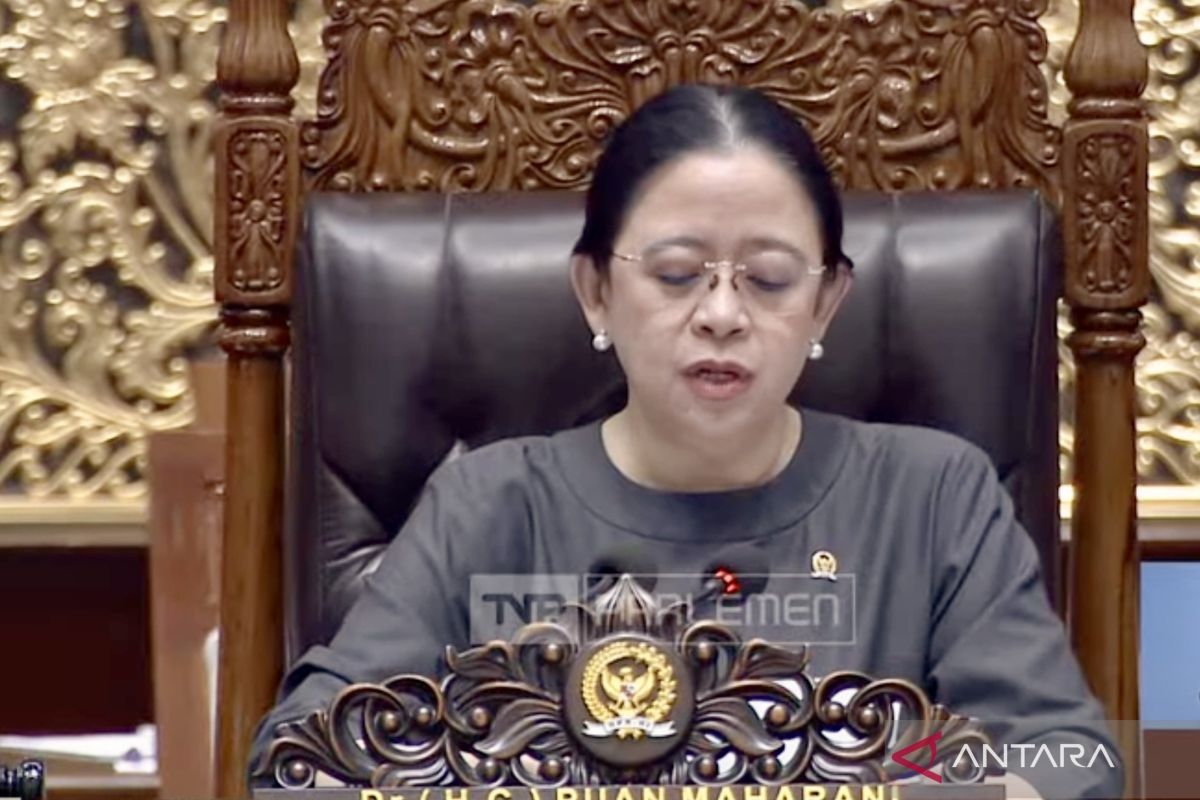
Jakarta – The 16th Plenary Session of the Fourth Parliamentary Period of the 2025-2026 session approved the Bill on Amendment to Law Number 34 of 2014 on Hajj Finance Management as an official proposal of the Indonesian House of Representatives (DPR RI).
“We ask the honourable assembly members whether the bill initiated by Commission VIII of the DPR on the Amendment to Law Number 34 of 2014 on Hajj Finance Management can be approved as a DPR RI proposal?” said DPR RI Speaker Puan Maharani at the parliamentary complex in Senayan, Jakarta, on Thursday, to which assembly members present responded in agreement.
The approval was made during the plenary session after each political faction in parliament submitted their written opinions on the bill, which had previously been an initiative proposal from Commission VIII of the DPR RI.
Earlier, the Hajj Finance Management Body (BPKH) assessed that the institutional design of BPKH under Law Number 34 of 2014 was conceptually and normatively appropriate, therefore no fundamental structural changes were required in the law revision.
“The institutional structure does not require fundamental changes and improvements should be directed towards implementation effectiveness,” said BPKH Executive Head Fadlul Imansyah during a meeting with the DPR RI Legislative Body on Thursday (12/2).
In that meeting, Fadlul conveyed that the strengthening needed should be directed more towards implementation effectiveness, particularly in aspects of technical coordination and regulatory harmonisation.
In terms of institutional design, he clarified, BPKH is established as an independent legal entity managing hajj finance.
The institution is mandated to receive hajj funds, develop investments, manage expenditures according to their intended purpose, and provide accountability based on Sharia principles, prudence, transparency, and accountability.
Under Law Number 34 of 2014, BPKH’s organ structure consists of an Executive Board and a Supervisory Board, known as a two-board system.
The Executive Board carries out executive and operational functions including investment decision-making, whilst the Supervisory Board is tasked with overseeing policies and performance.
According to him, structural strengthening need not be directed towards changing that system, but rather towards more operational affirmation of authority to enhance agility in carrying out core functions whilst maintaining checks and balances.
Regarding coordination relations, Fadlul conveyed that the oversight mechanism already has a clear legal basis, including those related to coordination with the Financial Services Authority (OJK) as regulated in Government Regulation Number 5 of 2018. Additionally, BPKH’s financial reports are also audited by the Financial Audit Board (BPK).
Thus, according to Fadlul, the hajj fund management oversight system is multi-layered, ranging from internal controls and risk management, oversight by the Supervisory Board, coordination with the OJK, to external audit by the BPK.
However, on the other hand, Fadlul stated that the revision of the Hajj Finance Management Law is a strategic opportunity for the institution to strengthen governance and investment flexibility and strengthen the role of subsidiary companies.
“This step is focused on strengthening the role of subsidiary companies as a direct investment instrument overseas, to optimise the benefit value of hajj funds and build synergy between national economic strength and international partnerships,” he said in Jakarta, Thursday (26/2).