
Plastic Waste in the Hands of Orphanage Children Transformed into Beautiful Key Rings
Cheerful laughter erupted from a group of children at an orphanage in one city one afternoon, marking a different kind of joy. Their eyes sparkled not from playing games or watching television, but from busy fingers arranging pieces of discarded plastic.
Waste HDPE plastic from used detergent containers, shampoo bottles, and milk jugs—items normally destined for landfill—were transformed in their hands into colourful key rings and unique glass coasters. Pride radiated from their faces as one child remarked enthusiastically: “It’s great fun making key rings from bottle caps. It turns out waste can become something really nice.”
This activity formed part of the inaugural Corporate Social Responsibility programme initiated by SATURUMA, a design and interior construction company, in collaboration with the environmental advocacy community Pandawara Group. Under the campaign banner #NyamanTanpaSampah (Comfortable Without Waste), the activity was deliberately designed to engage young people through a creative and enjoyable approach. For orphanage children, many of whom lack access to creative activities, the arrival of volunteers from SATURUMA and Pandawara provided a refreshing opportunity.
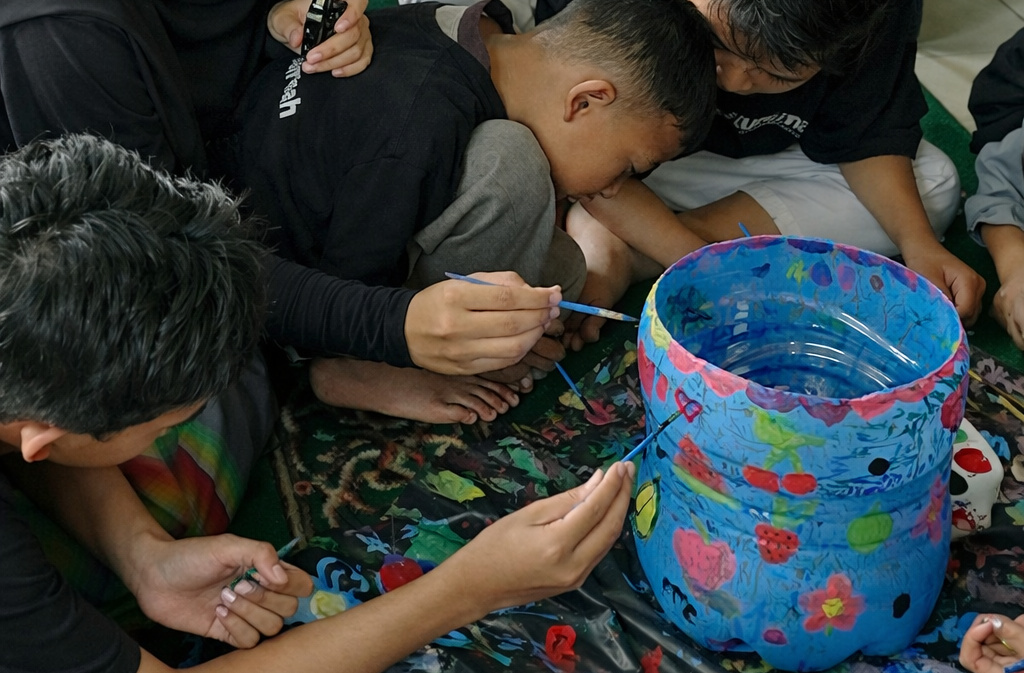
The children were not merely taught theory about waste separation; they engaged in hands-on practice. Starting from collecting plastic waste around the orphanage premises, cleaning it, and transforming it into useful items. Beyond HDPE plastic, old water jerry cans were repurposed with imagination. Using brushes and colourful paint, the cans were decorated with images of suns, flowers, and landscapes. These old containers were now transformed into charming plant pots that brightened the orphanage courtyard, creating a more lively, clean, and comfortable atmosphere.
Guntur Prasetyo, Marketing Communication Manager at SATURUMA, who attended the activity directly, expressed his emotion at witnessing the children’s enthusiasm. “We believe that comfortable spaces are created not only through beautiful design but also through well-maintained environments. Seeing these children so eager to learn and create, we are convinced that instilling environmental awareness from an early age is a long-term investment,” he said.
A representative from Pandawara Group echoed similar sentiments, noting that the children’s participation was key to sustainable environmental movement. “We have always believed that environmental care is a shared responsibility. Witnessing the enthusiasm and joy of the children here, we are increasingly convinced that environmental awareness can be fostered in an enjoyable way. They are agents of future change,” the representative stated.
The activity, lasting several hours, passed quickly. The creative session concluded with an equally enjoyable moment: breaking fast together. All the orphanage children, volunteers from SATURUMA, and Pandawara sat in a circle, sharing simple meals with a spirit of togetherness. A warm atmosphere of kinship emerged, proving that genuine care is not merely about environmental stewardship, but also about sharing happiness with others.
For SATURUMA, this programme is not merely an annual event. The company is committed to making it an ongoing activity that continues to grow, delivering tangible impact for the environment and surrounding community, particularly for those in need of care and compassion. In the hands of orphanage children, plastic waste is no longer a problem. It has become art, a symbol of hope, and proof that great good can emerge from small things.