
Plastic Traders Forced to Raise Prices Due to Increasingly Expensive Procurement Costs
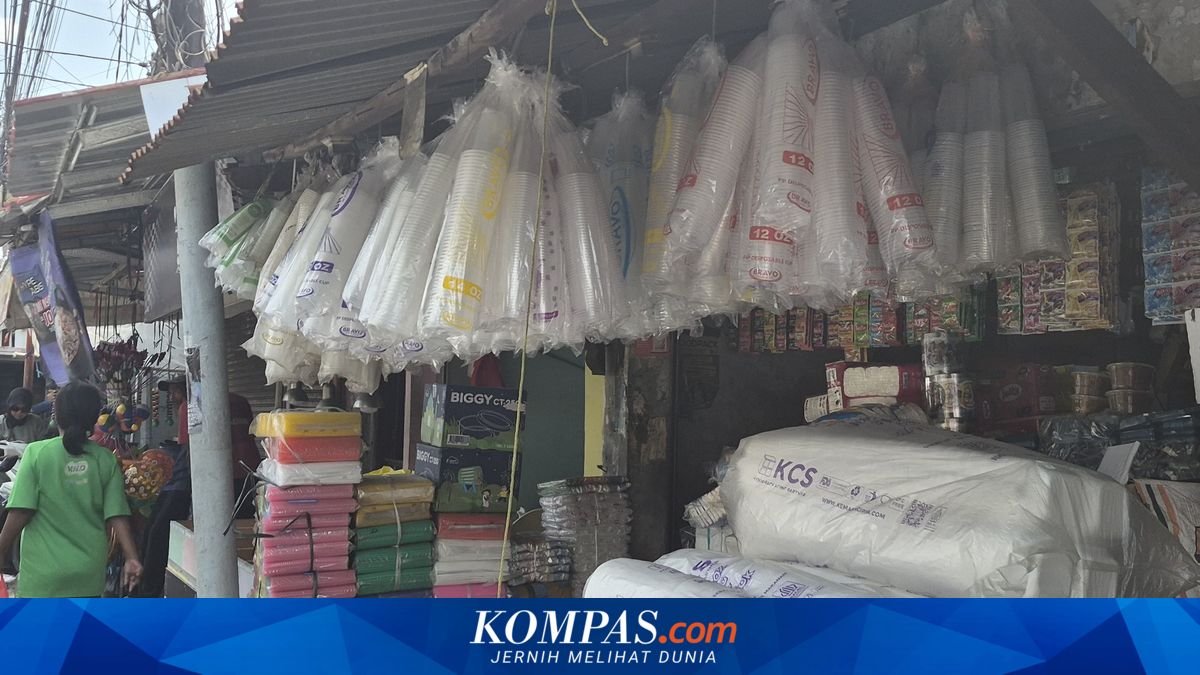
JAKARTA - Several plastic traders at Bukit Duri Market in South Jakarta have been forced to increase prices due to rising procurement costs.
“Because the procurement costs there have gone up, we have to raise our prices,” said one plastic trader named Eci (50), when interviewed by Kompas.com at Bukit Duri Market on Wednesday (18/3/2026).
Eci stated that almost all types of plastic have risen by around Rp 2,000–3,000 per pack. This increase has been occurring since mid-Ramadan 2026.
“If last year there was a 50 percent drop in turnover, it’s even worse now because plastic prices have risen, as customers who usually buy are no longer buying,” she explained.
Not only Eci, another plastic trader named Bintang (19) also admitted to being forced to raise the prices of his goods.
“Because all types of plastic are experiencing increases. The most severe increase is for Polo plastic, which now costs Rp 16,000 per pack,” he said.
Bintang said he has been protested by many buyers due to the skyrocketing plastic prices. He has also lost many customers recently.
“Many customers are complaining because prices have risen and many are not buying anymore,” he clarified.
Economist from the Center of Economic and Law Studies (CELIOS), Bhima Yudhistira, revealed that the cause of the rise in plastic packaging material prices is the difficulty in obtaining oil raw materials.
The increase in plastic material prices is certainly not detached from the US-Israel war with Iran, which resulted in the closure of the Strait of Hormuz, one of the world’s vital maritime shipping routes.
“After the Strait of Hormuz was closed and oil prices rose above $100 per barrel, all petrochemical companies, including plastic factories, are adjusting production costs,” said Bhima when contacted by Kompas.com on Tuesday (17/3/2026).
“The impact on logistics costs, as expectations of rising industrial fuel costs, is also a consideration, and all these costs will be passed on to consumers,” he continued.
The parties under pressure are UMKM, especially ahead of Eid when demand is high.
“Business actors certainly cannot raise the selling prices of food and drinks because turnover could drop amid weakening purchasing power,” Bhima explained.
To date, there are still no signs that prices will decrease.
“Unless the war starts to subside, and plastic raw material prices fall,” he stated.