
Plastic Product Prices Double, Strangling Traders and SMEs
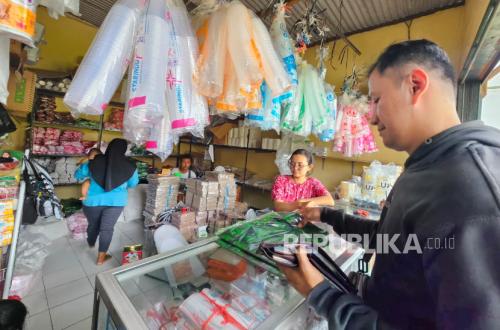
REPUBLIKA.CO.ID, SEMARANG – Plastic product prices in Semarang, Central Java, have experienced a significant surge, even exceeding 100 per cent. This has been a source of complaint among residents and traders, including small and medium enterprise (SME) actors.
Firza (30 years old), a distributor and owner of Toko Plastik Wahid Prima located in Gayamsari sub-district, revealed that the price increase in plastic products occurred gradually, starting in the first week of Ramadan or towards the end of February 2026. She said the first products to see price hikes were plastic cups commonly used by traders to sell iced drinks.
According to Firza, the initial price increase for plastic cups was still considered reasonable, at around 10 per cent. “What used to cost me Rp 250,000 per crate has now risen to Rp 260,000-Rp 275,000 per crate. So the retail price, which used to be Rp 14,000, is starting to become unfeasible,” she said when met by Republika on Tuesday (7/4/2026).
She explained that plastic product prices began to soar as Eid approached. “From a 10 per cent increase, it suddenly jumped 20 per cent, 30 per cent, then 50 per cent within a week, even reaching 100 per cent as Eid neared,” she stated.
Firza assessed that the price increases were unreasonable. “What was previously Rp 250,000 per crate of plastic cups is now Rp 400,000-Rp 500,000. That means a 100 per cent rise,” she said.
She added that the price hikes affected other plastic products evenly, such as packaging plastic and styrofoam. “Styrofoam used to be Rp 25,000 per slop, but now it’s Rp 38,000,” Firza said.
Due to the price increases, Firza admitted she has to inject much larger capital to obtain the same quantity of goods or stock. “It’s like if the usual capital is Rp 10 million, now it can be Rp 20 million,” she said.
Firza said she is reluctant to raise prices for her customers because most of them are SME actors. According to her, the price increases certainly burden them. However, Firza has no other option but to adjust her selling prices.
According to information Firza obtained from suppliers, the plastic product price increases occurred because factories are starting to close orders. “Factories are already closing orders and can’t produce anymore due to constraints with plastic pellets,” she revealed.
She added that the production obstacles seem related to the conflict in the Middle East. “Plastic pellets are petrochemicals, and factories can also operate from crude oil, whereas crude oil is apparently becoming scarce due to the impact of the war,” Firza said.
Firza hopes the government has a solution to stabilise plastic product prices again. “If possible, please find a solution for entrepreneurs, especially in petrochemical materials like this. We need certainty, not just continuous price increases,” she said.
One of Firza’s plastic shop customers is Ipah (32 years old). She is a fried chicken trader. The plastic products she usually buys for trading are styrofoam.
Ipah said the price of one pack of styrofoam containing 100 used to be only Rp 25,000. Now the price has broken through Rp 38,000. “The increase is huge. If it only rose by Rp 1,000 or Rp 2,000, it would be fine,” she said.
Since plastic product prices rose, Ipah admitted she has not yet increased her trading prices. However, because prices are continuously soaring now, Ipah has decided to raise the price of her fried chicken. “At most, I’ll increase it by Rp 1,000. Usually, one package I sell for Rp 10,000, later I’ll sell for Rp 11,000,” she said.
Prices of plastic household items have also risen. This was revealed by Ari, a household goods trader at Johar Market in Semarang. He said the price increase in plastic goods has occurred for at least the last month. “This is especially for the Maspion brand, with a 20 per cent increase in April,” Ari said.
He gave an example: the price of a 30-size Maspion rice thermos used to be around Rp 225,000. “Now the price has risen to Rp 280,000-Rp 285,000,” he said.
Due to the price increases, Ari admitted he has to reduce the quantity he takes from distributors or suppliers. “What used to be a dozen, now half a dozen,” he said.
Additionally, Ari is also compressing profit margins so that selling prices to consumers can be slightly contained.