
Plastic Prices Surge, Businesses Urged to Adopt Eco-Friendly Concepts
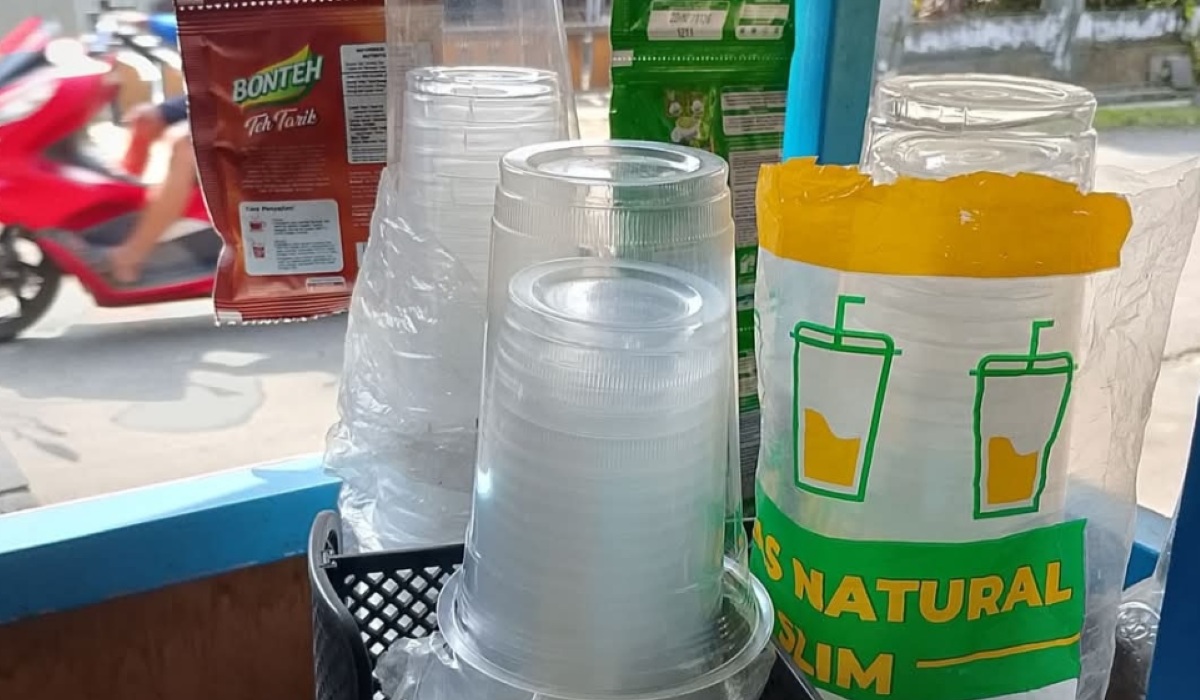
Plastic prices have surged by 50%-100%. The Central Java Industry and Trade Office (Disperindag) is urging traders and industries to switch to environmentally friendly or zero-waste concepts to reduce the use of such materials.
Media Indonesia monitoring on Tuesday (7/4) found that business actors in the industry and trade sectors in several areas of Central Java, such as Pekalongan, Batang, Kendal, Semarang, and Salatiga, are complaining due to the skyrocketing prices of plastic packaging, which have risen 50%-100% from previous levels, forcing them to devise strategies to curb prices.
Facing this plastic price increase, several food traders have been forced to raise selling prices. For example, jumbo ice sellers, who previously sold for Rp4,000-Rp5,000 per glass, are now charging Rp6,000-Rp7,000 per glass. As a result, there has been a decline in turnover in recent days.
Plastic prices, such as 1 kg of PP type, which was previously Rp38,000, have risen to Rp16,000—wait, that seems incorrect; perhaps a reporting error, but as stated. Owol plastic from Rp5,000 to Rp7,000, plastic cups from Rp14,000 to Rp22,000. Even the price surge has affected rice wrapping paper, from Rp10,000 per pack to Rp22,000 per pack.
“Now we are reducing plastic packaging for selling food. For wrapped rice sales, we use banana leaves and old newspapers. The trouble is, finding used old newspapers is now difficult too,” said Ayong, a Padang rice trader in Semarang City.
Head of the Central Java Industry and Trade Office (Disperindag), July Emmylia, said that facing the current plastic price surge, her office is encouraging industries and traders to switch to environmentally friendly or zero-waste concepts, so as not to overly impact the sales of other products.
“We continue to monitor this plastic price surge. Actually, there is some good in this. The direction is towards zero waste, and reducing plastic use has actually been encouraged,” said July Emmy.
According to July Emmy, the implementation of reducing plastic use has not been consistent, so the current situation is an opportunity to strengthen that movement again. “So, in my view, we must start; previously there was a zero plastic initiative, but it suddenly stopped—that’s what we need to push,” she added.
The impact of the Iran vs Israel and US war has also affected Central Java’s export values in the last month, particularly textile goods exports. Therefore, industries are urged to diversify markets.
“There has been a decline in Central Java’s export value of 7.23 percent or around US$300 million, especially in the textile sector to the United States and Middle East regions,” revealed July Emmy.
This decline in textile product export values, according to July Emmy, is triggered by global distribution disruptions and a drop in demand from major markets, as a result of the Iran, Israel, and America war, although there is a positive anomaly in exports to Saudi Arabia.
“Based on data from Certificates of Origin (SKA) issued by Disperindag, demand from that region has actually increased, especially for Hajj pilgrims’ food needs,” she added.