
Plastic Prices in Makassar Surge 50 Percent, Traders Resigned and Consumers Frustrated
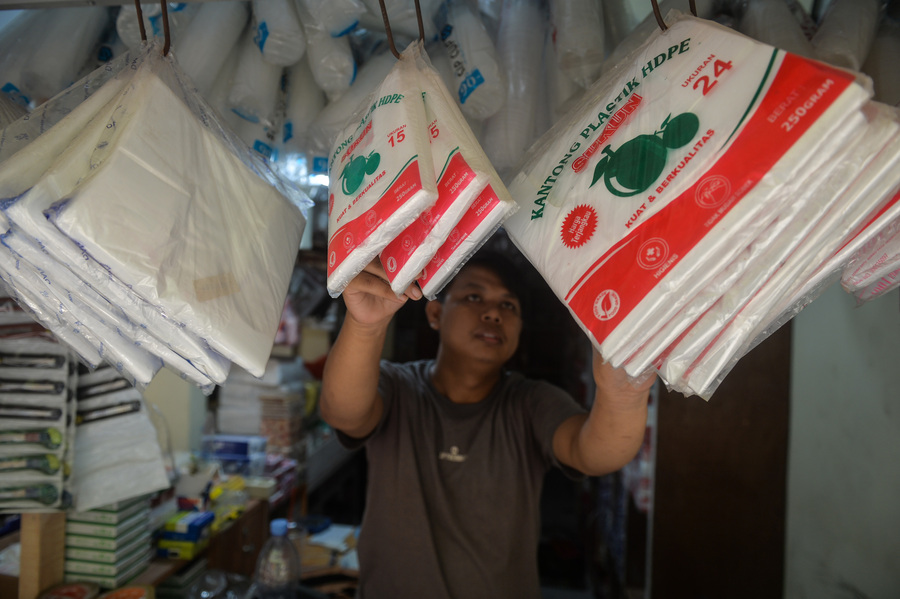
The surge in global plastic raw material prices, driven by economic uncertainty and Middle East conflicts, is now affecting retail traders in Makassar, South Sulawesi.
Micro, small, and medium enterprises (UMKM) in Makassar are facing new pressures. Not only are production costs swelling, but packaging plastic prices have also risen drastically by 30 to 50 percent in recent weeks.
Rini, owner of Toko Rodeo Plastik on Jalan Toddopuli, admits she is overwhelmed. Every day, she has to witness price lists from distributors that keep changing without a clear pattern.
Not only traders, but consumers are also showing varied reactions, from shock to venting frustration.
“The ones that rise the fastest are the clear plastic bags. The black ones are knock-offs, so their increase is minimal. But the clear ones, once again, rise very quickly,” Rini complains.
According to her, price uncertainty is the heaviest challenge. In a normal distribution system, traders can still manage stock strategies. But now, almost all types of everyday plastic needs are experiencing surges.
“The usual 30 percent package discount is gone now. So prices revert to full cost. That means an increase of 30 percent. Some even up to 50 percent,” Rini reveals.
As a result, many small traders are forced to reduce stock quantities or even stop purchasing certain types of plastic deemed too expensive.
The situation is worsened by unstable supplies. Old stocks remaining were depleted during Ramadan, and new stocks arrive in limited quantities.
Ironically, types of plastic that consumers rarely bought before are now in demand because their prices are relatively lower.
“Many items are out of stock. It’s tough. Now, the less popular items are selling well. What can we do? People are looking for cheap options, but nothing is cheap,” Rini says.
She gives an example: plastic that used to be sold cheaply now costs Rp1,000 more per pack. A figure that may seem small, but it burdens traders who rely on daily sales volume.
Consumer reactions are equally varied. Some try to understand, but many vent their frustration directly at the counter.
“If you want to buy, please do. We get it at this price too. It’s impossible for us to sell below cost,” Rini says in a resigned tone.
Despite the frustration, consumers still need plastic. To date, there is no effective substitute for plastic bags, especially for wrapping soupy food, noodles, and wet side dishes. “They definitely need that kind of plastic. It’s a necessity,” she asserts.
Rini says her supplies come from local distributors working with sales representatives.
She suspects this increase is linked to global dynamics, including Middle East conflicts affecting the plastic raw material supply chain. Nevertheless, she admits she has no power to change the situation.
“No strategy. What can we do? Just accept it. If people want to buy, fine. If not? The important thing is we explain the issues. But if people want to get angry, why explain? It won’t get through,” she says.
With prices continuing to rise and no certainty on when they will stabilise, plastic traders in Makassar can now only endure while hoping this pressure eases soon.
Meanwhile, consumers and UMKM must accept higher production and daily shopping costs. Or even forgo using plastic altogether.
“If someone wants to buy fried snacks, I’ll write in front of the stall: please bring your own container, because we no longer provide packaging,” explains Nurlia, one of the UMKM activists in Rappokalling, Makassar.