
Plastic Industry Hit by Middle East War, Here are the Data!
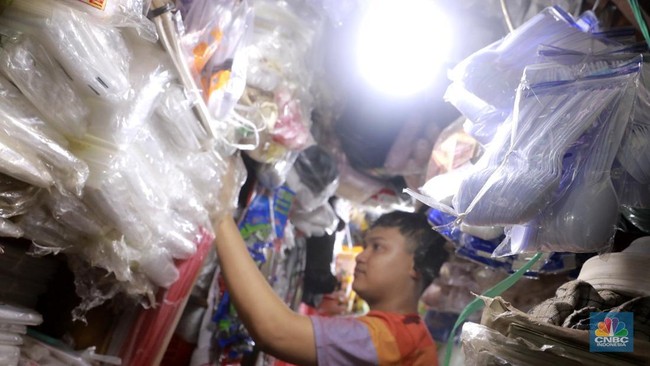
Jakarta, CNBC Indonesia - Pressure on the domestic industry’s supply chain due to the energy logistics crisis in the Middle East is now being felt by upstream industries that still rely on imported raw materials from the region. One such example is the national plastic industry.
The Central Statistics Agency recorded that Indonesia imported plastics and plastic products worth US$873.2 million in February 2026. This commodity has also contributed to the deficit throughout January to February 2026, amounting to US$1.38 billion.
“Plastic goods or HS 39, in February 2026, as I mentioned, reached US$873.2 million,” said Deputy for Distribution and Services Statistics of the Central Statistics Agency (BPS), Ateng Hartono, during the BPS press conference quoted on Thursday (2/4/2026).
In detail, the largest imports of plastics and plastic products came from China at US$380.1 million. This was followed by imports from Thailand at US$82.7 million and from South Korea at US$66.7 million.
Previously reported, the national plastic industry is beginning to feel the pressure due to the escalation of global conflict in the Middle East, which has triggered a rise in raw material prices in the international market. Plastic raw material prices have even been reported to have surged nearly twofold in recent times.
General Secretary of the Indonesian Association of Olefin, Aromatic, and Plastic Industries (Inaplas), Fajar Budiyono, said that the heating geopolitical situation is also affecting the raw material supply chain for the industry, particularly due to the increasingly uncertain conditions in the Strait of Hormuz.
“Currently, the war situation is intensifying, with mutual attacks and the conditions in the Strait of Hormuz becoming more difficult. The industry is focusing on managing feedstock and finished goods,” said Fajar to CNBC Indonesia on Monday (16/3/2026).
Fajar revealed that the increase in plastic raw material prices is currently quite significant. Previously, it was in the range of Rp15,000 to Rp17,000 per kilogram (kg), now the price has reached around Rp30,000 per kg. “From Rp15,000-Rp17,000 up to Rp30,000 (per kg),” said Fajar.
This increase, he continued, occurred in the prices of plastic raw materials used by the domestic industry. “Yes, plastic raw materials,” he concluded.