
Plan to Close Numerous Study Programmes Criticised, Universities Are Not Job Training Institutions
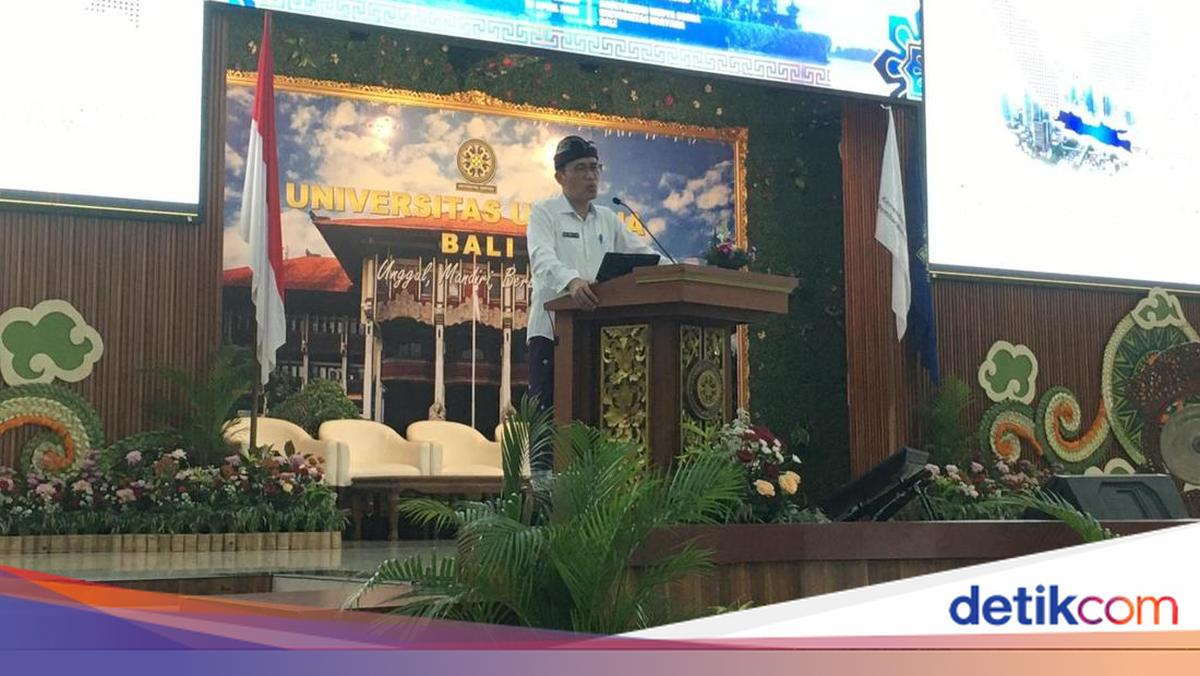
Education observer Indra Charismiadji has sharply criticised the Ministry of Higher Education, Science, and Technology’s (Kemendiktisaintek) plan to close several university study programmes (prodi) deemed irrelevant to workforce needs. Indra described it as an “intellectual genocide” occurring just ahead of National Education Day (Hardiknas) on 2 May.
“This policy carries significant risks if not grounded in comprehensive policy reasoning,” Indra stated in a press release received by detikBali on Monday (27/4/2026).
Indra acknowledges that aligning universities with the job market is essential, in line with global references from the McKinsey Global Institute and the World Economic Forum on job disruptions. However, he questions the government’s decision-making basis.
“The question is, is there a transparent academic study to determine which programmes should be closed?” asked the education observer from the Vox Populi Institute Indonesia.
According to him, without clear criteria, programme closures would rely on mere “feelings” or bureaucratic whims. He fears this could devolve into unhealthy competition among universities for students, rather than quality improvements.
Furthermore, Indra questions the existence of the Talent Roadmap 2045, which should serve as the primary guide. “How can the government close doors to knowledge without knowing what industrial houses it wants to build in the next 20 years?” Indra jabbed.
He emphasises that workforce planning cannot be handled by one ministry alone. Cross-sectoral collaboration is needed to determine which industries to develop and what competencies are required. Without this roadmap, closing programmes is akin to chopping down trees without a replanting plan.
From a humanities perspective, Indra highlights the government’s failure to distinguish between supply and demand sides. He cites Maritime Biology as an example—a discipline that should be a crown jewel in an archipelagic nation like Indonesia.
“Universities might open this programme, but where will graduates work if the absorbing ecosystem isn’t prepared by the state?” he stated.
For Indra, many “irrelevant” programmes are merely victims of the government’s lack of industrial vision. Closing them because graduates aren’t absorbed—while industries aren’t built—is a fatal logical error.
Indra also spotlighted the shift in universities’ roles, now forcibly turned into job training institutions. Yet, the constitutional mandate, per Article 31 paragraph 5 of the 1945 Constitution, positions higher education as a place to develop science and technology for civilisational progress.
“Kemendiktisaintek must stop viewing universities as labour factories,” Indra asserted.
“If we only train people to be workers, they will soon be replaced by machines or technology. Our curricula should encourage humans to become creators,” he added.
According to Indra, closing programmes without substantive reforms will only produce innovation-illiterate unemployment. Education is an investment in civilisation, not merely a market commodity. “Don’t let the ambition to chase employability statistics kill the seeds of innovation that should grow from academic freedom in universities,” he concluded.
Previously, as reported by detikEdu, Kemendiktisaintek plans to close various programmes deemed less relevant to future economic growth needs. This plan will be implemented in the near future.
Secretary General of Kemendiktisaintek, Badri Munir Sukoco, hopes universities will willingly sort and select programmes for closure. The ministry also seeks support from the Consortium of Higher Education Institutions Concerned with Population (PTPK).
“So, in our view at the ministry, this requires a joint policy. We also hope for support from PTPK friends, of course all the Rectors here, so there is willingness,” Badri said at the 2026 National Population Symposium on Thursday (23/4/2026).
“Not just willingness, later there may be some things we must execute in a not too long time regarding programmes; we need to select, sort, and if necessary close them to increase their relevance,” he explained.
Badri noted one oversupplied programme: education. He stated that in higher education statistics, social sciences programmes make up about 60%, with the largest portion being teacher education.
“Our teacher education graduates 490,000 each year,” said Badri.
“While the need for teacher graduates is only 20,000,” he added.