
PKH Task Force Achievements Praised; Key Points to Note
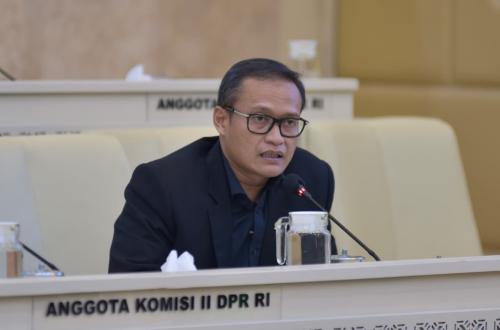
The government’s move through the Forest Area Enforcement Task Force (PKH) is seen as more than just an operation to enforce forest area control or an effort to boost state revenue. More than that, the policy is described as a major test for the future of agrarian justice and the nation’s sovereignty over the management of national natural resources.
Azis Subekti, a member of the Special Working Committee of the House of Representatives for the Resolution of Agrarian Conflicts (Pansus Penyelesaian Konflik Agraria DPR RI), said that agrarian problems that have long plagued Indonesia stem from weak consistency in state governance in regulating the living space, from licensing and area mapping to the supervision of land distribution.
‘There is one reality that must be honestly recognised: most agrarian conflicts today are not merely disputes between citizens, but arise from the country’s own inconsistency in managing the laws, licences, and justice of people’s living spaces,’ Azis said on Tuesday (20 May 2026).
According to Azis, for years Indonesia has built an economy based on natural resources with a weak administrative foundation.
Forest areas are defined on maps, while social realities and economic activities on the ground develop much faster than the state’s ability to update its governance framework.
As a result, the overlaps emerged among HGU (Hak Guna Usaha), mining licences, forest areas, plasma land, and the land of indigenous communities and local residents.
‘We have ended up becoming a country rich in natural resources but poor in certainty of space management,’ he said.
Azis assessed that the existence of the PKH Task Force should be read as the state’s effort to reclaim authority over the control of national living space, which for decades has resided in the grey area between legality, capital power, and weak governance.
He highlighted the PKH Task Force’s achievement, which by May 2026 was reported to have remitted around Rp10.27 trillion to the state treasury from administrative fines and tax revenues as a result of forest area enforcement.