
PKH Benefit Recipients to be Encouraged to Join Merah Putih Village Cooperative Membership
Jakarta — Indonesia’s Minister of Cooperatives Ferry Juliantono has underscored the critical importance of transforming Family Hope Programme (PKH) beneficiaries into members of Kopdes/Kel Merah Putih (Merah Putih Village Cooperatives) as a strategic step in economic community empowerment.
With the establishment of Kopdes Merah Putih Gejugjati, the social protection programmes previously implemented in Gejugjati Village by the Ministry of Social Affairs (Kemensos) can be sustained and extended.
Juliantono expressed hope that once social assistance recipients from Kemensos — including PKH, social aid (Bansos), food assistance, and other programmes — become cooperative members, their standard of living and welfare will improve. This transition will enable beneficiary families to become self-reliant households in the future.
“If all PKH and food aid beneficiaries become Kopdes members, this will ease the Ministry of Social Affairs’ burden in promoting community welfare improvements. Hopefully, this initiative will become a breakthrough that we can replicate in many locations,” Juliantono said in his remarks.
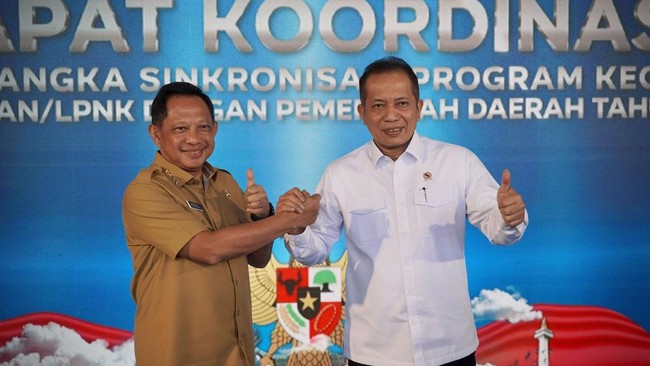
The event was attended by Deputy Minister of Cooperatives Farida Farichah, Minister of Social Affairs Saifullah Yusuf, East Java Deputy Governor Emil Elestianto Dardak, and Pasuruan Regent Rusdi Sutejo.
During the ceremony, symbolic presentation of Kopdes/Kel Merah Putih membership cards were distributed, along with family savings books for PKH beneficiaries, food assistance packages, laying hens, and business capital from BNI and Bank Jatim, each valued at Rp20 million. Additionally, Pupuk Indonesia provided 1 tonne of non-subsidised fertiliser, whilst Perum Bulog and ID Food donated computer equipment, printers, and food assistance packages.
Juliantono reiterated that member families of the PKH programme will gain significant benefits upon joining Kopdes/Kel Merah Putih. Members will secure convenient access to various subsidised commodities such as fertiliser, LPG gas, and other items through the cooperatives.
Beyond consumer status, PKH beneficiaries will receive a share of cooperative profits (SHU) at the end of each accounting period. The SHU is an accumulation of all transactions made by cooperative members and the general public conducting business at the cooperatives.
“When the cooperative generates profit, it will be distributed back to members through the SHU system. This will improve their standard of living, moving them from the first income decile to the second and beyond,” Juliantono explained.
He also emphasised that President Prabowo Subianto does not wish for rural and kelurahan (neighbourhood) residents to merely remain as passive social assistance recipients. Through the Kopdes/Kel Merah Putih initiative, they are being transformed into economic actors.
“They are being encouraged to become economic participants, and now we have established their business entity — the Merah Putih village and kelurahan cooperative,” he stated.
Juliantono explained that the expansion of Kopdes/Kel Merah Putih outlets is progressing massively. According to data from PT Agrinas Pangan Nusantara, which is collaborating with the Indonesian Military, approximately 32,000 outlets, warehouses, and supporting facilities have already been constructed. Of this total, 2,200 have been completed at 100 per cent functionality across Indonesia.
He added that community participation in cooperative membership will increase significantly once the programme is implemented across all villages. Kopdes, he noted, is a genuine empowerment instrument.
Juliantono also emphasised that Kopdes/Kel Merah Putih outlets are intended to serve as off-takers of community products. He noted that the Ministry of Cooperatives will push for the incubation, curation, and financing of local UMKM (small and medium enterprise) products from Pasuruan and East Java, with these products subsequently being marketed through Kopdes/Kel Merah Putih outlets.
“That is the purpose of village cooperatives — to serve as off-takers of community products, whether from livestock rearing, UMKM enterprises, handicrafts, culinary businesses, and so on,” he explained.
In closing his remarks, he urged Kopdes Merah Putih Gejugjati to be optimised and managed professionally. This is essential because Kopdes/Kel Merah Putih is not merely a government programme but rather an instrument for improving community welfare, particularly in villages and neighbourhoods.