
Pilgrims' Compliance and Officer Vigilance Key to Smooth Movement to Mina
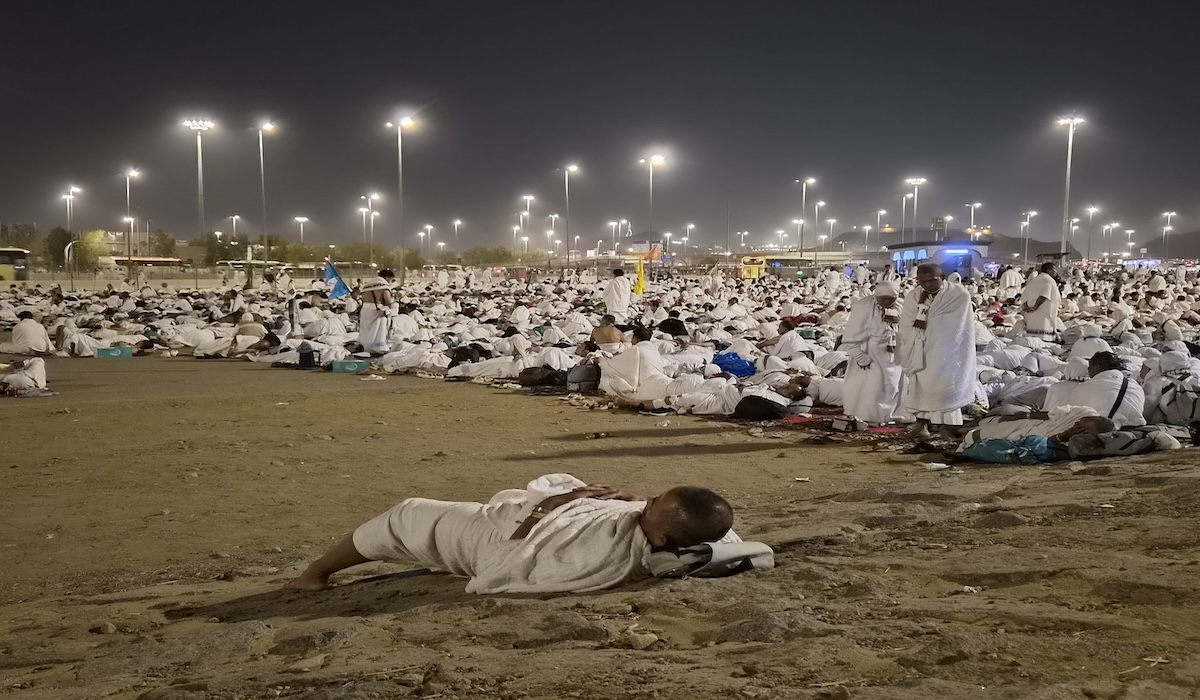
Pilgrims are advised to minimise outdoor activities outside their tents in Arafah. Operational management of the 2026 Hajj has recorded significant achievements, particularly in managing pilgrim mobility during the crucial Armuzna phase (Arafah, Muzdalifah, and Mina). Mitigation strategies designed to alleviate potential delays and congestion in pilgrim movement have proven effective on the ground.
Makkah Regional Office Head Ihsan Faisal reported positive progress in pilgrim movement from Muzdalifah to Mina. After completing the wukuf ritual at Arafah on 9 Dhu al-Hijjah (Tuesday, 26 May), pilgrims were gradually dispatched to Muzdalifah from the afternoon. Consequently, all Indonesian Hajj pilgrims were successfully evacuated and dispatched to Mina by 7am Arabia Standard Time (AST). Concerns over potential delays in movement to Mina were averted thanks to pilgrim discipline, dedicated staff efforts, and optimised movement schemes.
‘Alhamdulillah, by 7am on 10 Dhu al-Hijjah yesterday, we were able to clear all pilgrims from Muzdalifah. This is remarkable—faster than last year’s 7.30am,’ Ihsan stated during an interview on Thursday (28 May).
According to Ihsan, the key to accelerating the evacuation was implementing a two-lane system in Muzdalifah. Once bus arrivals from Arafah ceased and all pilgrims had disembarked overnight, the lanes were repurposed to expedite departures to Mina.
‘After pilgrims disembarked from Arafah buses by dawn, we immediately activated the two-lane system. This effectively dispersed queues for buses via both right and left entrances,’ he explained.
Ihsan also praised pilgrims for their orderly queuing and adherence to staff instructions on-site. This collective discipline is crucial for maintaining smooth operations in subsequent rituals.
Regarding the mabit (overnight stay) phase in Mina, Ihsan noted significant infrastructure improvements at the Jamarat area to ensure pilgrim safety. The stoning area now features a three-storey structure with a one-way flow system to prevent conflicting pedestrian movements.
‘The Jamarat has undergone major modernisation. Previously a single pillar, it has now expanded significantly—featuring first, second, and third floors,’ he said.
Indonesian pilgrims are primarily directed through the third floor due to its strategic accessibility from the Mina tent area. Movement routes pass through the first Muaisim tunnel, emerge into open areas, then re-enter a second tunnel leading directly to Jamarat’s third floor.
‘This allows direct access to the Jamarat for throwing stones at Ula, Wustha, and Aqabah. After Aqabah, pilgrims turn right, loop back, and return to their tents,’ Ihsan explained.
For pilgrims on the tanazul program, the first floor is designated for stoning before continuing their journey.
Despite the smooth initial phase, Ihsan urged pilgrims to remain vigilant and maintain stamina during the three-day mabit period in Mina. Regular evaluations will continue to ensure service quality remains high.
‘Future evaluations aim for further improvement. Pilgrims must stay organised and disciplined, while staff must remain resilient amid potential crowd tensions,’ he added.
Ihsan expressed hope that the positive trends in Arafah and Muzdalifah would drive success through the Mina phase until the Hajj concludes.
‘Insha’Allah, everything proceeds smoothly, and we hope the Mina phase also unfolds successfully,’ he said.
Following the completion of the Aqabah stoning on 10 Dhu al-Hijjah, millions of pilgrims today (Thursday, 28 May) crowded the Jamarat complex in Mina, scheduled to perform the triple stoning of Ula, Wustha, and Aqabah, marking the start of Tashriq rituals until 13 Dhu al-Hijjah. On 11 Dhu al-Hijjah (first Tashriq day), pilgrims are required to stone all three pillars sequentially, using seven pebbles each. Due to crowd complexity, Saudi authorities and Indonesia’s Hajj Operational Staff (PPIH) continue issuing strict advisories against stoning during peak hours, especially midday. Extreme heat and crowded corridors pose high risks of acute fatigue and severe dehydration among pilgrims.