
Pigai: Those Seeking to Abolish Free Nutritious Meal Programme Are Opposing Human Rights
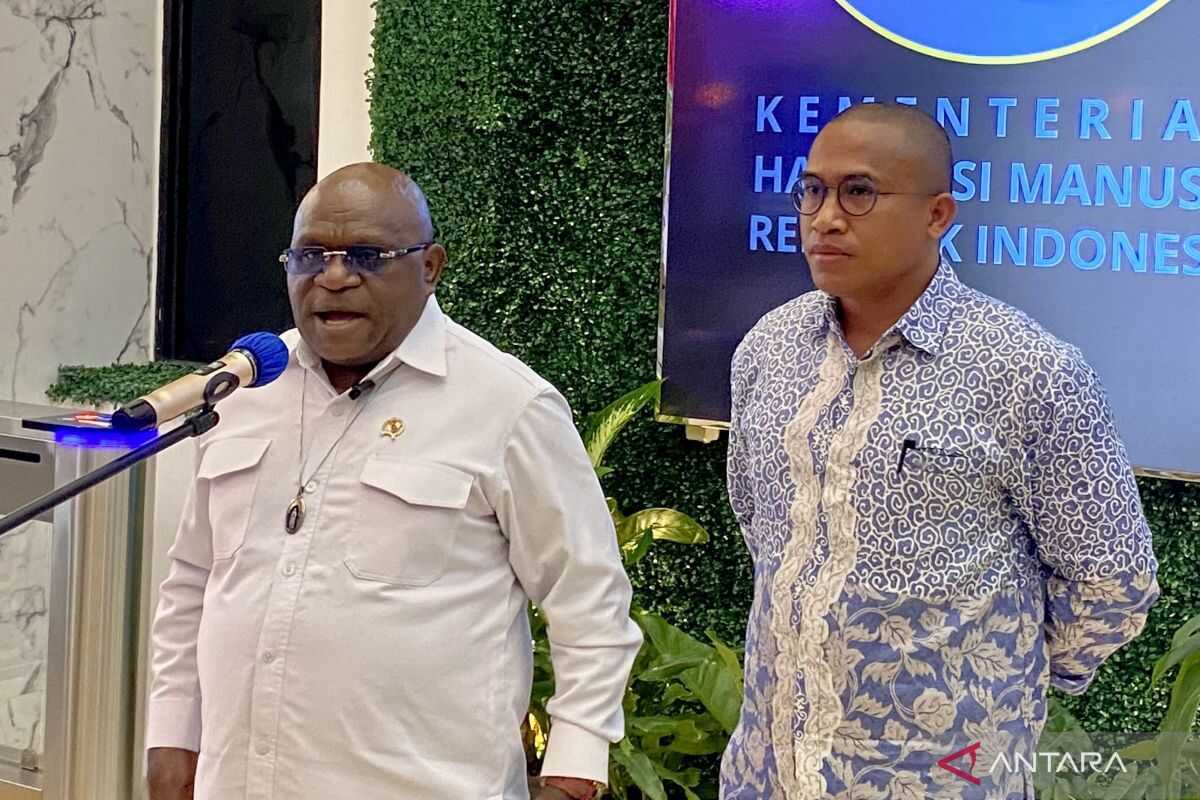
Jakarta (ANTARA) - Human Rights Minister Natalius Pigai has stated that parties seeking to eliminate the free nutritious meal programme (MBG) and other populist programmes are tantamount to opposing human rights.
“One point that needs to be understood is that those who wish to abolish the free nutritious meal programme and others are people who oppose human rights,” Pigai said at a press conference at the Ministry of Human Rights office in Jakarta on Friday.
The minister made the statement in response to a terror incident experienced by Tiyo Ardianto, head of the Student Executive Body (BEM) at Gadjah Mada University (UGM), after he criticised government policy.
In a letter submitted to the United Nations International Children’s Emergency Fund (UNICEF), Tiyo had criticised the MBG programme. He highlighted the programme’s financing, which he argued sidelined budget priorities for addressing inequality.
Tiyo’s criticism was grounded in the case of a primary school pupil in East Nusa Tenggara who allegedly took his own life due to his family’s economic hardship.
According to the Human Rights Minister, government programmes such as the MBG, free health checks, People’s Schools, fishing village development, and food self-sufficiency represent the state’s efforts to fulfil the basic needs of its citizens.
He argued that these programmes are aligned with human rights. “Therefore, those who wish to abolish free nutritious meals, free health checks, free education through People’s Schools, and the Red and White Cooperatives are people who oppose human rights,” he said.
President Prabowo, he added, has affirmed that power fundamentally belongs to the people, as reflected through the government’s priority programmes.
“For 80 years, the throne has often been associated with those in power, the elite. Wealth has been associated with the elite. Today, Prabowo is directing the throne to the people and wealth to the people,” he said.
He further stated that criticism aimed at improvement is permitted in a democratic state. However, he expressed regret over criticism directed at abolishing programmes intended for the public.
“I give people the opportunity to offer criticism, but they must not seek to abolish or eliminate these good programmes,” he said.