
Philippines and Thailand Urge Employees to Work From Home to Save Fuel—What About Indonesia?
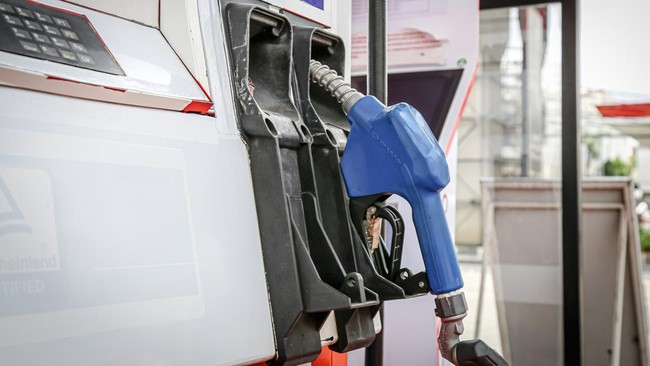
Jakarta — Several neighbouring countries such as the Philippines and Thailand have begun implementing work-from-home (WFH) policies for their citizens. The geopolitical conflict in the Middle East is being felt across Southeast Asia, with disruptions to global oil supply triggering spikes and volatility in fuel prices.
Minister of Energy and Mineral Resources Bahlil Lahadalia commented on neighbouring countries’ policies, noting that Indonesia has not yet issued any fuel conservation guidance. The government is currently assessing Indonesia’s specific needs, with Lahadalia emphasising that such policies must be tailored to each country’s circumstances.
“We are currently reviewing our position. What other countries do depends on their own conditions,” Lahadalia said at the Energy and Mineral Resources Ministry office in Jakarta.
The ministry is examining fuel consumption efficiency by maximising domestic energy sources. “Efficiency measures may include accelerating the rollout of B50 fuel as an alternative, and faster implementation of E20. If fossil oil prices exceed US$100 per barrel, fuel blending would be more cost-effective,” he added.
However, Lahadalia assured the public that subsidised fuel prices will not increase at least until the forthcoming Eid celebration. “I want to assure the public there is no need for concern regarding fuel prices, as there will be no subsidy fuel price increases until after Eid. There should be no reason for panic buying,” he stated.
Thailand’s Response
Thailand’s government has requested civil servants to work from home where possible as part of national energy-saving measures. Authorities have also instructed government offices to raise air conditioning settings to 26 degrees Celsius to reduce electricity consumption. “The government wants all sectors to use resources wisely and effectively,” Thailand’s government said in an official statement.
Officials have been instructed to avoid foreign travel during this period of energy uncertainty. These measures follow Thailand’s assurance of securing sufficient oil supply for approximately two months ahead. To preserve energy reserves, Thailand has temporarily halted oil exports.
Philippines’ Response
Philippines President Ferdinand Marcos Jr. announced the implementation of a four-day working week in several executive branch offices beginning 9 March. Marcos said this is part of government efforts to conserve energy and reduce fuel consumption as global oil prices surge following conflict in oil-producing regions.
“Starting Monday, 9 March, we will temporarily implement a four-day working week in certain executive branch offices. This excludes offices providing emergency or essential services, such as police, fire departments, and frontline services to the public,” Marcos said.
He ordered all government agencies to significantly reduce energy consumption. “I have directed all government agencies to save and reduce electricity consumption and fuel expenditure by 10 to 20 per cent,” he stated.
In addition to reducing working days, Marcos has temporarily banned official travel and non-urgent government activities, including meetings that could be conducted in-office. Several government agencies have already begun preparing additional measures. From 13 March, the Philippines Department of Trade and Industry will shift operations of its Makati City offices to remote work arrangements.
For the private sector, alternative work arrangements have been permitted under the Telecommuting Act passed in 2018.