
Philanthropy Alliance and the Future of Collaborative Governance in Poverty Alleviation in Indonesia
President Prabowo Subianto has made an important statement regarding his development vision: “I have been mandated to eradicate poverty from the soil of Indonesia.” This statement reflects a national policy direction that positions poverty eradication as a collective agenda requiring the involvement of various development stakeholders. Poverty alleviation efforts cannot be separated from villages, which serve as the primary living space for the majority of Indonesia’s population. The commemoration of National Village Day on 15 January 2026 therefore becomes relevant to reassert the strategic position of villages in national development, reminding us that villages represent the frontline element of governance closest to the people and serve as an important foundation in safeguarding the sustainability of the Unitary State of the Republic of Indonesia.
Examining the conditions of villages across various regions of Indonesia reveals a number of challenges in realising community independence and welfare. In many villages, strengthening institutional capacity, basic services, and supporting infrastructure for social and economic life still require continuous attention. Meanwhile, the quality and sustainability of primary education have not yet become an evenly distributed foundation, whilst access to healthcare services in certain areas, particularly remote regions, still needs to be further expanded. These challenges are further compounded by environmental vulnerabilities, including disaster risks and limited environmental management systems at the village level. All of these conditions demonstrate that poverty is a multidimensional problem, requiring integrated approaches involving various sectors, actors, and scales of intervention.
It is noteworthy that various stakeholders have demonstrated concern and commitment in responding to poverty alleviation challenges. The government, through empowerment-based and village-centred development approaches, has opened increasingly broad spaces for community participation and civil society organisations. In line with this, philanthropy, the private sector, academia, and civil society organisations have contributed through diverse social initiatives, programme innovations, and community support. This diversity of actors and approaches represents an important asset for Indonesia’s development.
Moving forward, the primary opportunity for strengthening lies in how these various efforts can become more interconnected and complementary, so that their impact can be felt more widely and sustainably. There remains potential to strengthen inter-programme synergy, develop shared learning, and optimise data utilisation as a basis for collaborative planning and decision-making. This underscores the importance of a collaboration mechanism that can strengthen interconnectedness between development efforts, allowing various initiatives already underway to complement one another within a more systematic and sustainable framework.
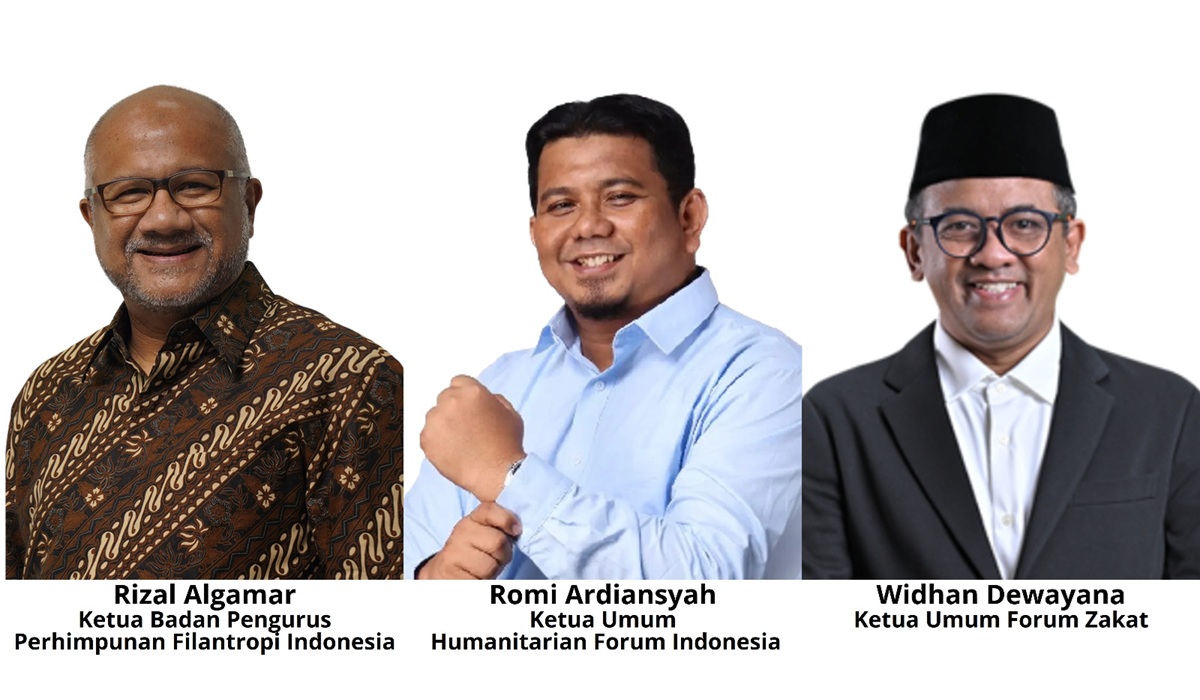
From this need, the Multi-Stakeholder Forum (MSF) Philanthropy Alliance was developed as a joint initiative by the Indonesian Philanthropy Association, the Humanitarian Forum Indonesia, and the Zakat Forum, through a process of dialogue and idea exchange with various stakeholders, including government. The MSF was established to strengthen interconnectedness amongst development actors in addressing poverty alleviation challenges in a more coordinated manner.
The MSF is designed as a collaborative governance architecture—a collaboration platform that brings together government, private sector, philanthropy, academia, and civil society to plan, implement, and evaluate programmes in an inclusive, transparent, and accountable manner. Through this approach, each development actor is encouraged to contribute according to their role and comparative advantage, not in isolation, but as part of a collective effort in supporting the national development agenda.
This approach aligns with the collaborative governance framework outlined by Chris Ansell and Alison Gash (2008), which emphasises the importance of sustained dialogue, shared data use, trust, and long-term commitment in producing more effective solutions. In this context, the MSF is positioned as a co-creation space where stakeholders come together to align direction, share learning, and formulate solutions based on actual needs.
To support these objectives, the MSF is built on three main pillars: strengthening cross-sector collaboration, joint resource mobilisation, and enhancing integrated monitoring-evaluation-learning (MEL) systems capacity. Through a network of more than 300 members encompassing philanthropic institutions, development partners, and the private sector, the MSF creates opportunities to connect financial resources, technical expertise, community knowledge, and policy networks in a more coordinated manner to support poverty alleviation efforts.
The added value of the MSF lies in its ability to bring together diverse resources—not only funding, but also data, technical expertise, local knowledge, and networks of development actors—within a shared framework. This approach opens the space for more targeted programme planning, helps minimise potential overlap, and encourages more effective utilisation of social resources. Over the medium term, the MSF also seeks to develop collaborative financing schemes, including through blended finance and resource pooling, so that best practices produced can be expanded and adapted in other priority areas.
It is important to emphasise that the MSF operates within the framework of village development already established by the government.