
PGN Prepares 5.7 Trillion Rupiah Capital Expenditure for Gas Infrastructure in 2026
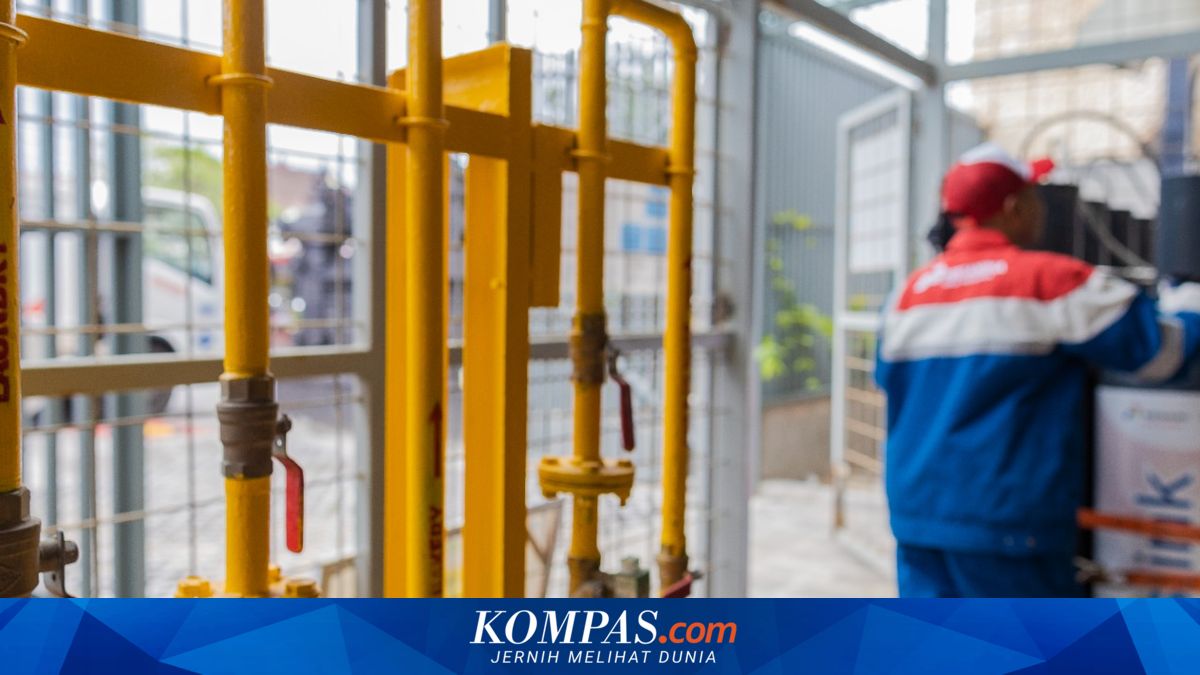
JAKARTA — PT Perusahaan Gas Negara (Persero) Tbk (PGN) is preparing capital expenditure of 353 million US dollars, or approximately 5.7 trillion rupiah, in 2026 to strengthen the development of integrated gas infrastructure in Indonesia. This move is also aimed at supporting national energy resilience whilst promoting the use of natural gas as a transition energy source.
The capital expenditure allocation represents an increase of approximately 14 per cent compared to 2025. The investment funds will be used for developing gas transmission and distribution networks, expanding customer services, and strengthening upstream oil and gas activities.
PGN Chief Executive Officer Arief Kurnia Risdianto stated that the company’s strategic direction in 2026 is focused on operational strengthening and selective business expansion whilst maintaining sustainability principles.
“PGN’s strategic direction in 2026 is focused on operational strengthening, business portfolio consolidation, and selective high-value business expansion,” said Arief in Jakarta on Monday, 9 March 2026.
“All of this is balanced with disciplined financial strategy and full commitment to implementing Health, Safety, Security, and Environment (HSSE) aspects at every level,” he added.
Beyond-pipeline development is being carried out through the use of Compressed Natural Gas (CNG) and Liquefied Natural Gas (LNG) so that gas distribution can reach more regions and customers.
Several priority projects being prepared include customer attachment, expansion of household gas networks (jargas) in the Sumatra and Java regions, construction of the Tegal–Cilacap Pipeline, and extension of the Sei Mangkei Pipeline.
Additionally, PGN is planning the development of a regasification terminal in East Java to strengthen the national gas supply chain. The company is also continuing to develop low carbon business as a source of long-term growth, including through biomethane initiatives.
The funds will be used to improve exploration performance and support increased oil and gas lifting.
Main programmes being prepared include drilling activities in the Pangkah, Ketapang, and Fasken Working Areas. The company is also preparing contract extension in the Pangkah Working Area and conducting three-dimensional seismic survey and processing.
“To ensure the achievement of operational performance targets, we are strengthening HSSE aspects with a zero accident target,” said Arief.
“Meanwhile, for sustainability commitment, we are targeting emissions reduction of 35,000 tonnes of CO2 equivalent,” he said.
PGN also considers collaboration with stakeholders as an important factor in facing the increasingly volatile dynamics of the energy industry.
Through strengthening synergies with various parties, PGN hopes to maintain transparency and align market expectations regarding the company’s business prospects in the future. With this foundation, PGN is optimistic about remaining adaptive and competitive amid changes in the global energy industry.