
Petrol Cars Face End Due to Korean Researchers' Discovery
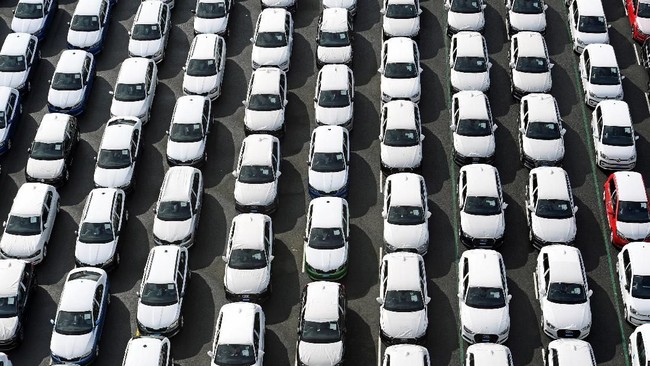
The rapid advancement of technology worldwide is also impacting the vehicle sector. Electric vehicles are increasingly dominating roads across the globe, threatening the existence of petrol vehicles.
Recently, a new electric vehicle battery innovation was discovered through research at Pohang University of Science and Technology in South Korea. The researchers successfully developed a silicon-based battery for electric vehicles.
This finding represents a turning point in the automotive industry, as it could eliminate dependence on fuel oil, or petrol, while also accelerating the transition to electric vehicles.
One of the advantages of the discovered silicon battery is its exceptionally long range. A single charge is claimed to cover up to 1,000 km.
Researchers from Pohang have also overcome the challenges of using silicon batteries. This type of battery expands up to three times when charged and only shrinks back afterwards.
Therefore, most research has attempted innovations. Batteries with nano-sized silicon particles that are extremely small.
A new problem then emerged. Nano particles require expensive production costs and a complex process.
Meanwhile, researchers from Pohang took a different approach by using silicon 1,000 times larger, in micro scale. This makes production easier and cheaper, with more generous energy density.
Regarding the expansion and contraction of silicon particles, the researchers used a polymer gel electrolyte. This changes as the silicon changes shape.
The gel is chemically bonded with radiation through electron beam exposure. The result is a stable bond even as the silicon particles expand and contract.
As a result, they created a silicon battery equivalent to standard lithium-ion with an energy density 40% greater.
According to the researchers, their designed silicon battery can be easily applied. “We used a micro-silicon anode, resulting in a stable battery. This research brings us closer to a high-energy-density lithium-ion battery system,” said Park Soojin from Pohang University in her research, quoted from Postech, Tuesday (24/3/2026).