
Petrol and Jet Fuel Consumption Rises During Eid Period
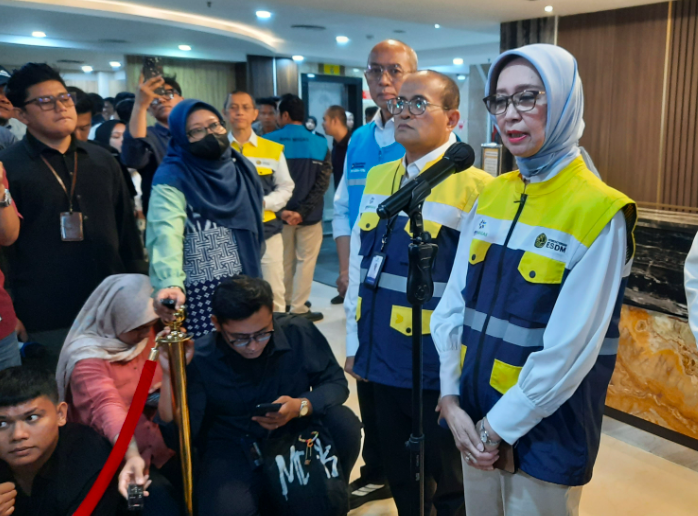
The National Command Post for the Energy and Mineral Resources (ESDM) Sector for the Ramadan and Eid al-Fitr (RAFI) Period in 2026 has officially closed. Chair of the National ESDM RAFI Command Post 1447, Erika Retnowati, stated that fuel stock resilience was reported as safe during the 20-day operation from 12 to 31 March 2026.
She said that fuel stock resilience for gasoline (petrol), gasoil (diesel), kerosene (household fuel oil), and avtur was maintained at an average of over 20 days.
The average daily fuel consumption increase during the command post period compared to normal distribution was most significant for gasoline. Gasoline rose by 15%, while gasoil fell by 18%. Avtur increased by 7.2% compared to normal distribution.
“National fuel distribution peaked for gasoline during the homecoming flow on 19 March 2026, with an increase of 37% from normal distribution. For the return flow, it occurred on 25 March 2026 with a 20% increase from normal distribution,” said Erika during a press conference at the BPH Migas Office in South Jakarta on Tuesday (31/3).
She noted that the gasoline consumption increase exceeded the estimated 12%. According to Erika, the main factor was the increased number of homecomers and the length of the holiday period. She did not deny the presence of panic buying but said it was limited.
“There was some, but not much panic buying, only in a few areas. But the number of people going home this time was extraordinary. Also, the holiday period was long, so besides going home, many people went on holidays. That certainly added to fuel consumption,” she explained.
For avtur products supporting air transport activities, the highest increase during the homecoming flow occurred on 18 March 2026, reaching 18% from normal distribution. For the return flow, it was on 29 March 2026 with a 22% increase from normal distribution.
Erika stated that BPH Migas had monitored daily fuel stock volumes and distribution realisations. Additionally, field supervision was conducted to monitor fuel provision and distribution conditions across 67 regencies and 21 provinces. “The supervision results show that fuel distribution was safe and smooth,” she said.
She also assured that during the national command post period, LPG distribution was safe. All agents and standby depots operated well to serve the public during the period.
“The Ministry of ESDM, through the Directorate General of Oil and Gas together with Pertamina, ensured that 40 LPG terminals, 757 SPBE, as well as 6,662 LPG agents and 867 NPSO operated well during Rafi (Ramadan-Eid al-Fitr),” she explained.
Additionally, LPG agents and standby depots operated 24 hours in special areas with high demand. National LPG stock resilience averaged 11.6 days during the command post period.
“Average LPG distribution during this command post period was 34,206 metric tons, or an increase of 6.5% from the normal average. The peak distribution increase occurred on 16 March 2026 at 33,428 metric tons, or 4.1% higher than the normal average of 32,111 metric tons,” she concluded.