
Pesticide Prices Set to Rise 30%, Agriculture Minister Sets This Limit
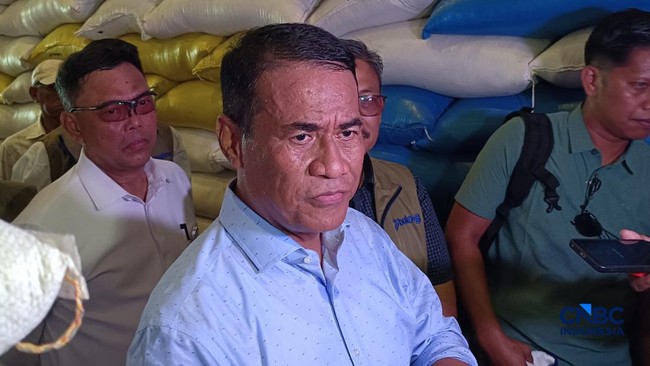
Makassar, CNBC Indonesia - Agriculture Minister Amran Sulaiman has reminded pesticide producers and traders not to raise prices excessively amid global geopolitical pressures that are driving up production costs. This warning comes after signals from the pesticide industry players planning to increase prices by 20%-30% due to surges in imported raw material prices and the weakening rupiah.
In response, Amran assessed that pesticide price increases should not be too high or remain within reasonable limits. He claimed to understand the pesticide industry because he has direct experience in the field before serving as Agriculture Minister.
“If possible, don’t raise it too much. I used to have a pesticide and rodenticide factory. But I closed it because I became Minister,” said Amran when met at the Bulog Panaikang Warehouse, Makassar, South Sulawesi, on Sunday (5/4/2026).
Amran also asked business actors not to take excessive profits amid the current situation and to continue considering the condition of farmers.
“Now, I ask, you’ve been profiting for decades. Please serve our country. It’s okay to profit, but not too high. Why? We must care for our brothers. Don’t take too much profit. Up to 30 percent. Because I have discoveries. We have a factory. My expertise is there,” he stated.
However, Amran mentioned that the use of pesticides in agriculture is not very significant, as the volume used is relatively small compared to other production components in the agricultural sector.
“Like this, the quantum of pesticides is not too large, right? Hopefully no pests. So the quantum is not too large, the most dangerous is fertiliser. That’s the danger,” he explained.
He emphasised that the government has prepared various supports to maintain agricultural productivity, from agricultural machinery (alsintan) to irrigation infrastructure.
“Land processing, agricultural machinery we have prepared, pump irrigation. That’s government assistance. Irrigation, government assistance. So, Indonesian farmers are safe,” he said.
When asked about the tolerable price increase limit, Amran mentioned that the increase figure should remain low.
“Yeah, small. Don’t raise it too much,” said Amran.
“5 percent, 10 percent. The important thing is to profit first,” he added.
He also assured that the government has prepared anticipatory steps, including the provision of pesticides by the government if needed.
“Yeah, the amount is small. But we are also preparing pesticides from the government. So, no. Don’t worry,” Amran stressed.
Previously, national pesticide producers through the Indonesian Pesticide Producers Association (APROPI) stated they would raise product prices by around 20% to 30%. This increase is triggered by surges in imported active ingredient prices from China, which are sensitive to oil prices, as well as rises in solvent costs based on oil and plastic packaging.
APROPI General Chairman Yanurius Nunuhitu said the cost pressures are becoming heavier due to the global geopolitical situation causing raw material shortages and the weakening rupiah exchange rate. Even solvent prices were reported to have risen by more than 60%, while plastic packaging is also affected by price increases.
In addition to potentially increasing farmers’ production costs, the pesticide price hike is also feared to trigger the circulation of counterfeit products in the market. Therefore, industry players have asked the government to also monitor product quality while preparing mitigation steps to protect farmers.