
Pertamina's Eastern Indonesia Region Exceeds Oil and Gas Production Target, Eyes New Opportunities
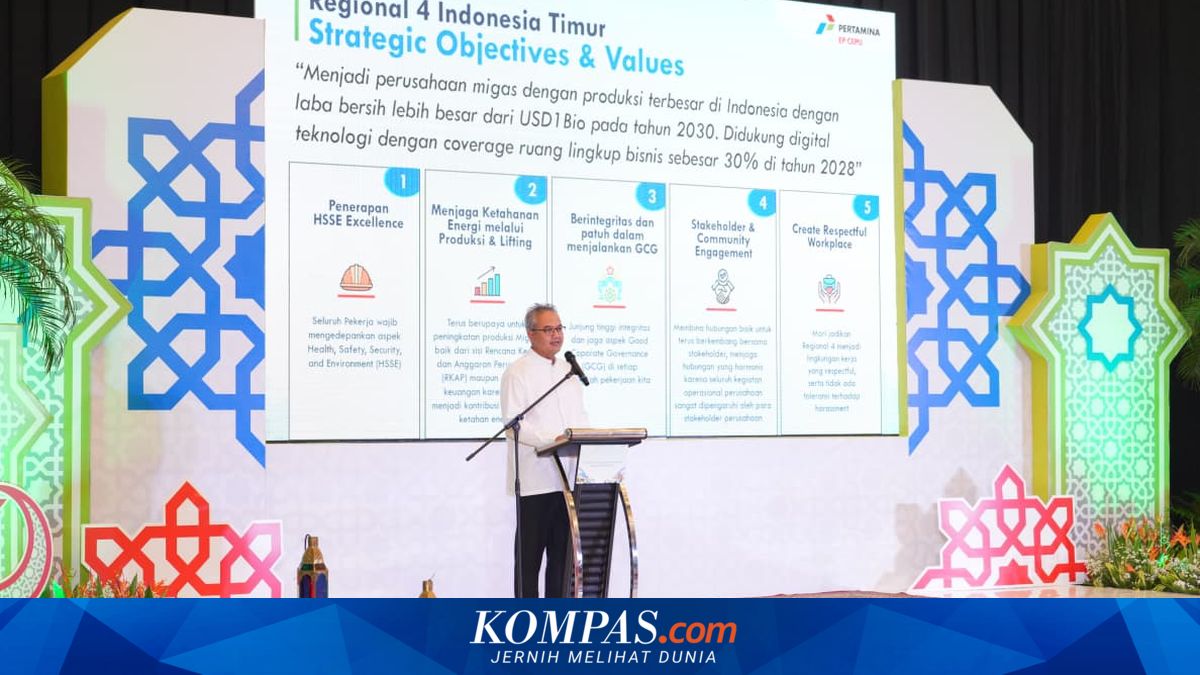
Jakarta — Pertamina’s Eastern Indonesia Subholding Upstream achieved oil and gas production exceeding its 2025 target, providing the company with a strong foundation to pursue new hydrocarbon opportunities in eastern Indonesia’s region.
Throughout 2025, the Eastern Indonesia Regional unit recorded oil and gas production of 208,500 barrels of oil equivalent per day (mboepd), representing 100.4 per cent of its planned budget target. Actual lifting operations reached 171,000 mboepd, or 102.9 per cent of the company’s target.
Regional Director Ruby Mulyawan stated that the unit is targeting increased production this year by strengthening various operational programmes, ranging from new well drilling to the application of production-enhancement technologies.
“To achieve that target, the Eastern Indonesia Region continues to undertake various efforts such as workover programmes, drilling of development wells and exploration wells to add resources, as well as Enhanced Oil Recovery methods like CO2 flooding, which is currently being developed in the Sukowati Field,” Mulyawan said in a written statement.
Mulyawan added that digital technology application is being aggressively implemented to support operational efficiency whilst maintaining sustainable hydrocarbon production in the region.
Meanwhile, workplace safety, security and environmental considerations—health, safety, security and environment (HSSE)—remain the company’s primary operational priority to support achieving production targets.
“HSSE implementation remains the main focus both at the regional office and across all operational zones,” said Mulyawan.
The Eastern Indonesia Region manages work areas distributed across East Java, Sulawesi, Maluku and Papua, encompassing both offshore and onshore assets. The region also oversees one strategically important downstream asset: Donggi Senoro LNG, which is among eastern Indonesia’s key gas projects.
An unnamed company official noted that whilst 2025 performance was satisfactory regarding both production and lifting operations, 2026 requires careful consideration of global geopolitical conditions that will inevitably influence the hydrocarbon industry, necessitating precisely calibrated strategies.