
Pertamina Reveals 19% of Indonesia's Oil Imports Pass Through the Hormuz Strait
Pertamina Reveals 19% of Indonesia’s Oil Imports Through the Hormuz Strait
Jakarta, CNBC Indonesia — PT Pertamina (Persero) has disclosed that 19% of Indonesia’s crude oil imports originate from the Middle East and transit via the Hormuz Strait, the shipping route currently closed by Iran.
Muhammad Baron, Vice President of Corporate Communications at Pertamina, confirmed that crude cargoes from the Middle East account for about 19% of total import value. ‘Around 19%, and we have already implemented distribution through regular alternative systems and emergency channels. So for national energy resilience, Pertamina has communicated this system to meet domestic needs,’ Baron said at Grha Pertamia on Wednesday, 4 March 2026.
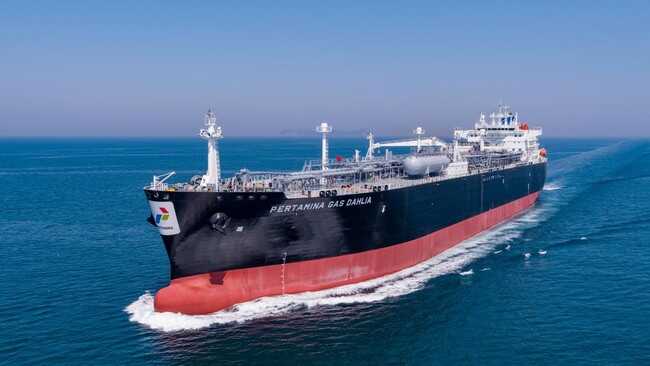
Meanwhile, four Pertamina-owned oil tankers are currently in the Middle East. Two of them remain trapped in the Hormuz Strait, whose route is closed by Iran. ‘The main point is that we continue to monitor and ensure the safety of the crews and the security of the company’s assets. There are indeed two Pertamina ships there, perhaps four, but two are outside the Hormuz Strait,’ Baron said.
The condition of the tankers is currently described as safe. The company continues to coordinate with the crews and with the Ministry of Foreign Affairs to safeguard the assets.
Decide on Oil Imports to the United States
Energy and Mineral Resources Minister (ESDM) Bahlil Lahadalia stated that the government has prepared anticipatory measures for the closure of the Hormuz Strait. ‘On the President’s instruction, given the developments. Now the Hormuz Strait is closed due to the Israel–United States–Iran tensions, which affect global energy,’ Bahlil said at a press conference at the Ministry of ESDM on Tuesday, 3 March 2026.
He noted that around 20-25% of Indonesia’s crude imports come from the Middle East via the Strait. The remainder is sourced from other regions including Africa, the United States, and Brazil.
Therefore, to anticipate potential supply shortages, the government plans to redirect part of the crude imports from the Middle East to the United States to avoid being caught in ongoing global dynamics. ‘This cannot be predicted when it will end. It could be fast or slow. We take the worst-case scenario at present: crude from the Middle East partially redirected to the United States to ensure availability,’ said Bahlil.
(pgr/pgr)