
Pertamina Patra Niaga Restores Former Mining Site in Palembang
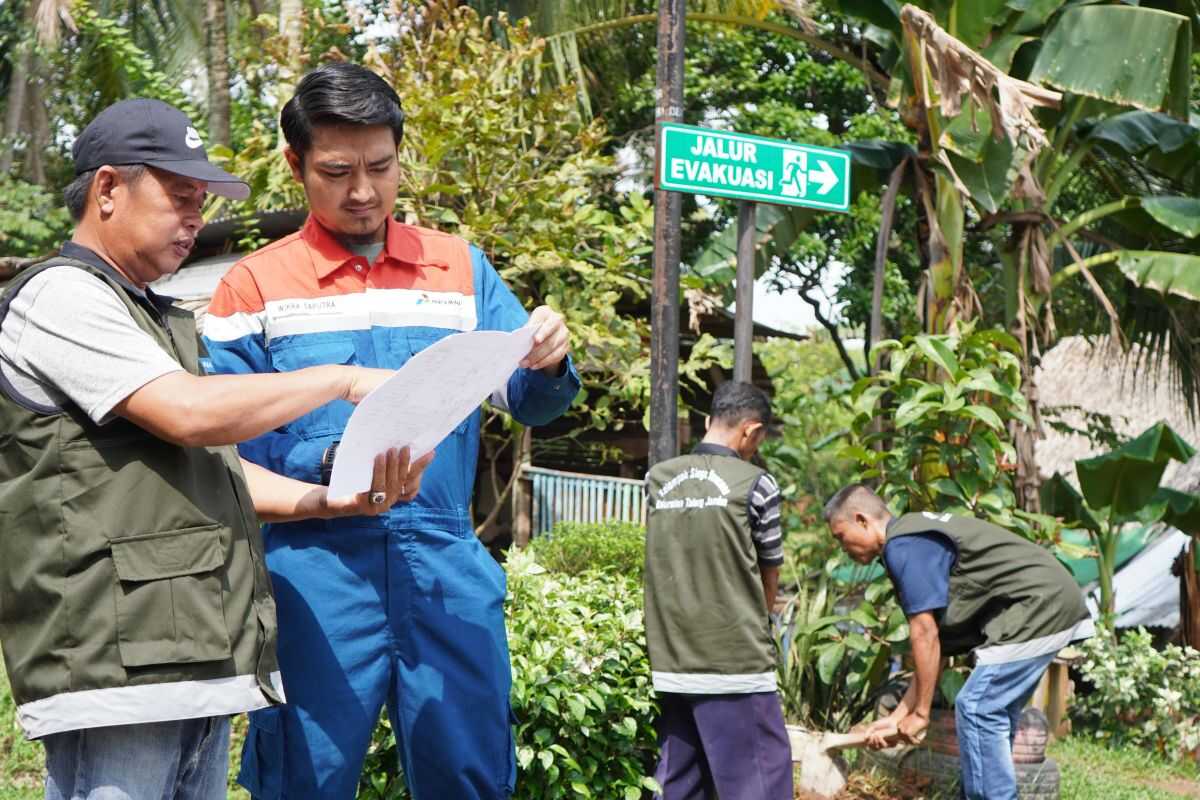
PT Pertamina Patra Niaga, through its Aviation Fuel Terminal (AFT) Sultan Mahmud Badaruddin II, is rehabilitating former mining land in Talang Jambe and Talang Betutu villages, Palembang, South Sumatra, to strengthen local economic development.
Pertamina Patra Niaga’s Corporate Secretary Roberth MV Dumatubun stated in Jakarta on Monday that the corporate social and environmental responsibility (TJSL) programme represents the company’s commitment to creating shared value for both communities and the environment.
“Through a structured and sustainable TJSL programme, Pertamina Patra Niaga seeks to deliver tangible solutions to social and environmental challenges in our operational areas,” he said. “This integrated approach not only restores environmental function but also opens new economic opportunities and strengthens community resilience.”
Pertamina hopes that through integrated methodology and cross-unit replication, former quarrying areas and other operational zones can be transformed into productive, safe and sustainable spaces for present and future generations.
Since the 1970s, the area served as a clay extraction site, leaving behind 105 hectares of degraded land. This has resulted in waste accumulation, flooding and landslide risks, threatening community safety.
Through integrated TJSL, Pertamina Patra Niaga’s Sumbagsel Regional division is driving the transformation of this area into a more productive and sustainable space. The programme is structured around four main pillars: Permata, Pesona, Perkasa and Pelangi.
This initiative serves as a key programme in the Ministry of Environment’s PROPER Gold environmental rating assessment, demonstrating the company’s commitment to achieving superior and sustainable environmental and social performance.
The Permata programme utilises 0.42 hectares of former quarrying land for community economic activities, including solar-powered fish cage farming development. As a result, brick artisan income has increased by 25 per cent and women farmer group income has risen by 133 per cent.
The Pesona programme focuses on organic and inorganic waste management, achieving 85 per cent management of household waste, equivalent to 3,600 kg per month. One innovative development is the processing of waste cooking oil and residue into fish feed, managed by local MSME groups.
Rusli, a member of the Pasta MSME Group, noted that the initiative delivers real benefits for both environment and local economy. “Processing waste cooking oil and residue into fish feed is one solution to reduce environmental impact from waste whilst creating economic value for the community,” he said.
For disaster risk mitigation, the Perkasa programme enhances community disaster preparedness capacity, including planting 250 coconut trees in the former quarrying area to strengthen soil structure.
The Pelangi programme develops integrated child-friendly public spaces (RPTRA) and children’s play areas, contributing to improved child nutrition in the area.